Short answer: yes, but not the way the postcards sell it. The middle of Sapa town is now concrete: big new hotels, a clock-tower station building, a plaza and a lot of weekend traffic. I still tell people to go, because it takes about 4 kilometres to leave all that behind, and past that line the mountains are exactly where they always were. The streams still run, Hmong families still work their terraces, and some of them now serve coffee on the stream bank. And if you want to be far from the town altogether, there's Topas Ecolodge, 40 minutes out and a different world. This is what I saw, who it suits and how to plan it.
The short version
Worth it if: you leave the town centre. The mountain scenery is still good once you are about 4 km out.
The centre: new hotel blocks, a plaza, crowds at weekends. Fine for dinner, not why you came.
The valley: streams, terraces, cafés on the water, and Hmong families who farm and now host visitors too.
Topas Ecolodge: a high-end hilltop lodge about 40 minutes from town. Great for quiet, wrong if you want evenings in Sapa.
How long: two to three nights. About 5.5 to 6 hours from Hanoi by limousine van.
Pickleball: yes, in Sapa town. A covered club and a rooftop court with mountain views; add Hanoi games on either side.
Is Sapa still worth visiting?
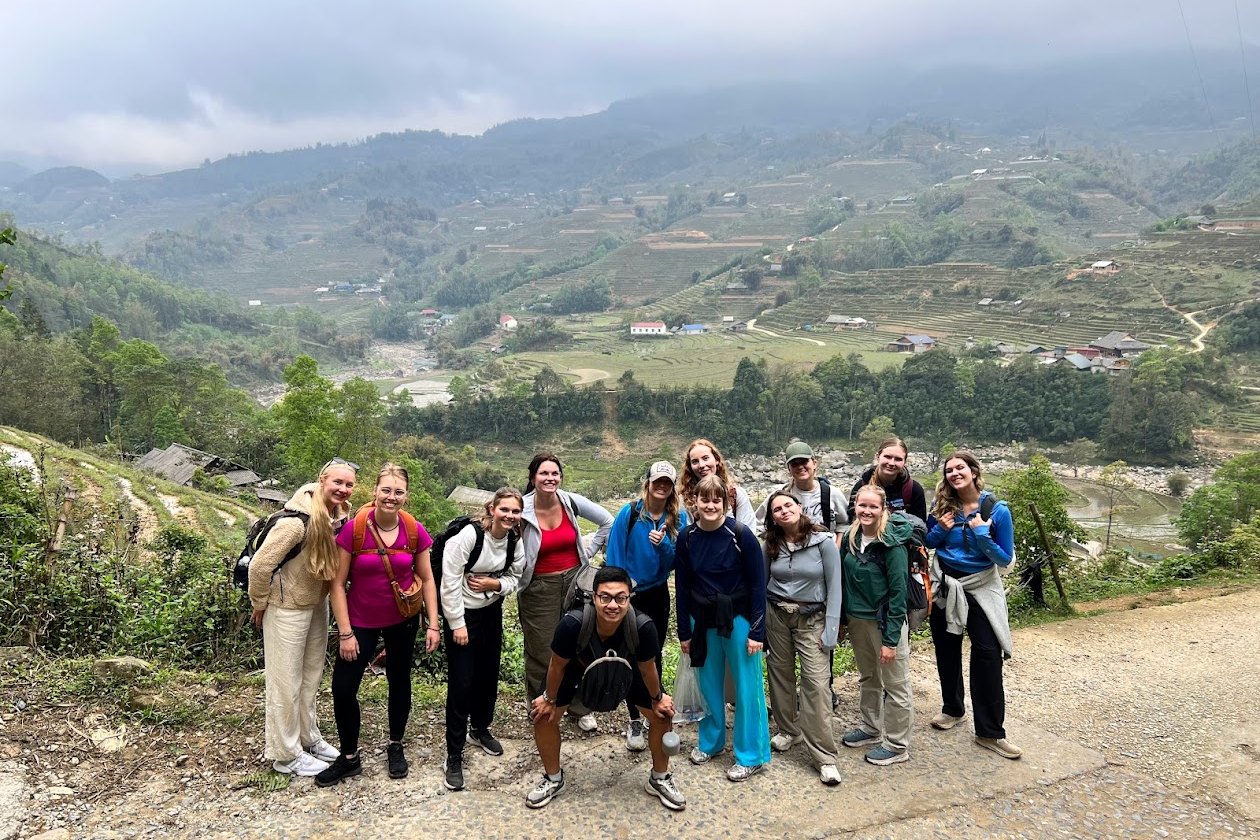
Yes, if you spend your time outside the town centre. The centre has been built up hard, but the valleys, streams and terraces a few kilometres away are still some of the best mountain scenery in Vietnam.
I've been guiding travellers around Vietnam for ten years, and the question I hear most about Sapa now is whether it has been spoiled. People have seen the photos of the new buildings and the cable car queues. They are right to ask. But the answer depends entirely on where you stand. The town is one thing. The land around it is another, and it is still very much there.
It suits you if you like walking, big views and cool air after the heat of Hanoi, and you are happy to get a car or a guide to take you out of the centre. You might skip it if you only have a few days and would rather spend them on the coast, or if what you want is a quiet little hill station. That version of Sapa has gone. For a different kind of mountain town, see our comparison of Sapa and Da Lat.
Is Sapa too touristy? What has changed in the town
The town centre is, especially at weekends. The valleys a few kilometres out are not, and that is where I would spend your time.
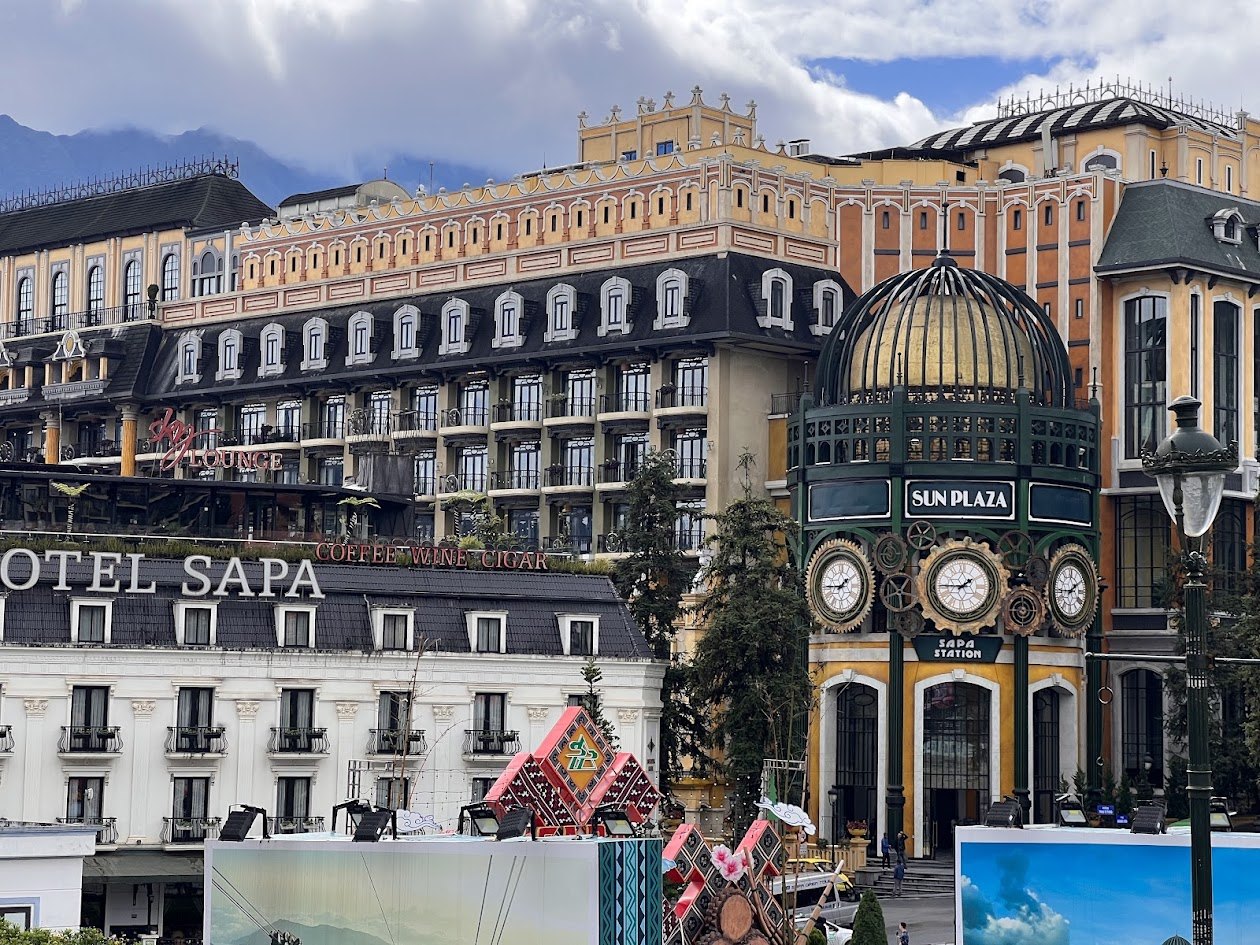
The middle of town is built over. The Sun Plaza and Sapa Station complex, where the Muong Hoa train starts, sits among large yellow-and-white hotel blocks. It photographs well and it is convenient: restaurants, shops, the train and the cable car are all in one place. But it is concrete, it is busy, and at weekends it fills up fast.
Even the cafés have grown up. Some now have glass walls, curved timber ceilings and terraces cut into the hillside, with the valley below.
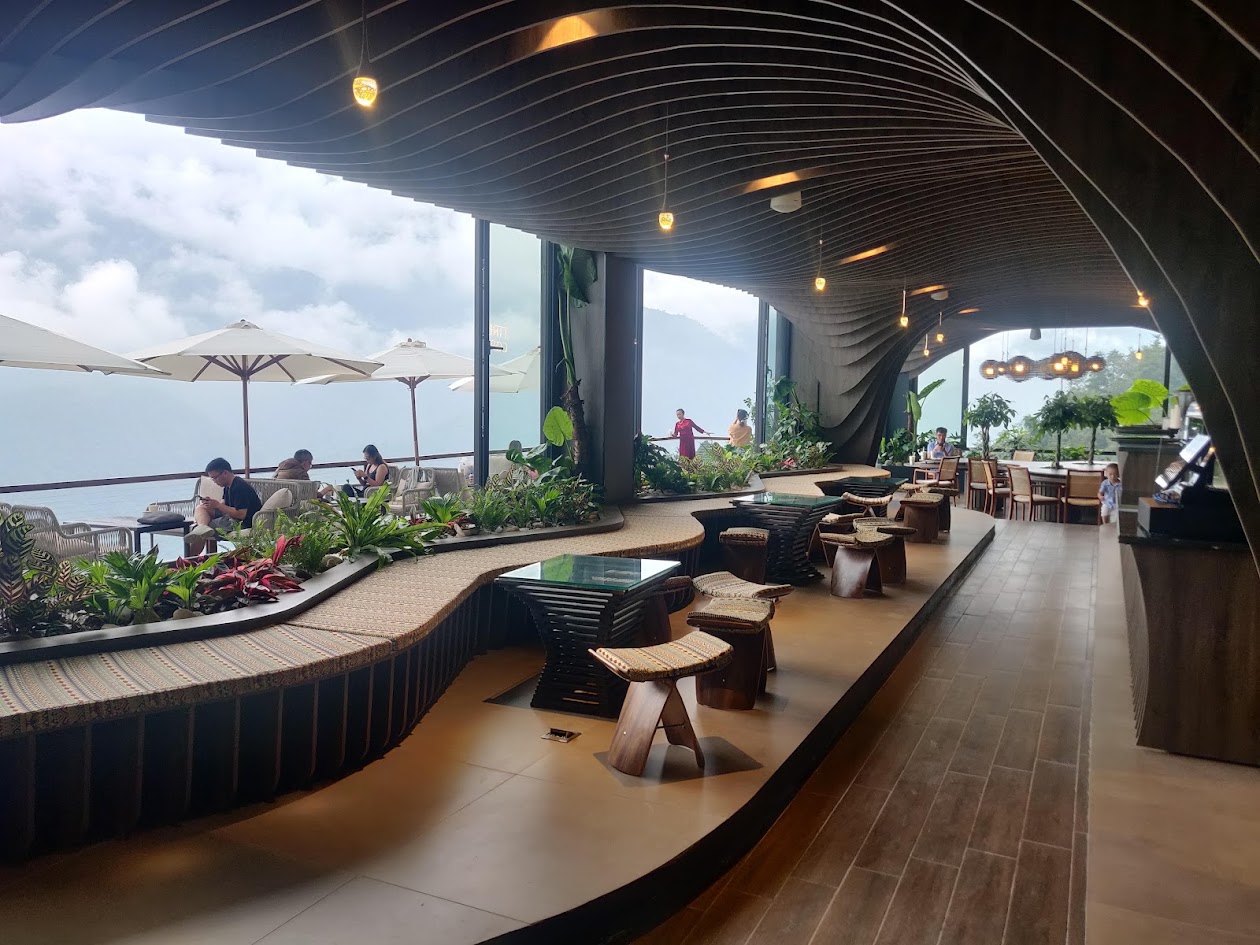
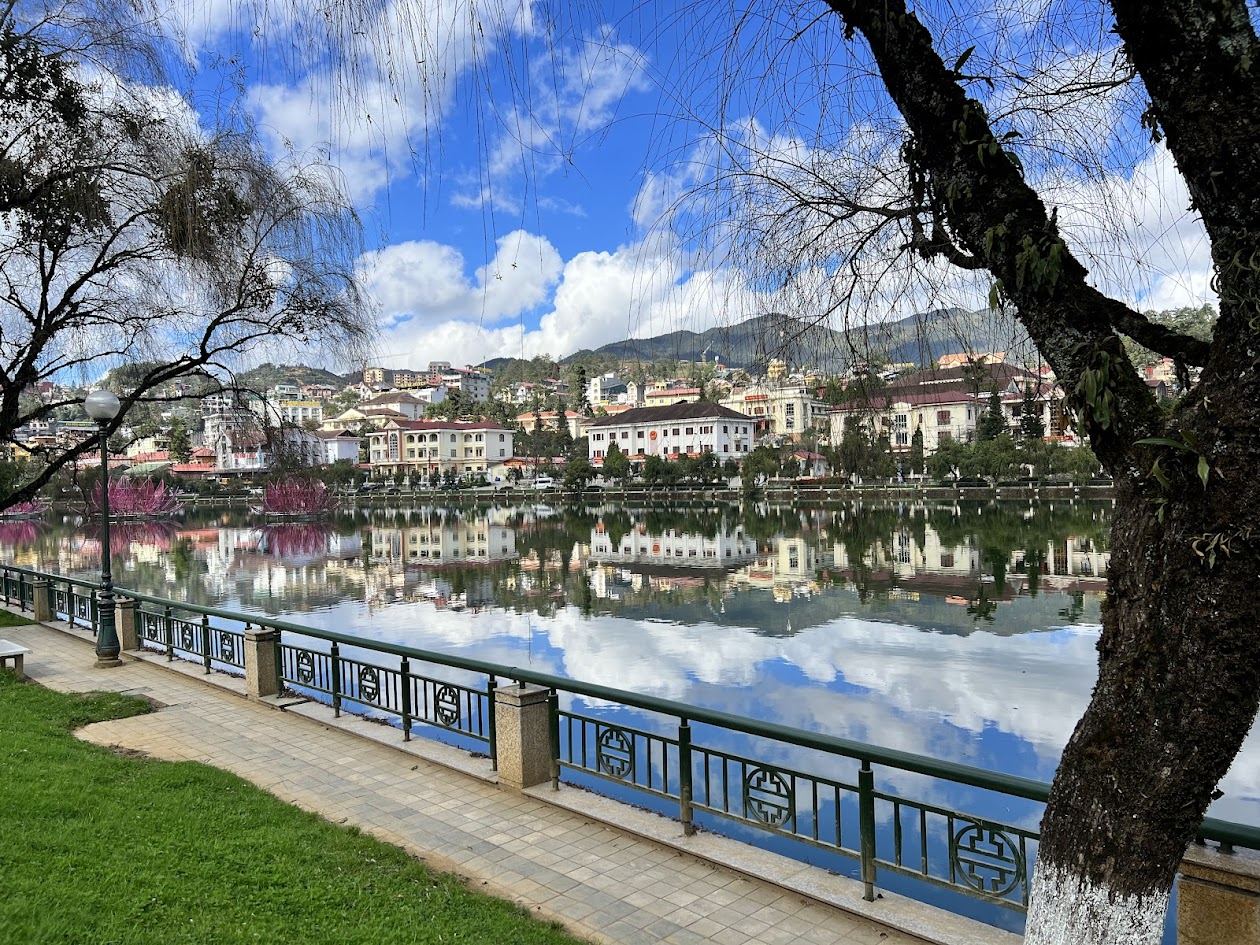
They are pleasant, and they are not the old Sapa. If you want the town for a meal and a walk around the lake, it still works. Our Sapa guide has the full list of things to do there, with prices.
What is it like 4 km outside the centre?
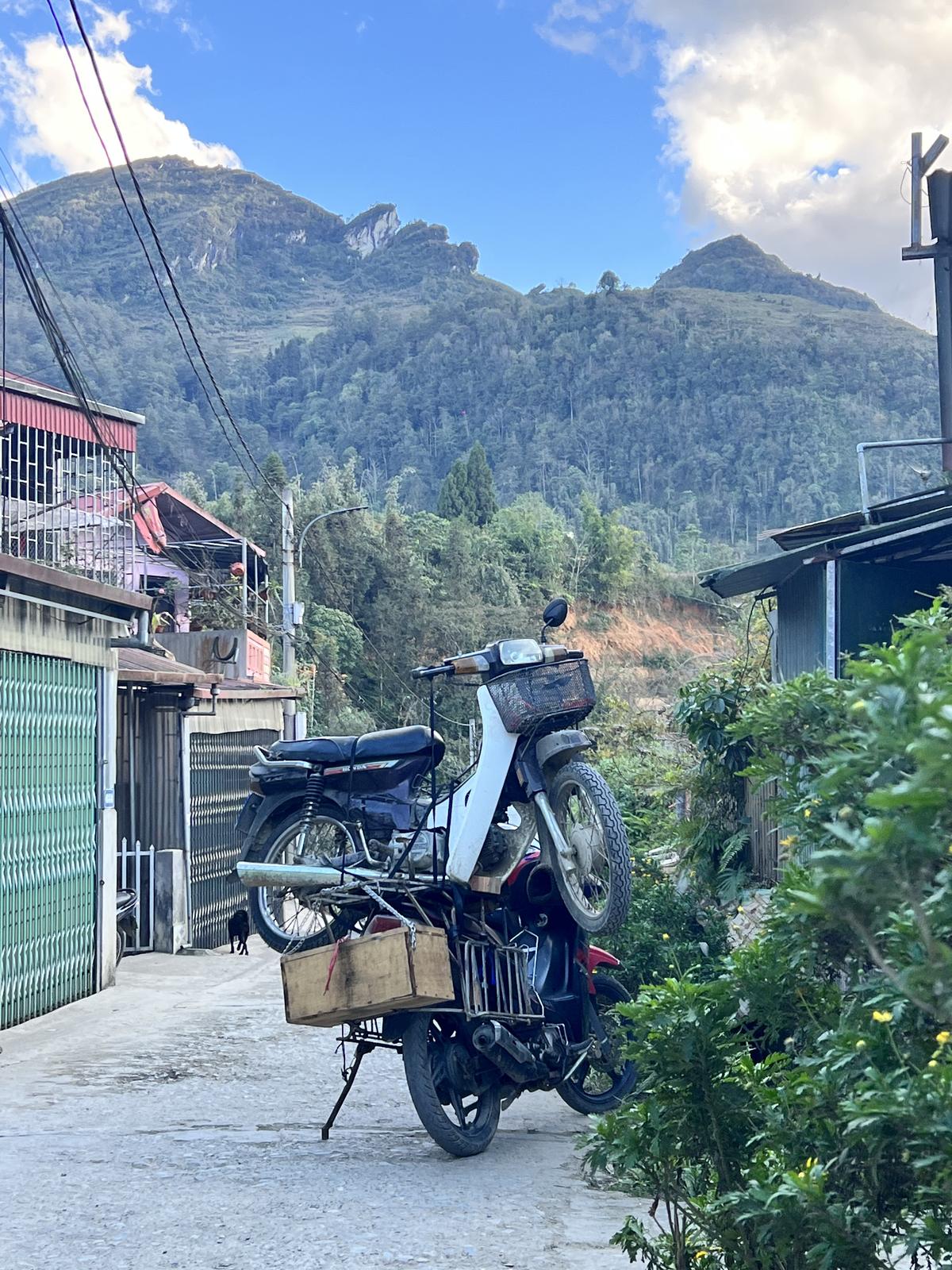
Drive or walk about 4 kilometres from the centre and the noise drops away. The mountains stand up behind the village roofs, a motorbike sits parked in the lane, and the terraces step down the slope below.
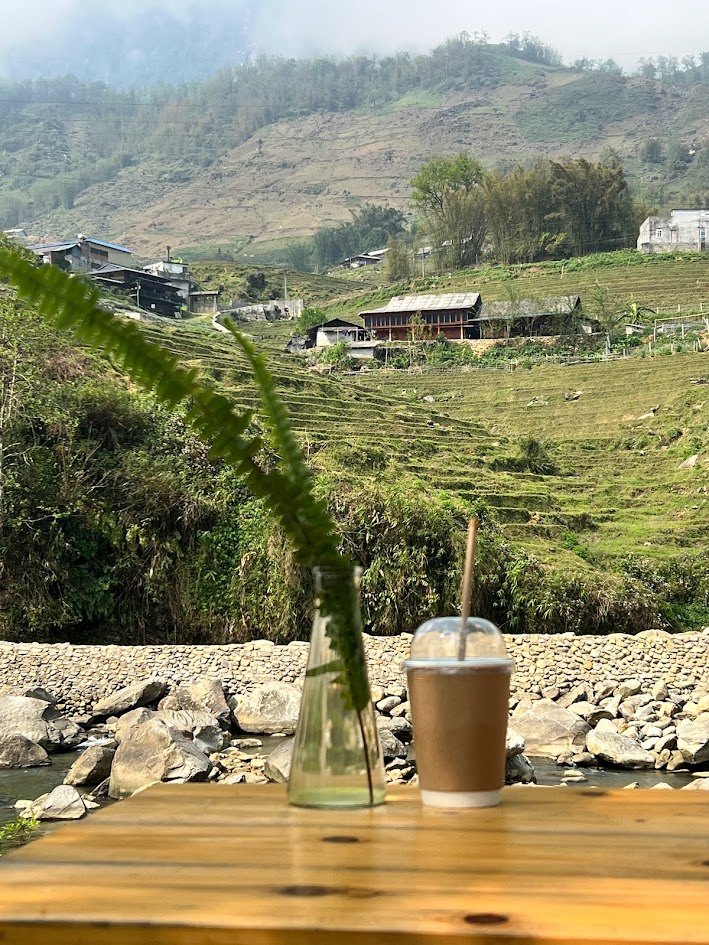
My favourite stop out here is the café at Wecamp Glamping, built right on the bank of a stream. You sit at a plain wooden table with the water a metre away and the terraces rising on the other side, and you can hear the stream. That is the Sapa people come for, and it is a short ride from the centre.
What I notice most is the people. Hmong families are still here, still working their fields on the hillsides, and many have added tourism to the farm: a café on the water, a homestay, a guiding job, textiles to sell. In the families I know, the income is clearly higher than it was a decade ago. Farming and visitors sit side by side, and the village still looks and sounds like a village.
How to spend your money where it helps
It isn't the same in every village, and not every café or homestay belongs to a local family. A few habits make a difference.
- Ask who owns it. A homestay or café run by the family that farms the land keeps the money in the valley.
- Hire a local guide. They know the paths, the families and the weather, and they are paid directly.
- Buy crafts from the maker. Indigo cloth and embroidery bought at the source is worth more to the person who made it.
- Ask before you photograph anyone, and don't hand out sweets or money to children, so they aren't drawn into asking visitors for things.
If you want to walk it, the valley trek past Lao Chai and Ta Van is the classic route. It is covered in our things to do in Sapa guide.
Is Sapa good for hiking and active travellers?
Yes. Sapa is one of the easiest places in the north to put real walking into a trip, because the paths start almost at the hotel door and a local guide can link them into a half-day or a full day.
- The Muong Hoa valley walk from town past Lao Chai and Ta Van, through terraces, bamboo and buffalo, with lunch in a family home.
- Village-to-village paths around the valley, at whatever pace suits you. A guide helps you find the quiet ones.
- Mountain hiking. Fansipan is now an easy cable-car ride, but the Hoang Lien Son range has harder days for those who want them. Ask for them when you plan.
Walking days pair well with a morning on court. Play in Hanoi before you go up, use the mountains to stretch your legs, and play again when you come back down. We can plan that as one private trip.
What is Topas Ecolodge, and is it worth the drive?
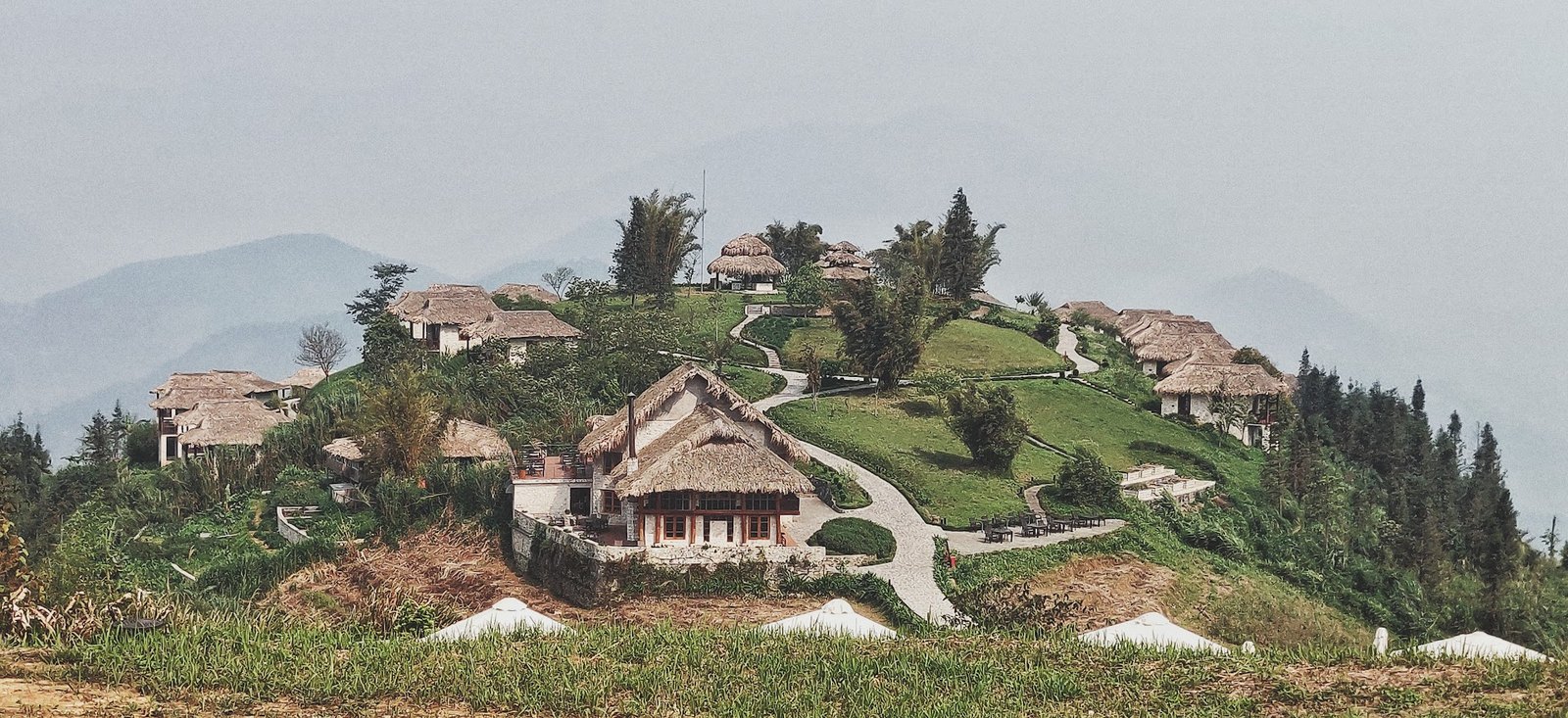
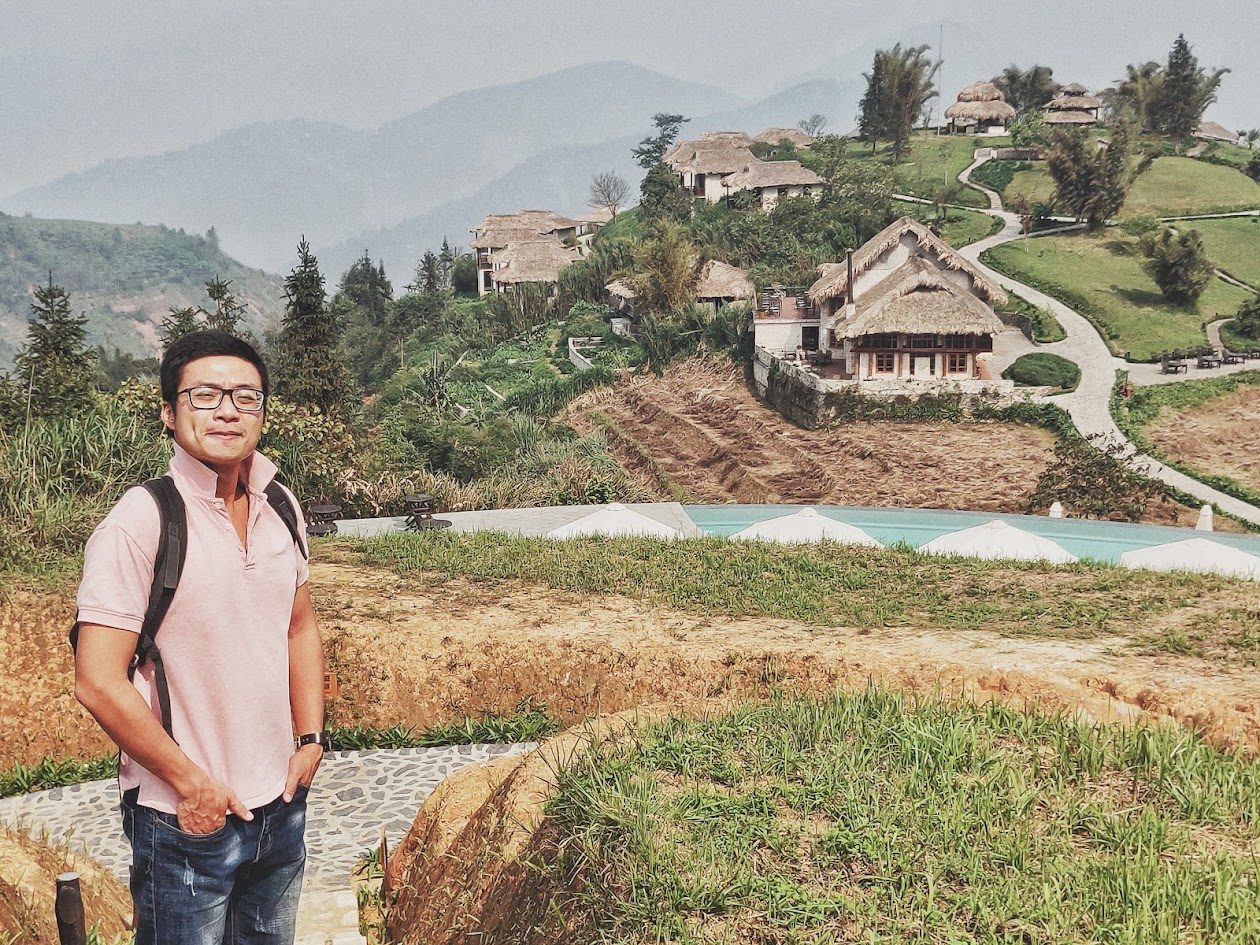
Topas Ecolodge is a high-end hilltop lodge about 40 minutes by car from the centre of Sapa, on a ridge above the valley. It's worth it for quiet, views and comfort, and it's the opposite of the town.
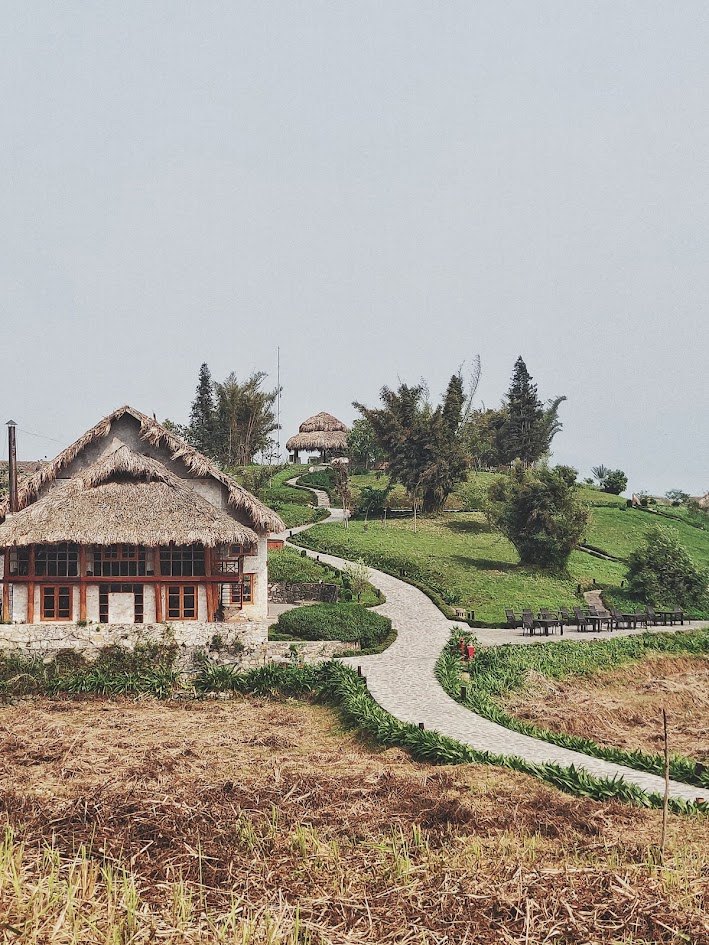
The bungalows are stone with thatched roofs, spread over a green hill more than a thousand metres up, with paths winding between them. There is an infinity pool at the edge of the hill and a restaurant with the whole valley laid out below it. You stay at the lodge. The town is 40 minutes away, so plan to eat there, and arrange your transfers in advance.
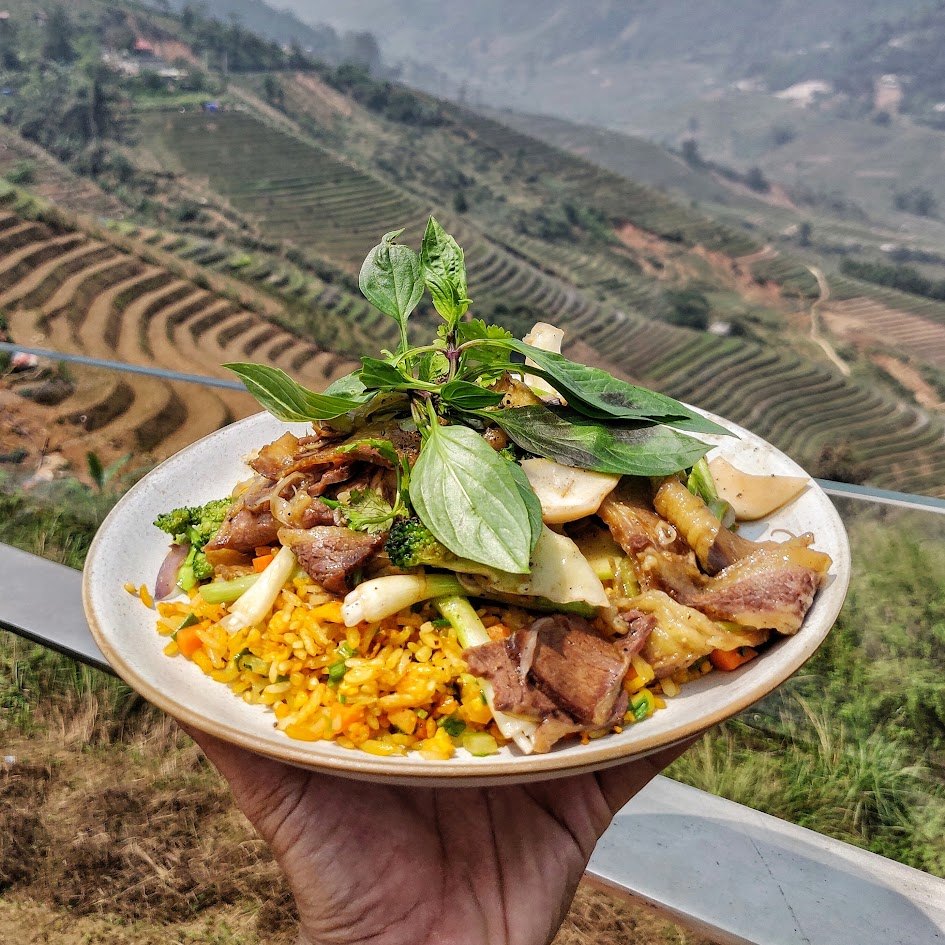
Lunch is a good way to judge the place. On the terrace, with the rice terraces falling away below the railing, you get a plate of beef and vegetables over rice with fresh herbs on top, and the whole valley behind it.
Who Topas suits, and who should skip it
- It suits: couples, anniversaries and anyone who wants the mountains quiet, with comfortable beds and early light on the valley. It is also a good reset after a few busy days in Hanoi.
- Think twice if: you want street food, shopping and the Saturday night square, you have a tight budget (it is priced as a high-end lodge, so check current rates), or you plan only one night. The hillside has steps, so ask about a room near the main building if stairs are hard.
Where to stay in Sapa: the town centre, the valley or Topas?
| Base | What it feels like | Best for | Getting around |
|---|---|---|---|
| Sapa town centre | Busy, built up, lots of choice. Concrete, but everything is close. | Short stays, food, the train and Fansipan | On foot; short taxis |
| The valley, about 4 km out | Quiet roads, streams, terraces, Hmong farms and homestays. | Walkers, photographers, slow travellers | Walking, motorbike taxi or a guide |
| Topas Ecolodge | High-end, remote, very quiet, with views over the whole valley. | Couples and anyone who wants comfort and calm | Car, about 40 minutes from town |
A good split is a night in the valley for the walking, then a night at Topas to finish. If you want the town as well, a night in the centre at the start gives you dinner and the lake.
How many days do you need in Sapa?
Two to three nights is right. Getting there takes 5.5 to 6 hours from Hanoi each way, so one night is mostly spent on the road. Two is enough for one valley walk and a view; three gives you a spare morning if the weather turns, which in the mountains it often does. The fastest way from Hanoi is a limousine van, about 5.5 to 6 hours on the expressway and the mountain road, or the night train to Lao Cai and an hour by road. Our Sapa guide has the prices and times.
Sapa fits well into a longer loop of the north. See our northern Vietnam itinerary for where it sits, and quiet places beyond Ha Long Bay if you want fewer crowds still. Travelling slowly or in your sixties and beyond? Vietnam for older travellers covers pace and comfort.
Is Sapa worth it if you only have 2 days?
Yes, as a short, focused trip. It works best as two nights, so the travel days don't eat the mountains. If two days is all you have, this is how I would use them:
- Day 1: early van from Hanoi, arrive around lunchtime, then an afternoon walk or coffee in the valley about 4 km from the centre.
- Day 2: one big thing: the Muong Hoa valley walk to Lao Chai and Ta Van, or a night at Topas if you want comfort. Head back to Hanoi in the late afternoon.
Add a third day and you can do both, and have a spare morning if the cloud sits in.
Sapa or Ha Giang?
Choose Sapa for comfort, easy logistics and walking. Choose Ha Giang for a remote road trip you have to earn. Both are in the far north and both are about five to six hours from Hanoi, but they feel nothing alike.
| Sapa | Ha Giang | |
|---|---|---|
| Style | Walks, terraces, hotels and lodges | A long road loop through a high karst plateau |
| Time needed | 2 to 3 nights | 4 to 5 days for the roughly 350 km loop |
| Effort | Easy to moderate; you choose your walks | Long, winding days on the road |
| Comfort | Wide choice, up to high-end lodges like Topas | Simpler stays, more remote |
| Best for | First-timers, couples, mixed-ability groups | Adventurous travellers who have seen the classics |
Our Ha Long Bay vs Ha Giang Loop post goes deeper on the loop. If you are weighing Sapa against a very different mountain town, read Sapa vs Da Lat.
What is the best time to visit Sapa?
March to May and the dry weeks of late autumn are usually the clearest. September, at the rice harvest, is the most beautiful and the busiest.
Mountain weather doesn't keep a schedule. In my photos the valley is clear and blue in one and wrapped in cloud in the next, and some mornings are hazy even on a good day. March to May and the dry weeks of late autumn are usually the clearest, and harvest in September is the most beautiful and the busiest. Bring layers whatever the month; our Vietnam packing list covers it, and the best time to visit Vietnam has the month-by-month picture. Don't pin everything on one morning for the view.
Pickleball and Sapa
Yes, you can play in Sapa town itself. There are fewer courts than in Hanoi or Da Lat, but a good local crowd and some of the best views of any court in Vietnam. Many Kinh Vietnamese live and work in Sapa, so the pickleball community is bigger than most visitors expect.

- Sapa Center Pickleball Club: a covered hall of several courts with big windows onto the mountains. Rain and fog don't stop play, which matters here. It gets cold in winter, so bring a layer.
- Rooftop court, Sapa Lumia Hotel: a single outdoor court on Violet Street, with the mountains right behind the net.
Hours, prices and addresses change quickly, so call before you go. Lao Cai city, about an hour down the valley, has a bigger cluster of clubs. We can also set up games for you in Sapa as part of a private trip. Sapa is still mainly for walking, so I'd add Hanoi sessions on either side: play before you go up and again when you come back, legs a little stiff. Our Hanoi pickleball guide lists the clubs that welcome visitors, and Sapa vs Da Lat compares the courts in both mountain towns. If you want the north's quiet valleys with a game in Hanoi at each end, our Valleys to the Bay trip does that with Pu Luong instead of Sapa.
Explore Vietnam beyond the usual tourist routes
Combine mountain walks, local experiences and pickleball in Hanoi into one private Vietnam journey. We put you in the valley or at Topas, book a local guide, and fit a game in at each end. Your dates. Your pace.
Plan your private Vietnam tripSapa FAQ
Is Sapa still worth visiting in 2026?
Yes, if you spend your time outside the town centre. The centre is now concrete hotels, a plaza and weekend crowds, but the valleys, streams and terraces a few kilometres away are still some of the best mountain scenery in Vietnam. Plan two to three nights.
Is Sapa too touristy now?
The town centre is, especially at weekends. About 4 km out, the feel changes: quiet roads, streams, terraces and Hmong families still farming. Stay or spend your days in the valley and the crowds mostly stay behind.
How far is Topas Ecolodge from Sapa town?
About 40 minutes by car from the centre, roughly 18 km on mountain roads. It sits on a hilltop above the valley, so plan to eat at the lodge and arrange your transfers in advance.
Is Topas Ecolodge worth it?
For couples and travellers who want quiet, views and comfort, yes. It is a high-end lodge, priced like one, and far from town. Skip it if you want street food, shops and evenings in Sapa centre, or if you only have one night.
How can I visit Hmong villages respectfully?
Ask who owns the café or homestay you are paying, hire a local guide, buy crafts directly from the maker, ask before taking anyone's photo, and do not hand money or sweets to children. A small, quiet group is better than a crowd.
Can I play pickleball in Sapa?
Yes. Sapa town has a covered club, Sapa Center Pickleball Club, and a rooftop court at Sapa Lumia Hotel, both with mountain views. There are fewer courts than in Hanoi or Da Lat, and Lao Cai city, an hour away, has more. Call ahead for hours and prices.
How many days do you need in Sapa?
Two to three nights. Two nights gives you one valley walk and one view or a night at Topas; three gives you a spare morning if cloud rolls in. Getting there from Hanoi takes about 5.5 to 6 hours by limousine van.
Is Sapa worth it if you only have 2 days?
Yes, if you accept it is a short, focused trip. With 5.5 to 6 hours each way from Hanoi, one night is tiring, so plan two nights if you can. Spend the first afternoon in the valley and the second day on one big view, such as Fansipan or Topas.
Should I choose Sapa or Ha Giang?
Choose Sapa for comfortable hotels, short walks and an easy trip from Hanoi. Choose Ha Giang if you want a remote, demanding road journey: the loop is about 350 km over four or five days, after five to six hours just to reach Ha Giang town.
What is the best time to visit Sapa?
March to May and the dry weeks of late autumn are usually the clearest. The September rice harvest is the most beautiful and the busiest. Mountain weather changes fast in any month, so bring layers and keep a spare morning.
Is Sapa good for hiking and active travel?
Yes. The Muong Hoa valley walk past Lao Chai and Ta Van is the classic route, and a guide can link village paths into a longer day. It pairs well with morning pickleball in Hanoi before and after the mountains.
The bottom line
Is Sapa still worth visiting? Yes, as long as you get out of the town centre. The middle of Sapa is concrete now. Four kilometres away, the mountains, the streams and the Hmong families on their land are all still there, and for many of those families tourism has made life better. Stay in the valley or splurge on Topas, walk with a local guide, and you'll see the Sapa the photos promised. When you're ready, we can plan it as a private trip that fits Hanoi, the mountains and a few good games together.
Find a game in Vietnam
Join Pickleball in Vietnam, our free Facebook group. Ask about courts, find a morning game and swap tips with players who live here.
Join the group