Good news first: getting into Vietnam in 2026 is easier than it has ever been. The Vietnam e-visa is now open to every nationality on earth, valid for up to 90 days. But two new rules came into force this year that trip people up at the airport — so read to the end.
The short version
Do you even need one? Maybe not. Citizens of around 38 countries enter visa-free for 30 or 45 days.
If you do: the e-visa is available to all countries, costs about USD $25, lasts up to 90 days, single or multiple entry.
Apply only at the official site: evisa.gov.vn. Allow at least 3–5 working days.
Step one: do you need a visa at all?
Before you pay for anything, check whether you're exempt. As of 2026, roughly 38 nationalities can enter Vietnam visa-free — you just show up with your passport.
The 45-day visa-free list runs through 2028 and includes the UK, France, Germany, Italy, Spain, the Netherlands, Denmark, Sweden, Norway, Finland, Japan, South Korea and around a dozen more European countries. Most ASEAN nationalities get 30 days visa-free. If your whole trip fits inside that window, you can skip the e-visa entirely.
Rules do shift, so confirm your own passport's status before you book flights. But for a lot of our guests — especially from Western Europe — the answer is simply: no visa needed.
Step two: if you're not exempt, the e-visa
If your nationality isn't on the visa-free list, or you want to stay longer than the exemption allows, the Vietnam e-visa is what you need. Here's the honest, jargon-free version:
- Who can apply: every country and territory — the old restricted list no longer exists
- How long: up to 90 days, single or multiple entry
- Cost: around USD $25 for single entry, paid online by card
- Processing: normally about 3 working days — apply at least 5 days before you fly to be safe
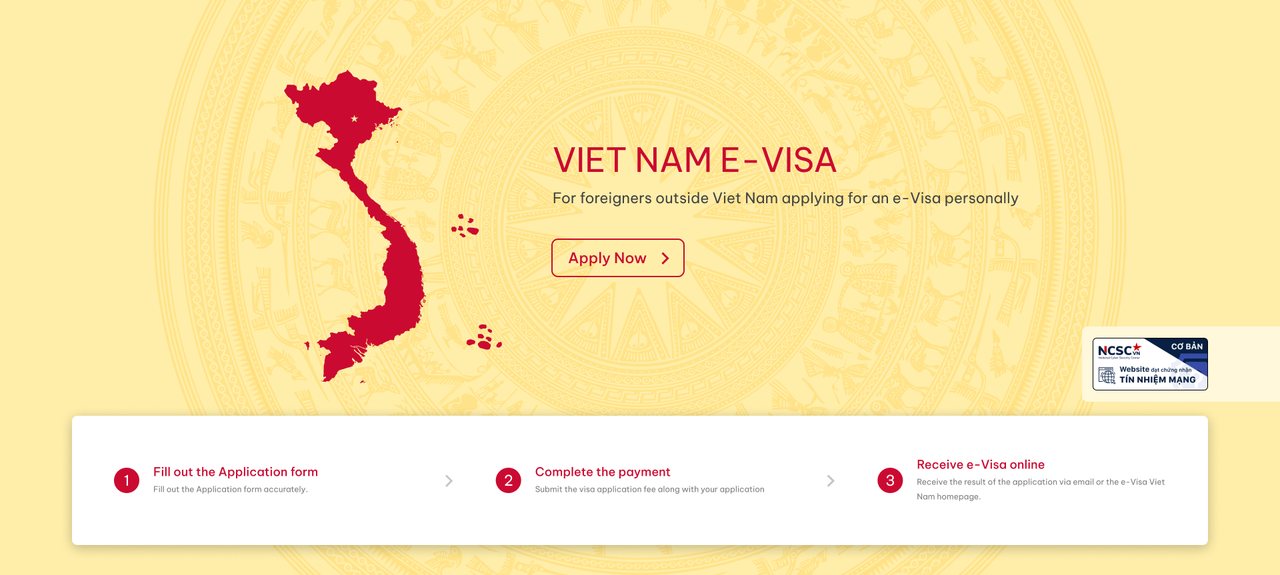
- Where: the official portal is evisa.gov.vn
⚠ Use only the official site
Search "Vietnam e-visa" and you'll hit dozens of agency sites charging three times the real fee. The only official portal is evisa.gov.vn. You do not need an agent — the application is straightforward and you can do it yourself in about fifteen minutes.
The two 2026 rules that catch people out
These are new, and older travel blogs won't mention them. Both have turned travellers away at the gate this year.
1. The 6-month passport rule is now strictly enforced
Since 1 March 2026, your passport must be valid for at least 6 months beyond your arrival date, and this is now checked firmly — some airlines have refused boarding. Before you travel, look at your passport's expiry date. If it's close, renew it well ahead.
2. The Digital Arrival Card at Ho Chi Minh City
From April 2026, arrivals at Tan Son Nhat airport (Ho Chi Minh City / Saigon) must also complete a Digital Arrival Card online, within 72 hours before landing. It's a separate form — it does not replace your e-visa, and it's quick to fill in. Just don't be caught unaware in the queue.
We'll tell you exactly what your passport needs
When you book a tour with us, we confirm your specific visa situation before you commit to anything — no guesswork, no agency upsell.
See the toursThe bottom line
Vietnam has quietly become one of the easiest countries in Asia to enter. Check whether you're visa-exempt first; if not, the 90-day e-visa from evisa.gov.vn costs about $25 and takes a few days. Make sure your passport has 6 months left, fill in the Digital Arrival Card if you're flying into Saigon, and that's genuinely all there is to it. Now the only thing left to plan is where to play.
Find a game in Vietnam
Join Pickleball in Vietnam, our free Facebook group. Ask about courts, find a morning game and swap tips with players who live here.
Join the group