Sapa is two places at once. One is the Sapa on your feed: a cable car into the clouds on Fansipan, a glass bridge hanging off a mountain pass, the giant golden hand at Moana, wooden houses and a waterfall at Cat Cat. The other is quieter: rice terraces stepping down the Muong Hoa valley, Red Dao families running herbal baths in Ta Phin, and a Sunday market at Bac Ha where people from the hills still come to trade buffalo and brocade. The best trips mix the two. Here are the things to do in Sapa in 2026, with prices, opening times, how to get there from Hanoi, and the honest answer on snow.
The short version
Don't miss: Fansipan by cable car on a clear morning, the Muong Hoa valley walk to Lao Chai and Ta Van, the view from O Quy Ho pass, and a Red Dao herbal bath after a long day.
For photos: Moana Sapa, the Rong May glass bridge and Cat Cat village. All fun, all busy at weekends.
Plan around the days: Saturday night is the busiest evening on the town square. Bac Ha market is on Sunday morning only.
Getting there: about 5.5 to 6 hours from Hanoi by limousine van, or the night train to Lao Cai plus an hour by road.
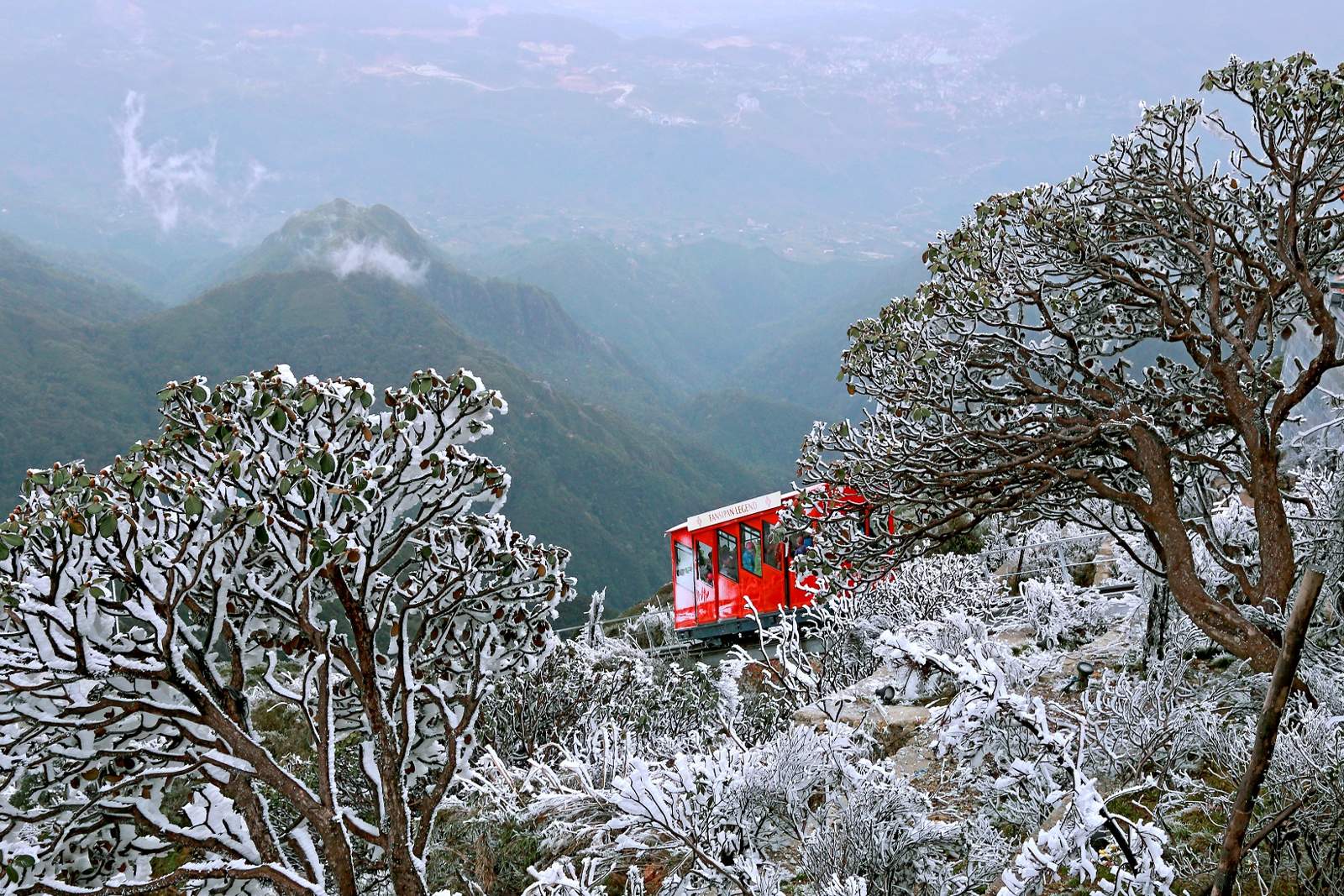
Snow? Rare. Frost and ice on Fansipan are common in cold snaps from December to February; real snow falls only on a few days in some winters.
Fansipan: the roof of Indochina
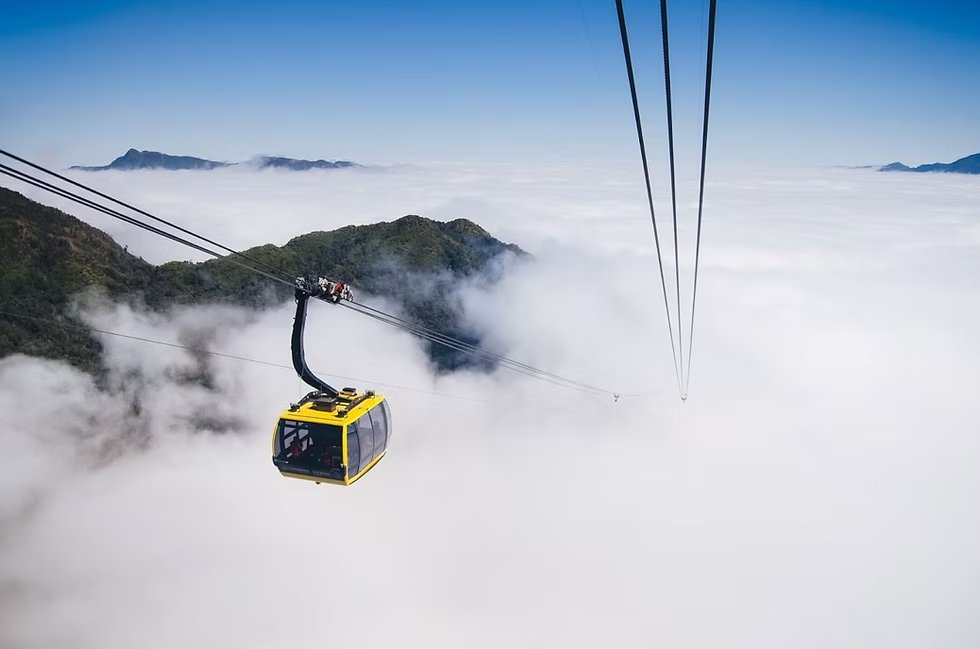
At 3,143 metres, Fansipan is the highest mountain in Vietnam, Laos and Cambodia. Climbing it used to take two days of hard trekking. Now the Sun World Fansipan Legend cable car carries you up in about 15 minutes, over the Muong Hoa valley and the forest of the Hoang Lien Son range, often straight through the clouds and out above them.
- Cable car (return): about 800,000 VND for adults Monday to Friday and Saturday and Sunday afternoons; 850,000 VND on Saturday mornings, public holidays and Tet. Children between 1 and 1.4 metres pay 550,000 VND; under 1 metre is free.
- Summit funicular: from the top station, about 600 stone steps lead to the summit marker. A short funicular, the Do Quyen train, saves most of the climb, at around 150,000 VND up and 120,000 VND down.
- Combo tickets: cable car with a buffet lunch is around 1,050,000 VND on weekdays; cable car with both trains around 1,370,000 VND.
- Hours: boarding from about 8am to 2:30pm Monday to Thursday, to 3:30pm on Fridays and from 7:30am to 3:30pm at weekends and holidays. Allow three to four hours in total.
Go early on a clear day. Ask your hotel how the summit looks before you buy tickets, because on a fogged-in day you'll see white and not much else. It's 5 to 10°C colder at the top than in town, so bring a proper jacket, a hat and gloves in winter, and shoes with grip for the wet steps.
The spiritual complex on the summit

Most people expect a peak and a view. What surprises them is the temple complex built into the mountain top. Walking up from the cable car station you pass:
- The Amitabha Buddha: a 21.5-metre bronze statue, assembled from thousands of bronze panels, standing over the clouds. It's the most photographed spot on the mountain.
- The Arhat path: a stone stairway lined with hundreds of carved statues of the Buddha's disciples, each with a different face.
- Pagodas and the great bell: including Kim Son Bao Thang pagoda, a large bronze bell and a statue of Quan Am, the goddess of mercy.
It's a working place of worship, so cover your shoulders and knees, keep your voice down inside the pagodas, and take your hat off.
The Muong Hoa mountain railway
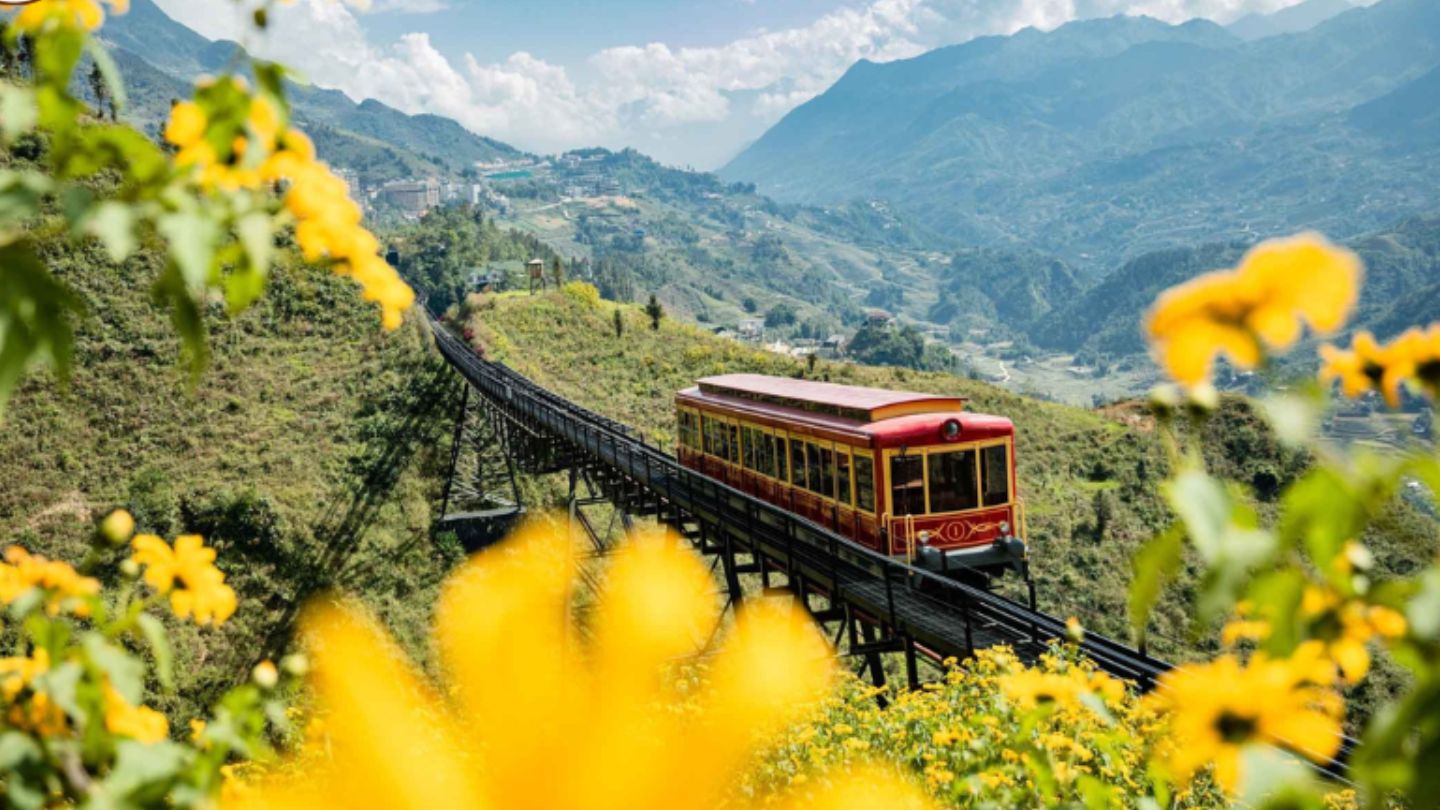
The Muong Hoa train runs from the Sun Plaza building in the middle of town down to the Fansipan cable car station, about 3 kilometres away, in 10 to 15 minutes. Its red, Swiss-designed carriages cross long viaducts over the terraces, and the view out of the big windows is one of the best in Sapa. Tickets are around 150,000 to 200,000 VND return.
It's the easiest way to reach the cable car, and much nicer than a taxi. If you only want the views and not the summit, the ride alone is worth doing.
Cat Cat village
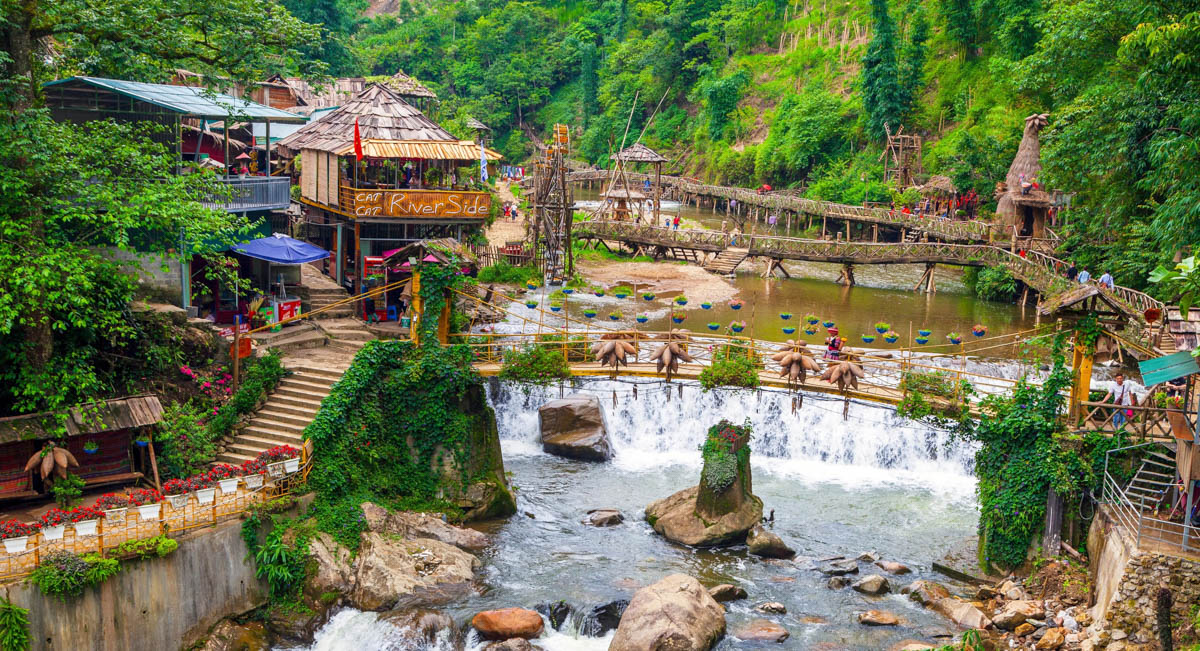
A Black Hmong village about 2 kilometres below the town, Cat Cat is where most first-time visitors go. A paved path winds down past wooden houses, indigo-dyeing and weaving stalls, water wheels and a waterfall with a little bridge, then climbs back up the other side. It's pretty and easy to reach on foot.
Be clear about what it is: Cat Cat is a managed tourist site, with a ticket of around 150,000 VND for adults and 90,000 VND for children, costume rental for photos, cafés and plenty of set-up photo spots. It's not a working village in the way Lao Chai, Ta Van or Ta Phin still are. Go early, enjoy it for what it is, and save your real village time for the valley walk. The path is steep in places, and the climb back up is the hard part; motorbike taxis wait at the bottom if you'd rather ride.
Moana Sapa
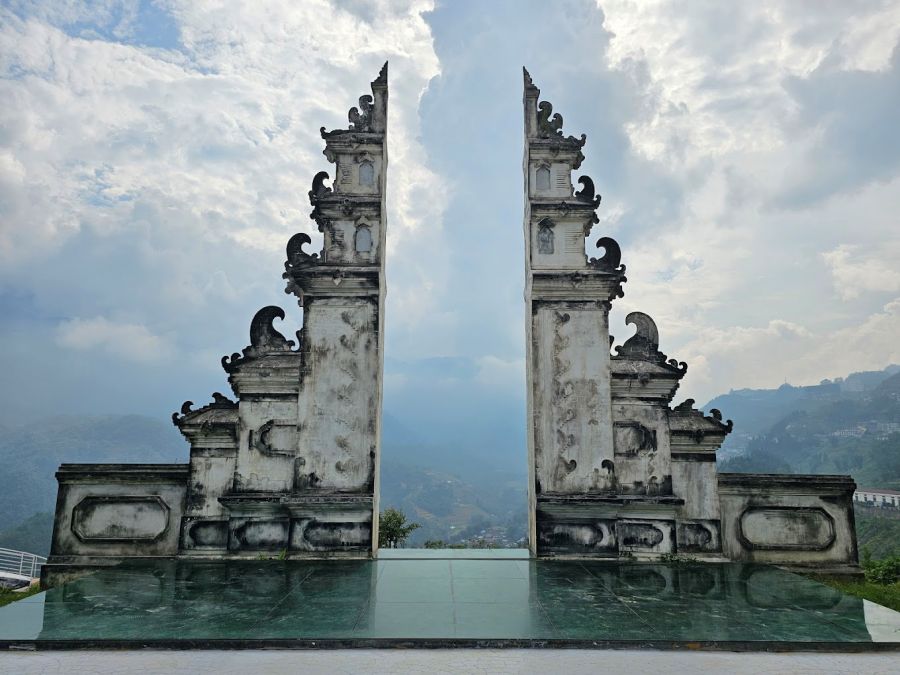
Moana is an outdoor photo park of more than 10,000 square metres at 68 Violet Street, about a kilometre from the Stone Church, so you can walk there in 10 to 15 minutes. It's full of sets built for pictures:
- a Bali-style "heaven gate" on a mirrored floor
- a giant golden hand reaching out over the valley
- an infinity pool with a floating piano
- a statue of a Moana girl more than 6 metres tall
- a swing on the edge of the hill, and a lone tree above the valley
- a café with a panoramic view
Tickets are around 100,000 VND, or 150,000 VND with a drink in the café; children under 1 metre are free. It's open roughly 7am to 7pm. Come between 7 and 9am for the clouds, or from 3 to 5pm for golden light, and on a weekday if you can. The mirrored floors stay wet on purpose, so wear shoes with grip, and take a windproof layer for the swing and the golden hand.
The Rong May glass bridge and O Quy Ho pass
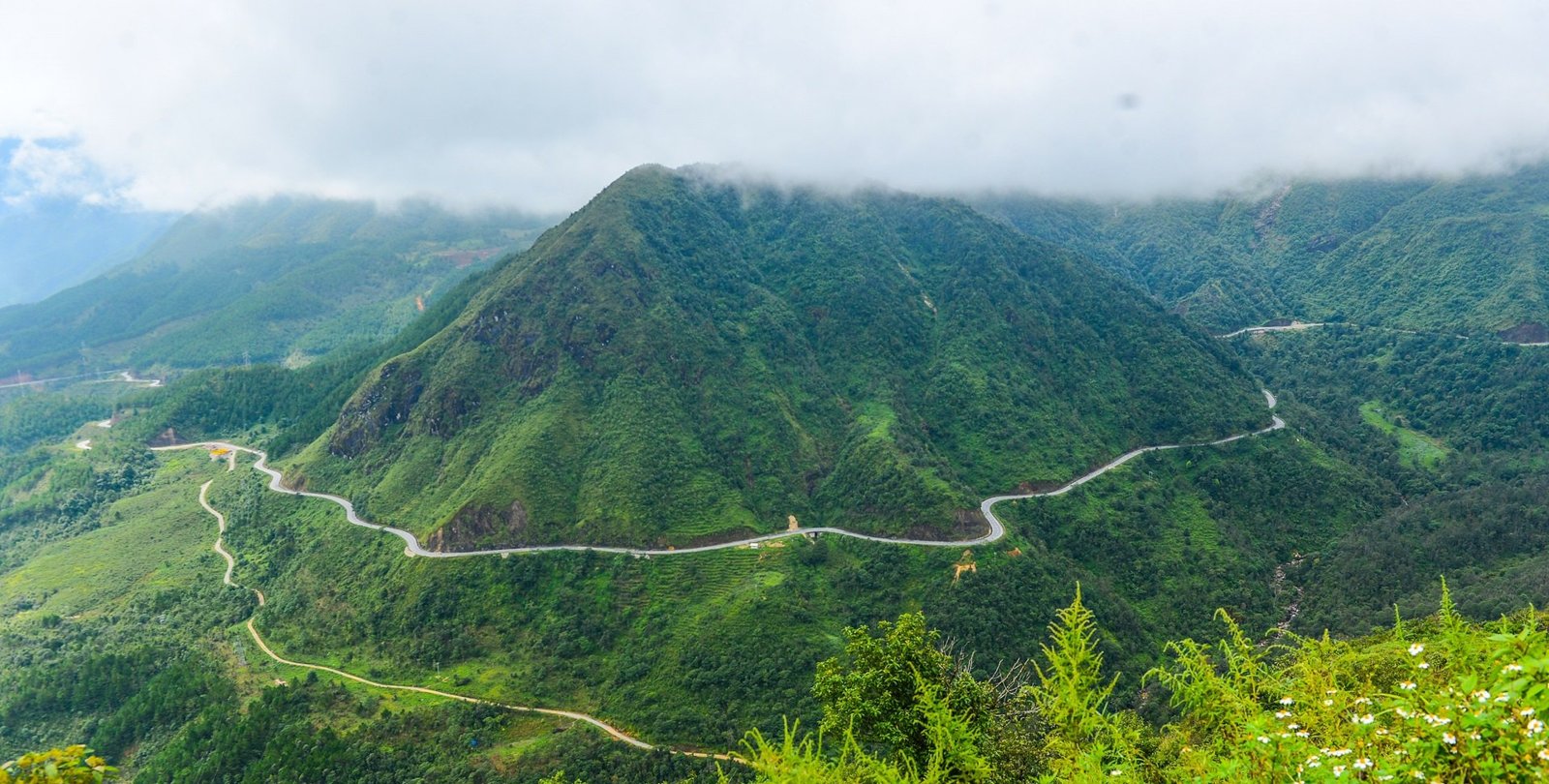
About 17 to 20 kilometres from town, the road climbs over O Quy Ho pass, the "heaven's gate" between Lao Cai and Lai Chau provinces. The views across the Hoang Lien Son range are huge, and sunset here is the reason to go.
At the top of the pass, just over the line in Lai Chau, is the Rong May tourist area:
- The glass bridge: a glass lift runs up inside the cliff to about 2,200 metres, then a glass-floored walkway sticks out from the rock face with a long drop below. Tickets are around 500,000 VND for adults and 300,000 VND for children, including the lift.
- The rainbow slide: you sit on a rubber ring and shoot down a long, brightly coloured slide through the forest. Silly and very good fun.
If heights aren't your thing, stop at the free viewpoints on the pass instead; the mountains are the same. On the way, the Silver Waterfall is a short roadside stop for about 20,000 VND, and Love Waterfall is a pleasant forest walk along the Golden Stream for around 70,000 VND.
Trekking the Muong Hoa valley
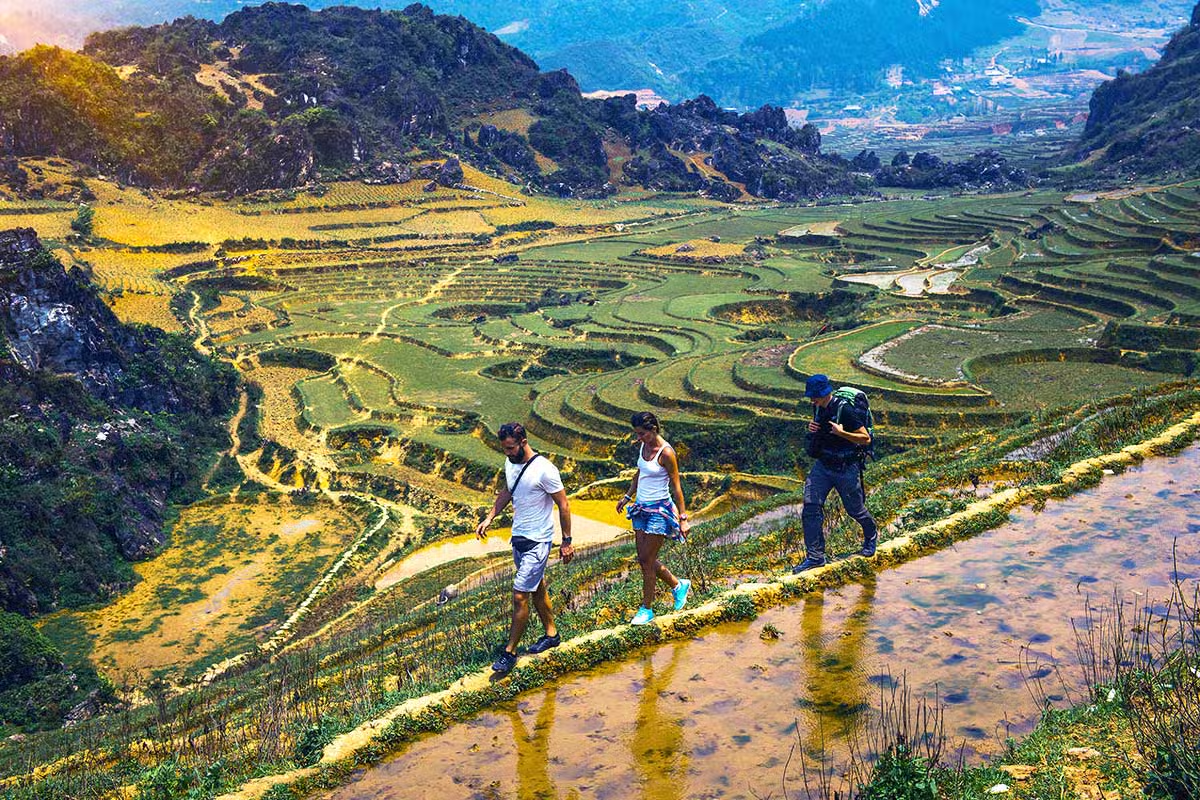
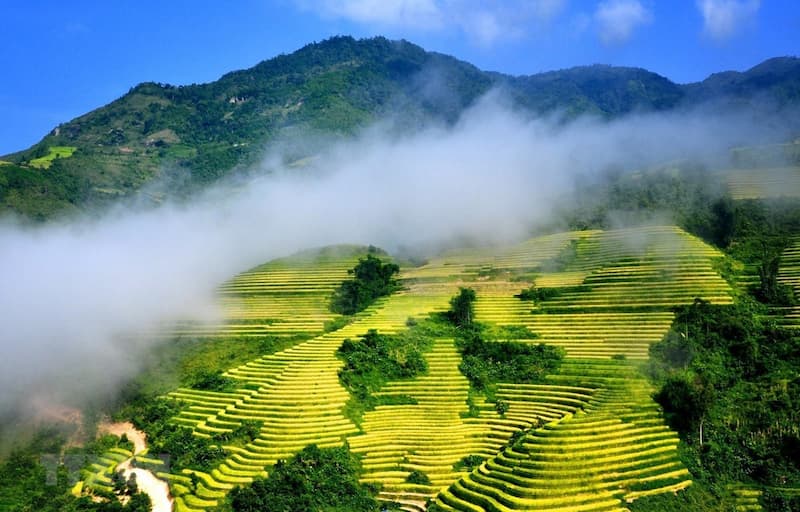
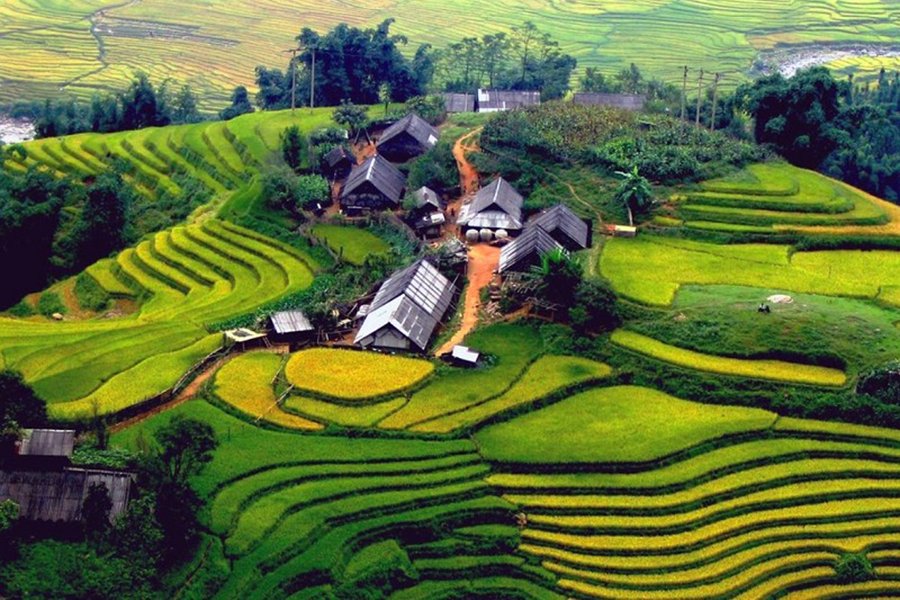
This is the Sapa most people remember longest. A walk from town down into the Muong Hoa valley takes you past some of the finest rice terraces in the country, bamboo, buffalo and streams to the Black Hmong village of Lao Chai and the Giay village of Ta Van, where you can have lunch with a family or stay overnight in a homestay.
- Distance: the classic route is around 10 to 12 kilometres, mostly downhill, with a car back to town.
- Guide: go with a local guide. They know the paths, which change with the season, and the money goes to the villages. A guided day trek costs roughly 450,000 to 600,000 VND per person, more for a private guide. The villages themselves are free to visit.
- Ground: paths can be very muddy after rain. Wear proper walking shoes, not trainers, and use a stick on the steep bits.
- Easier option: drive to Lao Chai and walk the flatter stretch through the valley to Ta Van, about an hour and a half.
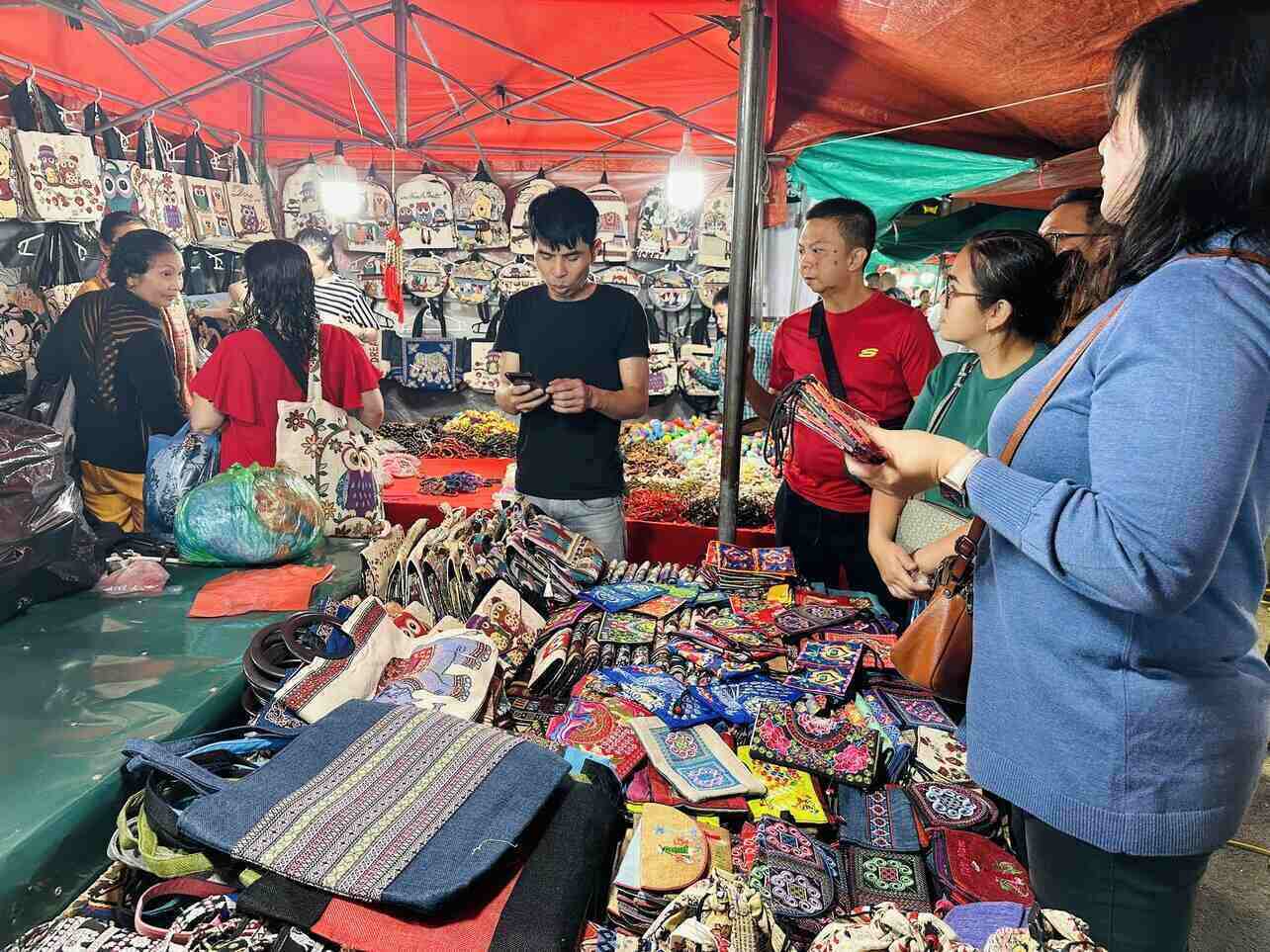
Women from the villages will often walk alongside you and hope you'll buy their textiles at the end. A polite "no thank you" is fine, but agreeing up front to buy a small piece is kinder and simpler.
Ta Phin and a Red Dao herbal bath
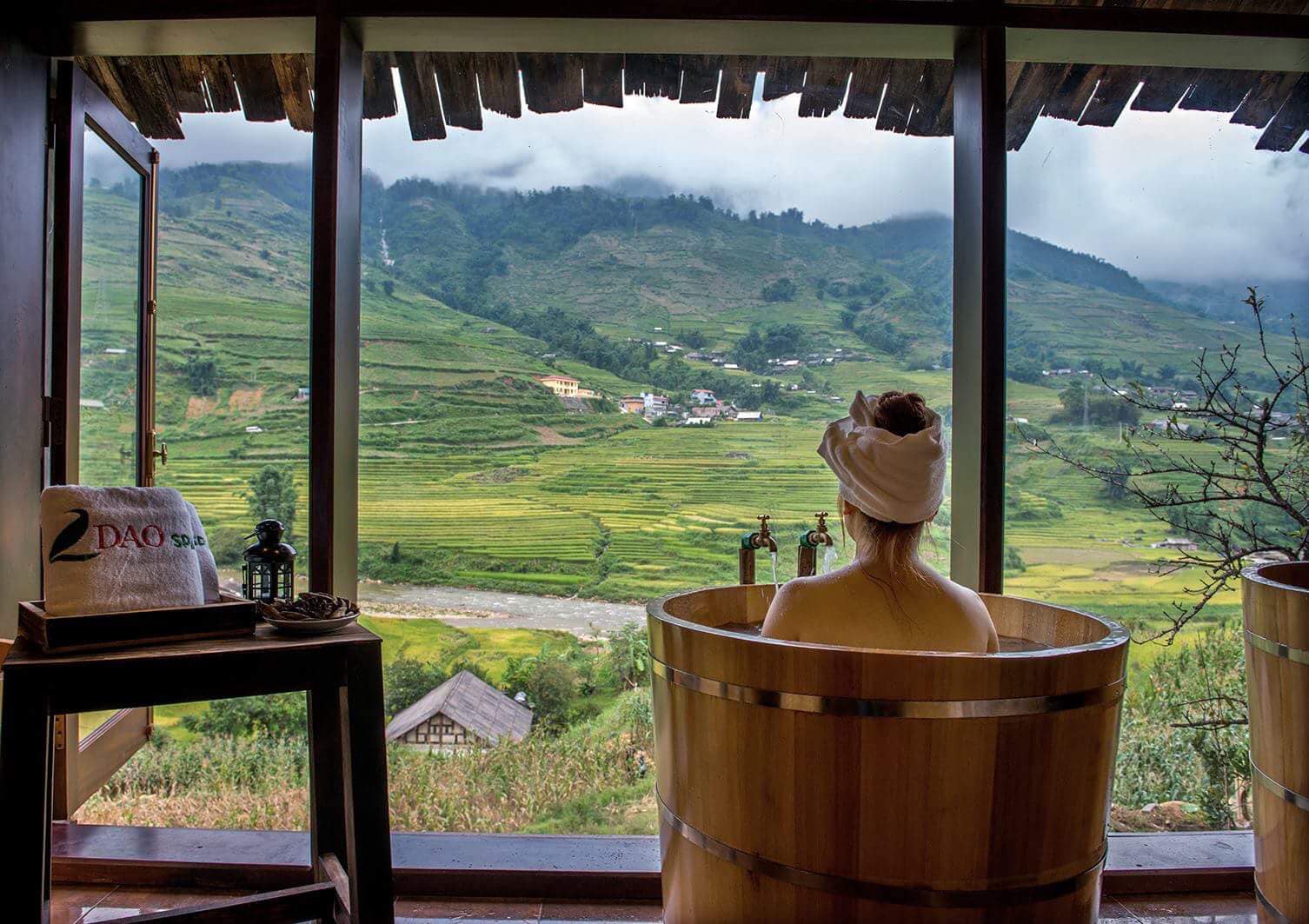
For a quieter, less commercial village, head to Ta Phin, about 11 kilometres north-east of town. It's home mainly to Red Dao families, with some Black Hmong, and it's known for two things.
- Embroidery: you can watch women spin, weave, dye with indigo and embroider in their homes, and buy straight from the person who made it.
- The herbal bath: a Red Dao tradition. You soak in a wooden barrel of steaming water boiled with more than 20 medicinal plants gathered from the mountains. It's the best thing you can do for your legs after a day's trekking. Around 40 households in the village offer it, from about 80,000 to 100,000 VND; spas in town charge more.
Keep the bath to about 30 minutes, and don't go in on an empty stomach or after drinking. Near the village are Ta Phin cave and the roofless stone ruins of a 1940s French monastery, both worth a short stop.
Bac Ha Sunday market
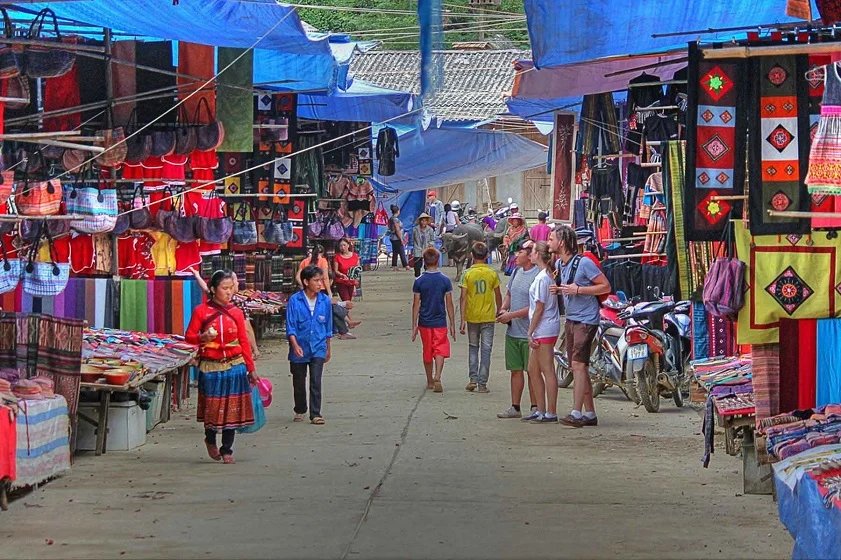
If you're in Sapa over a weekend, the Sunday market at Bac Ha is the most colourful day out in the region. People from the highland villages, many of them Flower Hmong in their brilliant embroidered clothes, come in from early morning to buy and sell. It runs on Sunday only, from dawn until about 2pm, and it's busiest from 8 to 9am.
- The livestock market: on a hill at the far end, where pigs, chickens, horses and buffalo change hands.
- Brocade and clothing: skirts, bags, hats and scarves, much of it made by the women selling it.
- Mountain food: thang co stew, men men (steamed corn), sour pho, five-colour sticky rice, black sticky rice cakes, and smoked buffalo meat to take home.
- Herbs and plants: dried medicinal roots, wild orchids and, in season, the famous Bac Ha plums.
Bac Ha is about 65 kilometres from Lao Cai city, and roughly two and a half to three hours by road from Sapa, so it's a long day. Leave Sapa by 6am. In Bac Ha town, the Hoang A Tuong palace, built for a local ruler in the early 20th century, is a short walk from the market.
Sapa town, the square and Saturday night
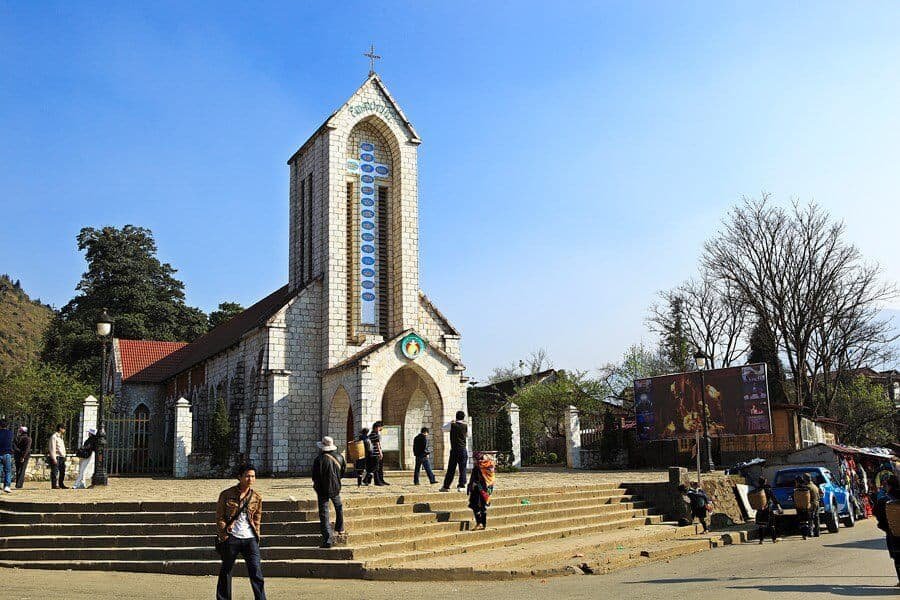
The heart of town is the grey Stone Church, built by the French in 1895 from stone bound with lime, sand and molasses. In front of it, the town square is where everyone gathers in the evening.
- Saturday night: the square is at its liveliest. Hmong and Dao families gather, there's music on khen pipes and flutes, dancing, and sometimes the traditional "love market" performances, where young people once met and courted through song. Visitors are often pulled into the circle dance.
- Street food: grills line the streets around the square every night, with skewers of pork and chicken, sticky rice cooked in bamboo, sweet potatoes and eggs.
- Sapa Lake: good for a slow walk before dinner.
The centre has grown fast and has a lot of new hotels, so it's busier than old photos suggest. For quiet, stay a little out of town with a view, or spend a night in a valley homestay.
Cafés with a view
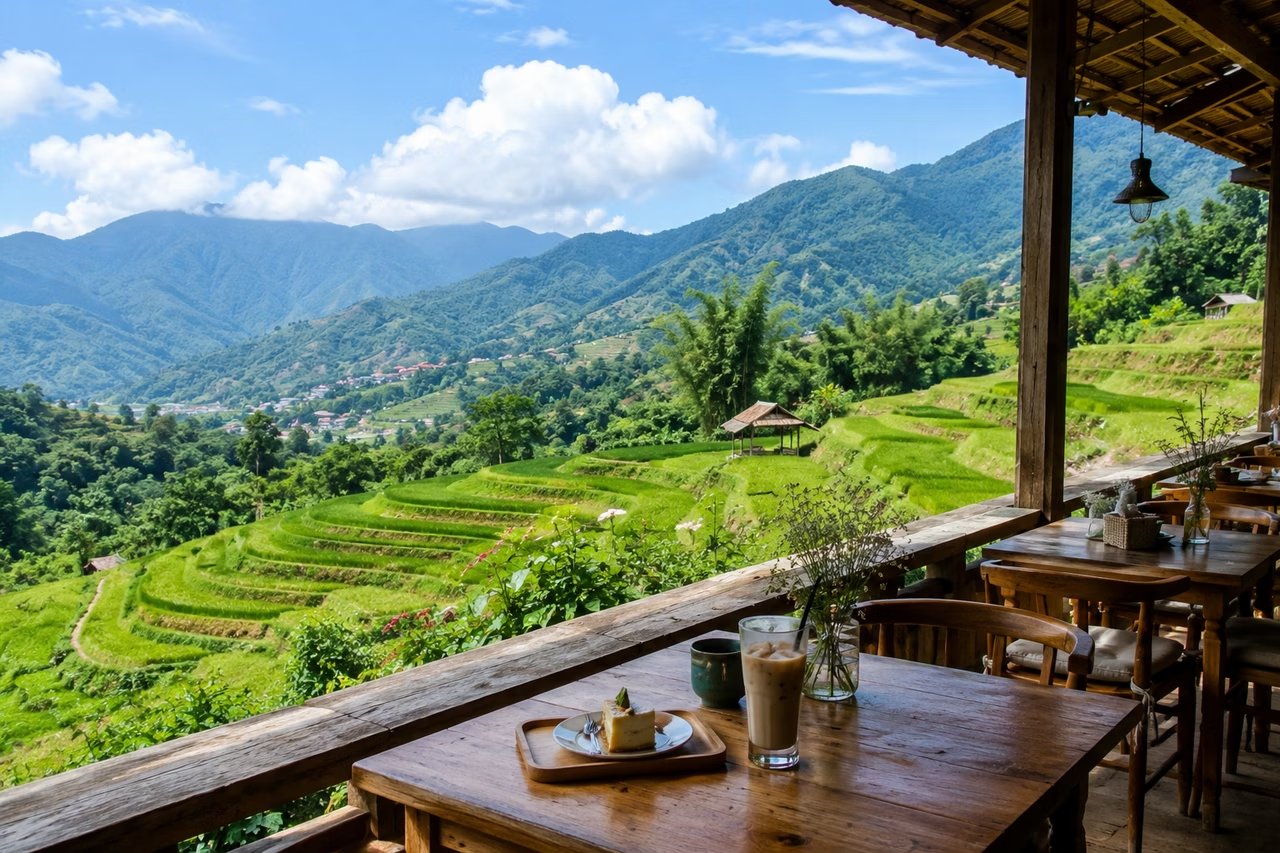
A hot drink with a valley view is one of Sapa's simple pleasures. Viettrekking Coffee, at the end of Hoang Lien street, is a favourite, because you can sit with a coffee and watch the red Muong Hoa train glide across the valley below. Plenty of cafés along the same ridge have terraces facing the terraces. Order an egg coffee or a hot ginger tea and give it an hour.
What to eat in Sapa
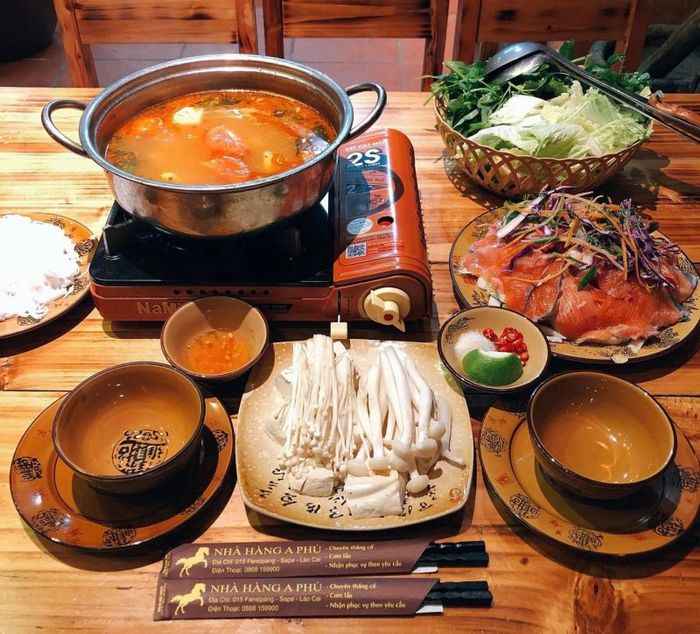
- Salmon and sturgeon hotpot: both fish are farmed in Sapa's cold streams and turn up in hotpots all over town.
- Hotpot and grill restaurants: a tabletop grill and a pot of broth, the classic cold-night dinner.
- Street skewers: pork, chicken, sticky rice in bamboo and grilled eggs around the square.
- Thang co: the Hmong stew, traditionally made with horse. Adventurous eaters only.
- Corn wine and apple wine: local spirits, often sold at markets. Strong.
How to get from Hanoi to Sapa
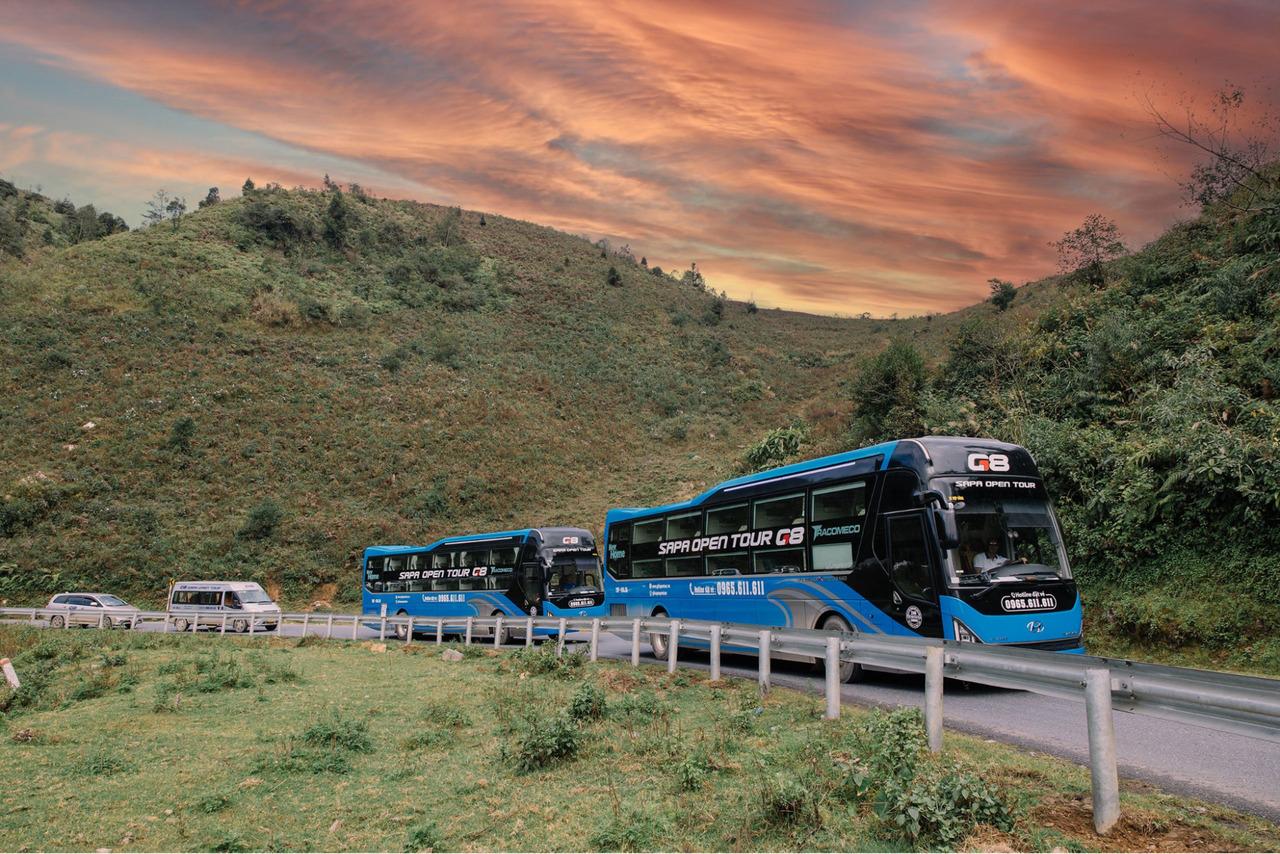
- Limousine van: the most popular choice. About 5.5 to 6 hours on the Hanoi to Lao Cai expressway, then the mountain road up. Around 320,000 to 450,000 VND, with pick-ups from Old Quarter hotels. Departures run through the day.
- Night train to Lao Cai: trains leave Hanoi around 9:30 to 10pm and arrive in Lao Cai around 5:30 to 6am, then it's about an hour by road up to Sapa. Private carriages cost roughly US$45 to US$65 a bunk.
- Private car: about 5 to 5.5 hours, with stops when you want them. The comfortable option for two to four people.
- Avoid: the overnight sleeper bus, which drops you in Sapa around 4 or 5am, hours before hotel check-in.
Sapa has no airport. Lao Cai province was enlarged in 2025 when it merged with Yen Bai, so you may see new province names on maps; the towns and roads are the same. For the bigger picture, see our northern Vietnam itinerary.
When to go, and the truth about snow
- March to May: mild, flowers, and often the clearest views. A very good time.
- June to August: rainy season. Green terraces and fewer visitors, but muddy trails and cloudy peaks.
- September to early October: harvest season, when the terraces turn gold. The most photographed time of year, and busy.
- Late October to November: dry and cool, with good visibility.
- December to February: cold. Town can drop close to freezing at night, and Fansipan below it. Peach and plum blossom appear from late January.
About snow: many people come to Sapa hoping to see it, so here's the honest picture. Snow is rare. What you're likely to see in a cold snap is frost and ice on Fansipan: on 25 December 2025 the summit hit 0°C and the trees and walkways were coated in ice, a week after a light snowfall. Some winters bring a few snowy days; many bring none. Snow can't be forecast weeks ahead, so if it's the main reason for your trip, book flexibly and watch the weather a few days out. Our Vietnam packing list covers what to bring for the cold north.
A three-day Sapa plan
- Day 1 (Friday or Saturday): leave Hanoi in the morning, arrive mid-afternoon. Coffee at a valley-view café, then the square and street grills in the evening. On a Saturday, stay for the music and dancing.
- Day 2: if it's clear, the Muong Hoa train and Fansipan first thing. Lunch in town, then Moana or Cat Cat in the afternoon.
- Day 3: the valley walk to Lao Chai and Ta Van, lunch with a family, and a car back via Ta Phin for a herbal bath.
- Day 4: O Quy Ho pass and Rong May in the morning, then back to Hanoi. If it's a Sunday, swap this for Bac Ha market and head back to Hanoi from there.
Keep one flexible slot. Mountain weather changes fast, and the best plan is to do Fansipan on the clearest morning you get.
Pickleball and Sapa
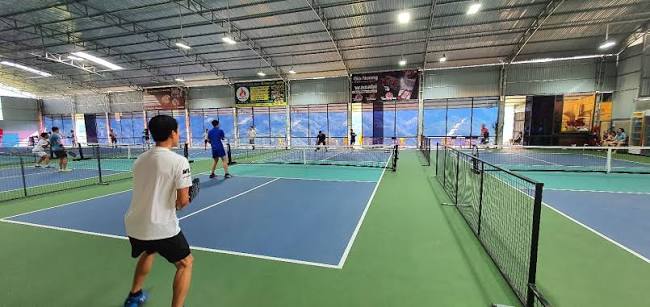
Let's be honest: Sapa isn't a pickleball destination. The game has spread across Lao Cai province, with local tournaments in 2026, but the courts are mostly in Lao Cai city, down in the valley, and there's little a visitor can drop into up in Sapa town. The mountains are for walking.
That works out nicely. Plan your games in Hanoi on either side of the trip: an evening session before you leave, and another when you get back, legs a little stiff from the valley. Our guide to pickleball in Hanoi lists clubs that welcome visitors, and our Hanoi and Sapa short trip is built exactly this way: a session on Hanoi's courts, then up into the mountains.
Sapa FAQ
How many days do you need in Sapa?
Two nights is the minimum to see Fansipan and do a valley walk. Three nights gives you a buffer for bad weather and time for Ta Phin or O Quy Ho pass, and a fourth day fits Bac Ha market if you're there on a Sunday.
How much is the Fansipan cable car?
About 800,000 VND return for adults on weekdays and 850,000 VND on Saturday mornings and holidays, plus around 150,000 to 200,000 VND for the Muong Hoa train and the Do Quyen funicular if you want to skip the 600 steps to the summit.
Does it snow in Sapa?
Rarely. Frost and ice on Fansipan are fairly common in cold snaps from December to February, but real snow falls only on a few days in some winters, and it can't be predicted far ahead.
Is Cat Cat village worth visiting?
Yes, for an easy, pretty walk with a waterfall, as long as you know it's a managed tourist site with a ticket. For real village life, walk the Muong Hoa valley to Lao Chai and Ta Van, or visit Ta Phin.
When is Bac Ha market?
Sunday only, from early morning until about 2pm. It's busiest from 8 to 9am, and it's two and a half to three hours by road from Sapa.
Can I play pickleball in Sapa?
Not easily. Courts in the province are mostly down in Lao Cai city. Play in Hanoi before and after your trip to the mountains instead.
The bottom line
The best things to do in Sapa are Fansipan on a clear morning, a walk through the Muong Hoa valley, a herbal bath in Ta Phin and the view from O Quy Ho pass, with Moana, the glass bridge and Cat Cat for fun photos in between. Time it for a Saturday night on the square or a Sunday at Bac Ha, give it three nights, go with a local guide for the valley, and treat snow as a lucky bonus. If you'd like it arranged, our Hanoi and Sapa short trip combines the mountains with games in Hanoi, or we can plan a private trip around your own dates.
Find a game in Vietnam
Join Pickleball in Vietnam, our free Facebook group. Ask about courts, find a morning game and swap tips with players who live here.
Join the group