Packing for Vietnam in the dry season is a puzzle, because you're packing for three countries at once. In January you can need a warm jacket in Hanoi, a rain jacket in Hoi An and nothing but linen in Saigon, all in the same week. Add strict rules on power banks, a national ban on vapes and a 7-kilo cabin limit on domestic flights, and it pays to think before you zip the case. This is our Vietnam packing list for December to April, written for active travellers who'd like to bring a paddle too.
The short version
Pack in layers: a warm layer and long trousers for the north, a light rain jacket for the centre, breathable clothes for the south.
Don't forget: a universal adapter, your e-visa printout or exemption details, travel insurance, sunscreen and insect repellent.
Leave at home: vapes and e-cigarettes (illegal since January 2025), drones, and too much cash.
Flying in Vietnam: power banks go in your cabin bag only, two at most, and you can't use them on board.
For the courts: non-marking shoes, outdoor balls and a light layer for cold Hanoi mornings. Paddles can be rented almost everywhere.
The weather you're packing for
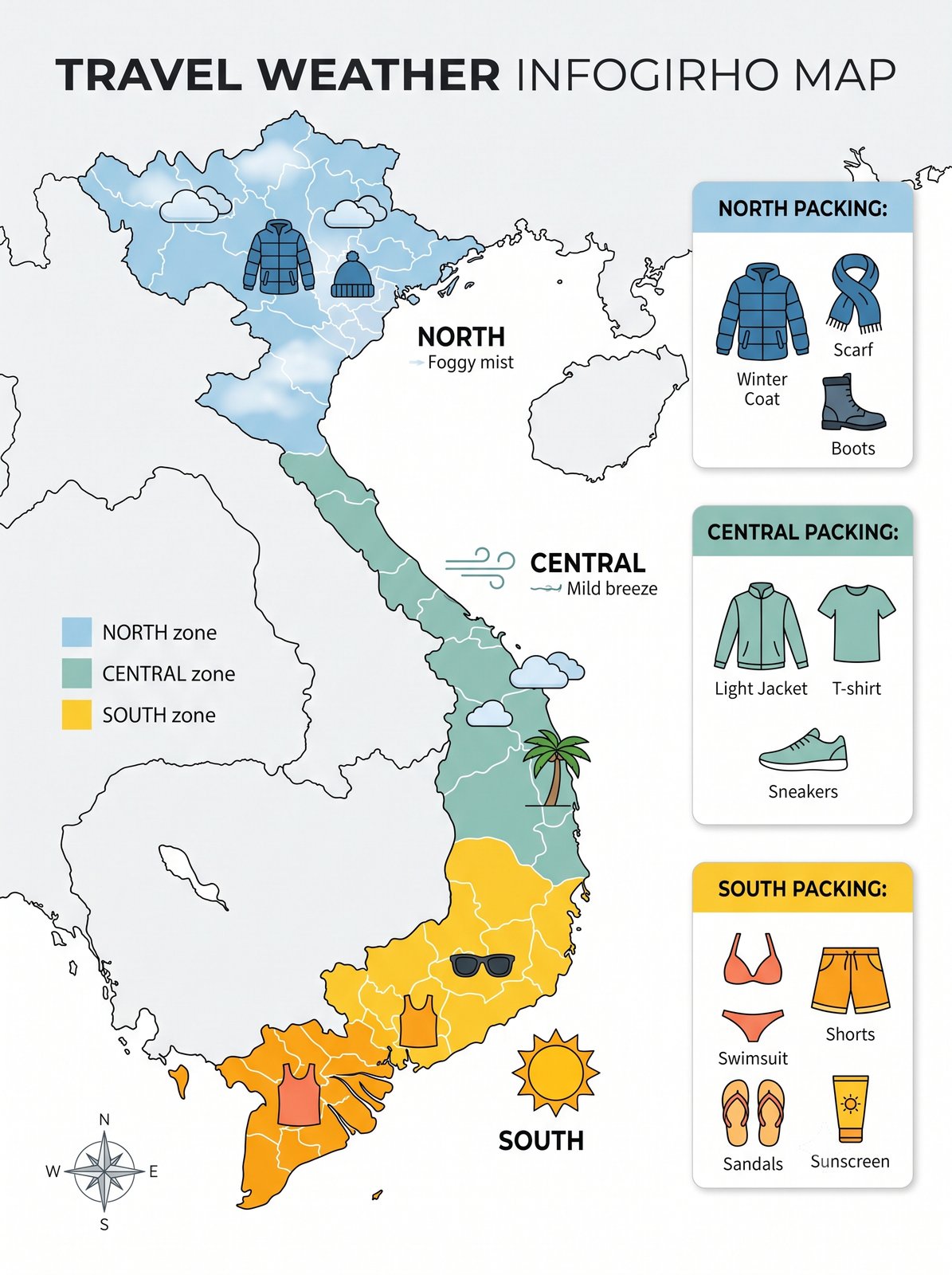
- Hanoi, Ninh Binh and Ha Long: days around 17 to 21°C, nights often 14 to 16°C and colder during cold snaps in January and February. Often grey, with fine drizzle. It warms up from mid-April.
- Sapa and the far north: the coldest place in the country, with days around 14°C, nights near freezing in December and January, and occasional frost.
- Hue, Hoi An and Da Nang: December and January can still be wet, around 20 to 25°C. February and March are drier and pleasant; April reaches the low 30s.
- Saigon, the Mekong and Phu Quoc: hot and dry, 30 to 34°C. Humidity builds through April.
Our best time to visit Vietnam guide has the full month-by-month picture.
Documents and money
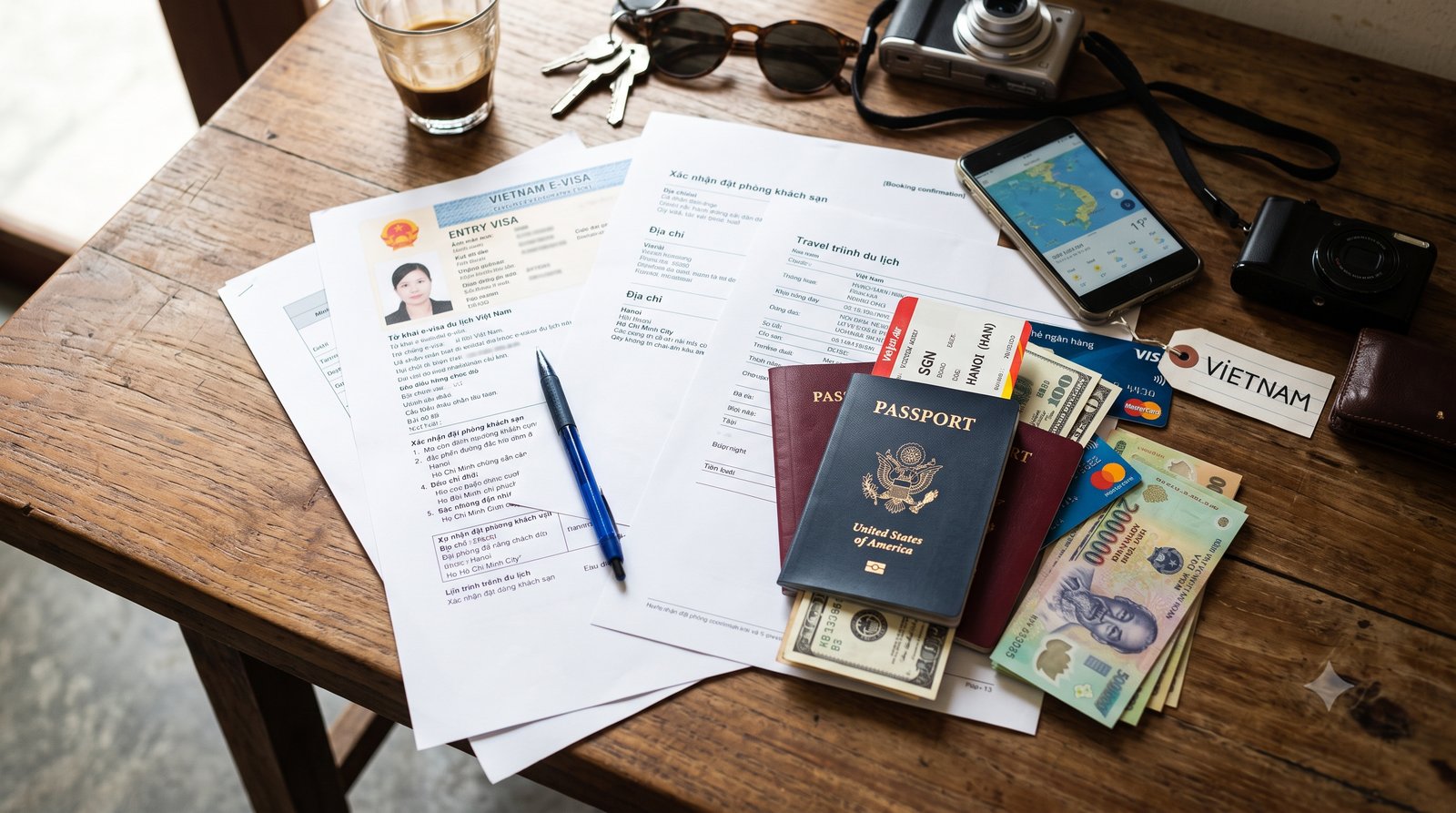
- Passport with at least six months' validity and a couple of blank pages.
- Your visa: many nationalities need an e-visa, which costs US$25 for single entry or US$50 for multiple entry and is valid for up to 90 days. Apply only through the official portal at evisa.gov.vn; many lookalike sites charge more. Some passports, including British, German and French, are visa-exempt for 45 days. Rules change, so check before you book. Our e-visa guide walks you through it.
- Travel insurance that covers medical evacuation and, if you play, sports injuries. Check the age band too.
- Cards and some cash: cards work in hotels, bigger restaurants and shops, sometimes with a 2 to 4 percent fee. Markets, street food and taxis are cash. ATMs are everywhere, though most charge a fee per withdrawal. A few clean US dollar notes make a handy backup.
- Copies: photos of your passport, visa and insurance on your phone and in your email.
More on cash, cards and tipping in our money in Vietnam guide.
Clothes for the north
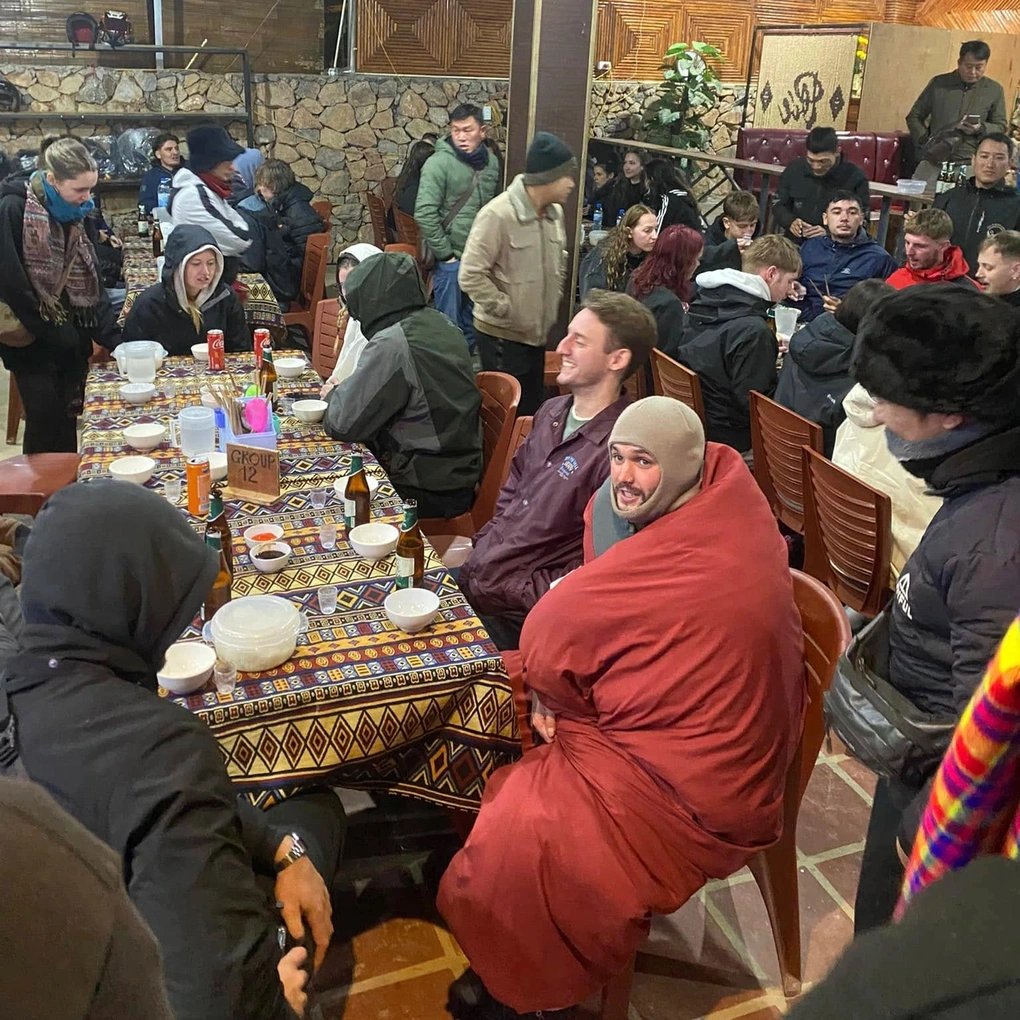
Visitors underpack for Hanoi more than anywhere. Houses and many cafés aren't heated, so 14°C on a damp evening feels colder than it sounds.
- A light down or fleece jacket
- Two or three long-sleeved tops and a jumper
- Long trousers or jeans
- Closed shoes and warm socks
- A scarf, which doubles as a temple cover-up
- For Sapa: thermals, a hat, gloves and waterproof walking shoes
- For a Ha Long cruise: a warm layer for the deck in the evening
Clothes for the centre and the south
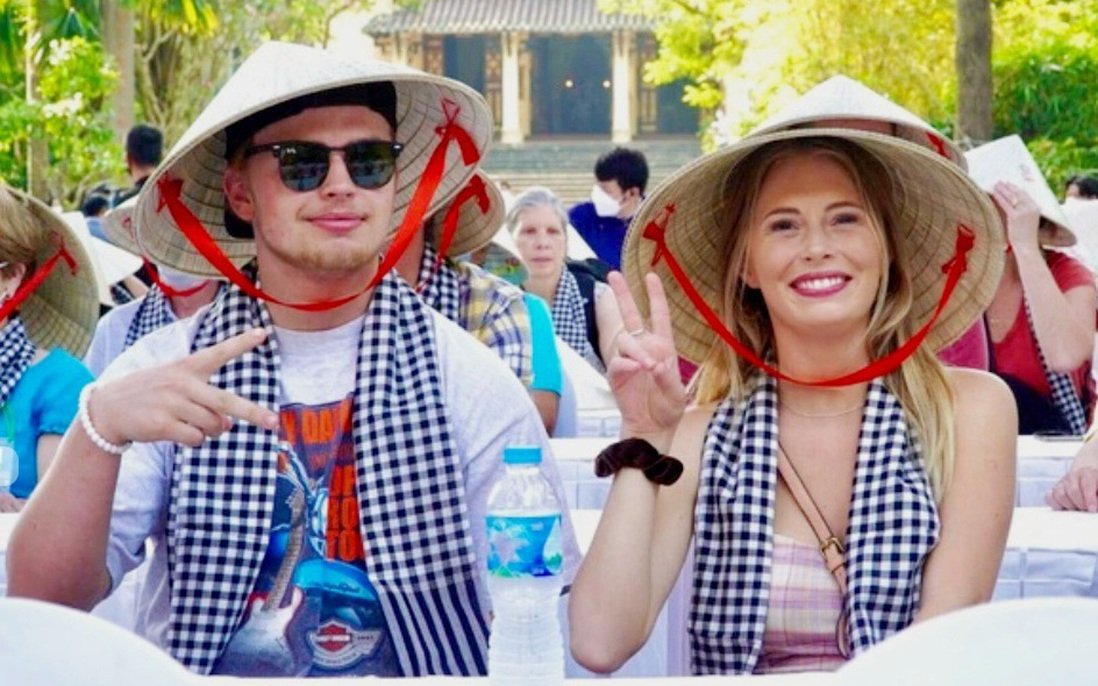
- Light, breathable tops in cotton, linen or quick-dry fabric
- Shorts and light trousers or a long skirt
- A packable rain jacket for Hoi An, Hue and Da Nang in December and January
- A wide-brimmed hat and good sunglasses
- Swimwear, plus a rash vest or long-sleeved swim top for boat days
- Comfortable walking sandals and a pair of flip-flops
- One smarter outfit for a nice dinner or a rooftop bar
Laundry is cheap and quick in every town, so plan for a week of clothes, not your whole trip.
What to wear at temples and the Mausoleum
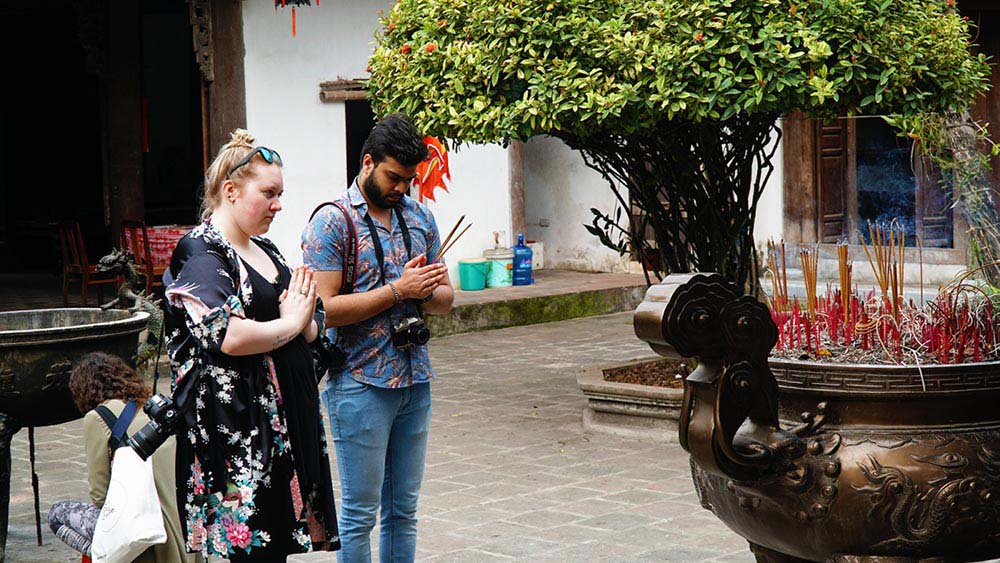
For pagodas, temples and palaces, cover your shoulders and knees. A scarf or a light pair of trousers in your day bag solves it. The Ho Chi Minh Mausoleum in Hanoi is stricter: no shorts, short skirts, sleeveless or see-through tops, and big bags must be left at the entrance. It's open mornings only and closed on Mondays and Fridays, and from November to March it opens at 8am. Our Vietnam etiquette guide covers the rest.
Health and toiletries
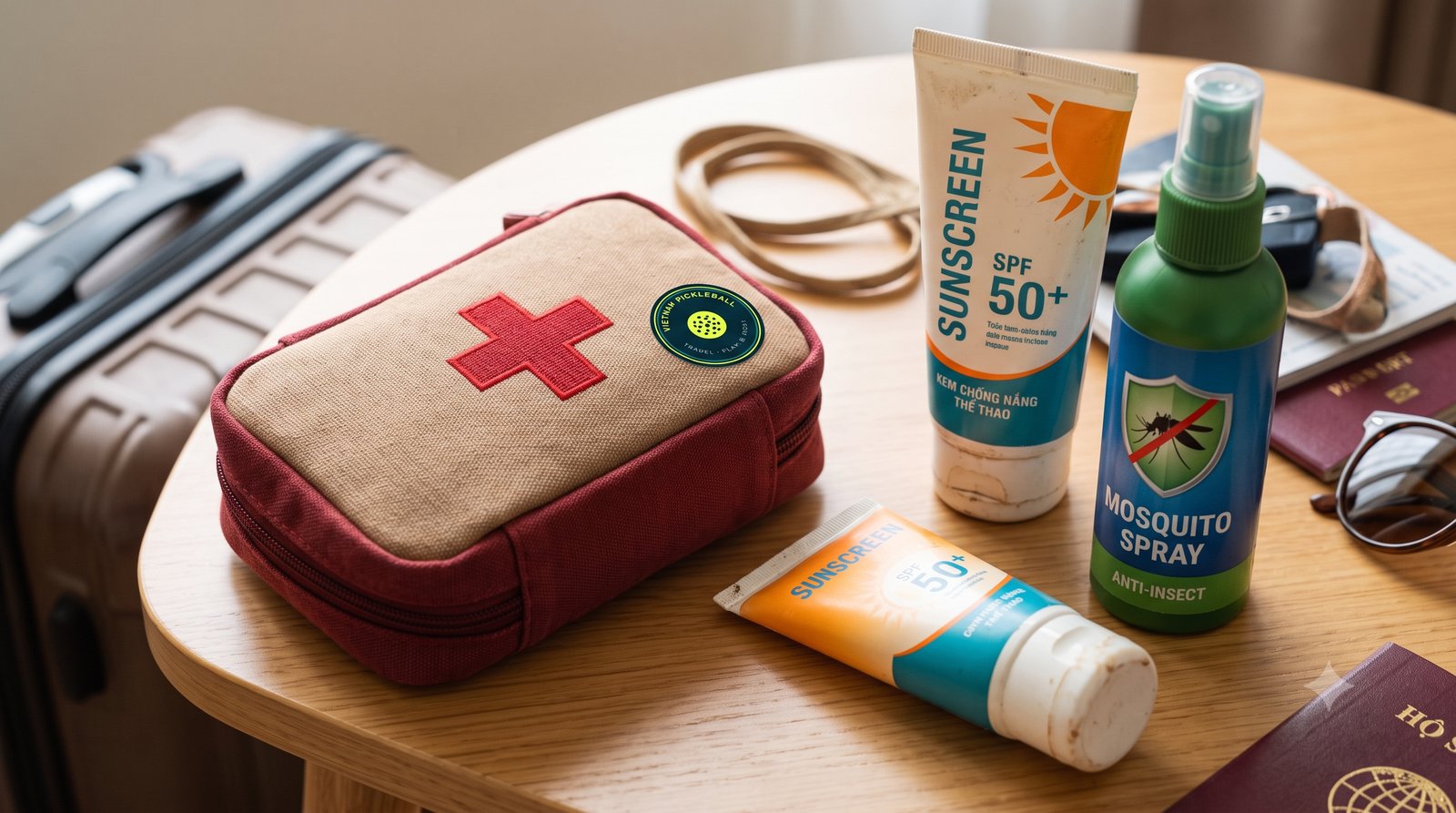
- Sunscreen: high SPF. It's sold everywhere, but imported brands cost more.
- Insect repellent with DEET or picaridin, especially for the south and the Mekong Delta. Mosquito-borne illnesses such as dengue occur all year.
- Your prescription medicines, in their original packaging, in your hand luggage, with a copy of the prescription or a doctor's letter. Some medicines, including those containing codeine and strong painkillers or sleeping pills, are controlled in Vietnam, so carry the paperwork.
- A small first-aid kit: plasters, rehydration salts, stomach tablets and blister pads.
- A refillable water bottle: tap water isn't safe to drink, but many hotels offer filtered refills.
Pharmacies (nhà thuốc) are on almost every street in the cities, and many staff speak some English. Our is Vietnam safe guide covers food and water too.
Electronics: plugs, power banks and eSIMs
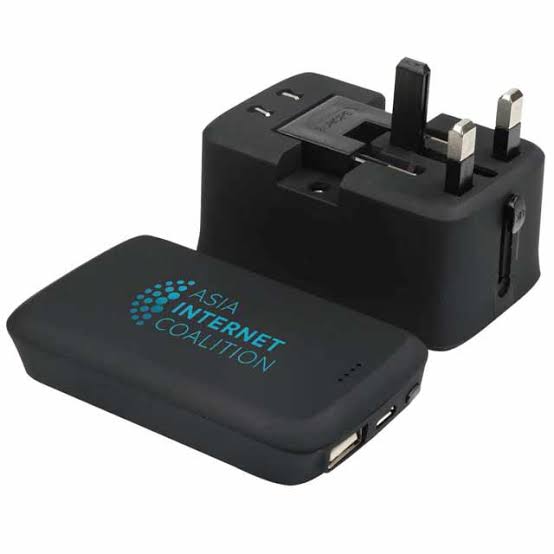
- Plugs: Vietnam runs on 220V. Sockets take flat two-pin (type A) and round two-pin (type C) plugs, and many accept both. Bring a universal adapter if you're from the UK, Europe or Australia. Most phone and laptop chargers handle 100 to 240V; check older appliances from the US.
- Power banks on domestic flights: since July 2026, they must travel in your cabin bag, never in checked luggage, with a maximum of two per person, each up to 100Wh (larger ones need airline approval). You can't use or charge them on board, and the terminals should be covered or the bank kept in its box or a pouch.
- An eSIM or local SIM: get one with a Vietnamese phone number if you can. Grab, Zalo and many bookings work better with a local number. Airport SIM desks are easy.
- Leave the drone at home. Flying one legally needs a permit for every flight, and drones are often confiscated on arrival without one.
Luggage: bags and baggage limits
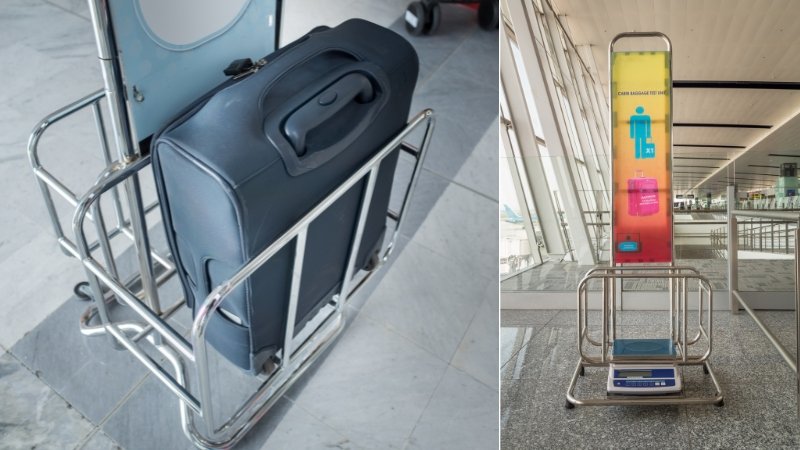
Most trips include two or three domestic flights, and the cabin limits catch people out:
- Vietnam Airlines: 12kg cabin bag on long-haul routes and their connecting domestic flights; 10kg on most other routes; 7kg on smaller ATR planes. A free checked bag of 23kg in economy.
- VietJet: 7kg in total in the cabin. Checked bags are bought separately by weight.
- Bamboo Airways: 7kg in economy cabin.
A medium suitcase plus a small day bag works better than a huge case: you'll lift it in and out of boats, cars and old hotel lifts. A light daypack is essential for day trips.
What not to pack
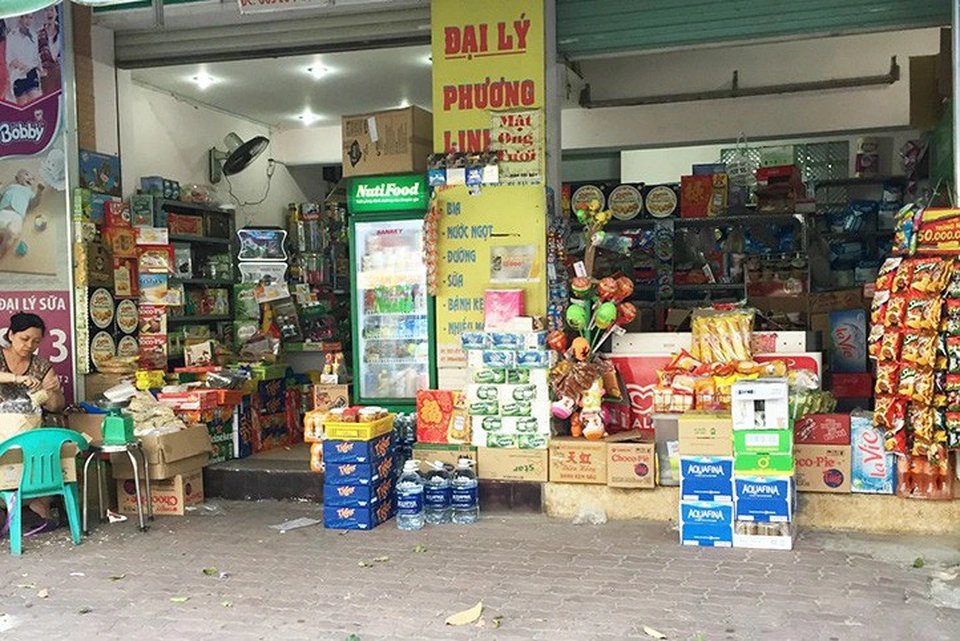
- Vapes and e-cigarettes: banned in Vietnam since 1 January 2025, including for personal use. Since the end of 2025, users face fines of 3 to 5 million VND and the device is destroyed. Don't bring one.
- A drone, as above.
- Lots of cash and expensive jewellery.
- A hairdryer: hotels have them.
- Things you can buy cheaply: rain ponchos, umbrellas, flip-flops, basic toiletries, light T-shirts and a conical hat. And if you're going to Hoi An, leave room for tailoring.
The pickleball kit
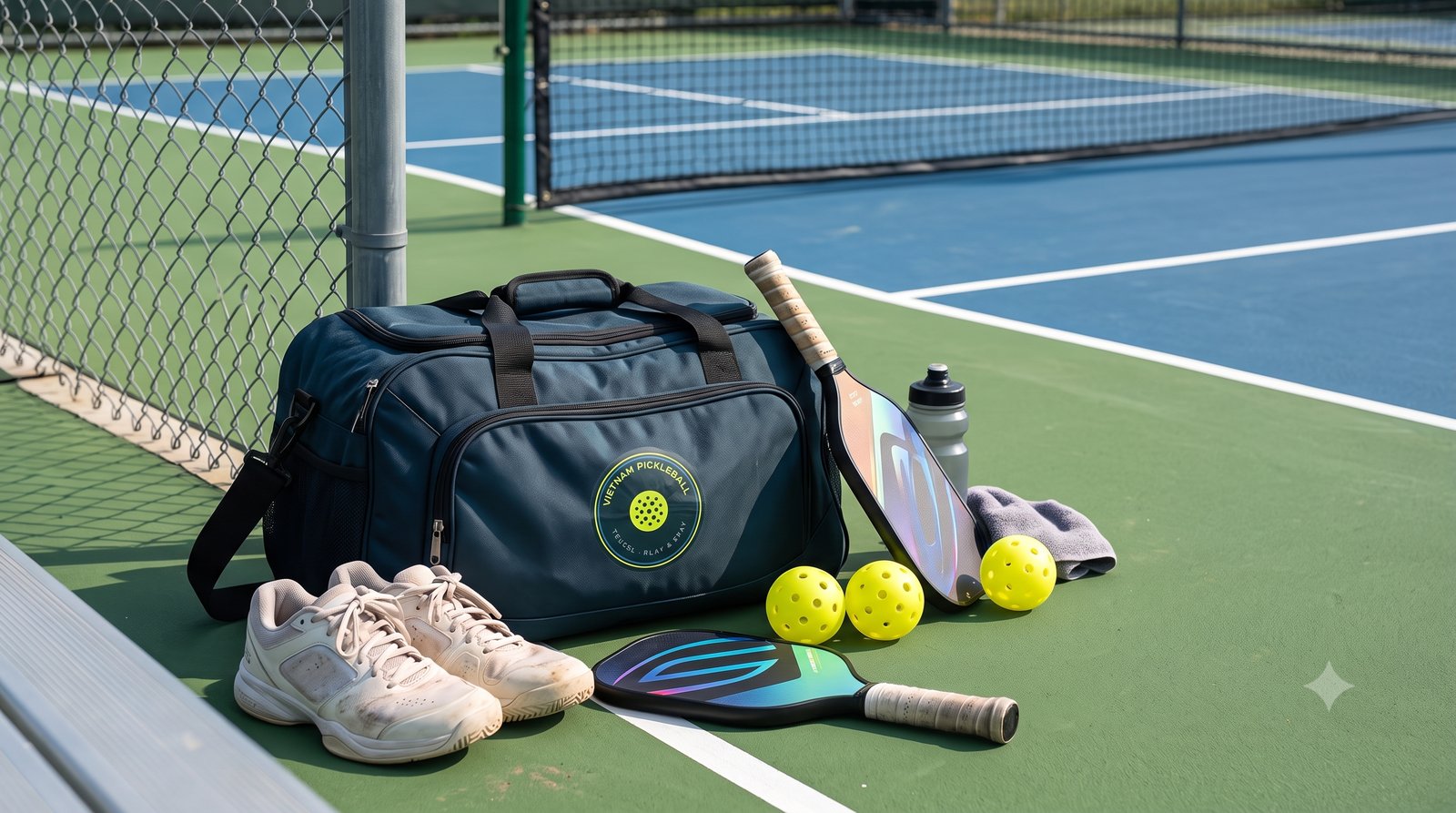
- Your paddle: the US TSA allows paddles in hand luggage, but Vietnamese airlines don't publish a specific rule, and a paddle counts towards your cabin weight. Pack it inside your carry-on in a slim cover, or in your checked bag. Most clubs also rent paddles, so you can travel without one.
- Court shoes: non-marking, and not running shoes. They're the one thing that's hard to replace locally in your size.
- Outdoor balls: bring a few of your favourite brand. They crack faster on cold Hanoi mornings, so pack spares. Local shops sell balls, but choice is narrower.
- For the heat: moisture-wicking shirts, a visor or cap, sports sunglasses, a small towel and electrolyte sachets. Oresol rehydration salts are sold in every pharmacy.
- For northern mornings: a light long-sleeved layer you can peel off after the first game.
Our full guide to what to wear for pickleball in Vietnam goes deeper, and playing in the heat explains why 6am is the best time to play.
Pack light. We'll handle the rest.
Every trip we plan is private: just you, your partner or a few friends, on your own dates. We book the courts, arrange paddles if you'd rather not fly with one, and plan the route around the weather.
Plan a private tripA printable checklist
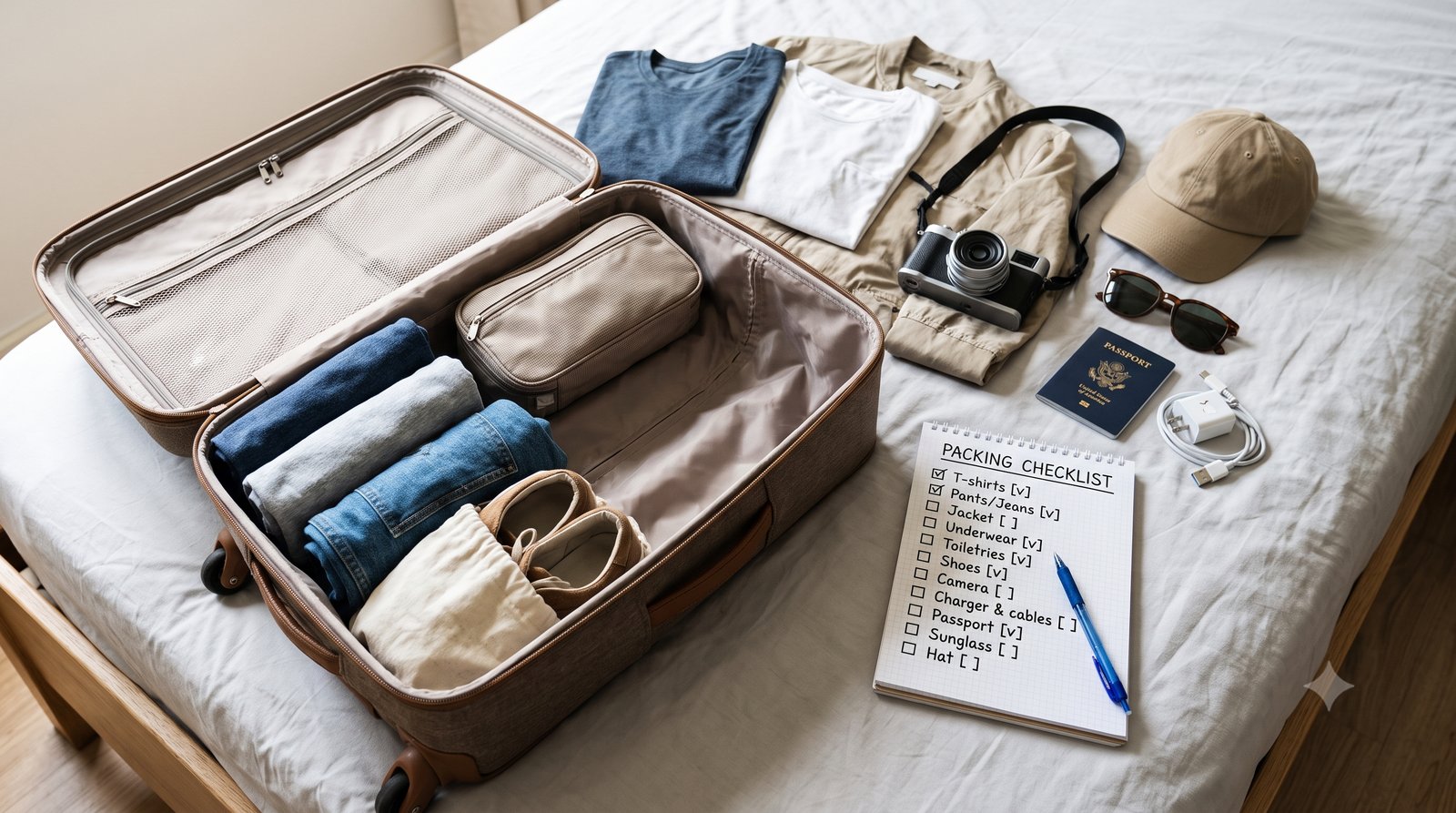
Documents: passport, visa or exemption details, insurance, cards, some cash, copies on your phone.
Clothes: warm jacket and long layers (north), rain jacket (centre), breathable tops and shorts (south), swimwear, a scarf or cover-up, one smart outfit.
Shoes: walking shoes, sandals, flip-flops, court shoes.
Health: medicines with paperwork, sunscreen, repellent, first-aid kit, water bottle.
Tech: universal adapter, phone and charger, up to two power banks in the cabin bag, eSIM.
Pickleball: paddle (optional), outdoor balls, towel, cap, electrolytes, a light layer.
Vietnam packing FAQ
What should I pack for Vietnam in December or January?
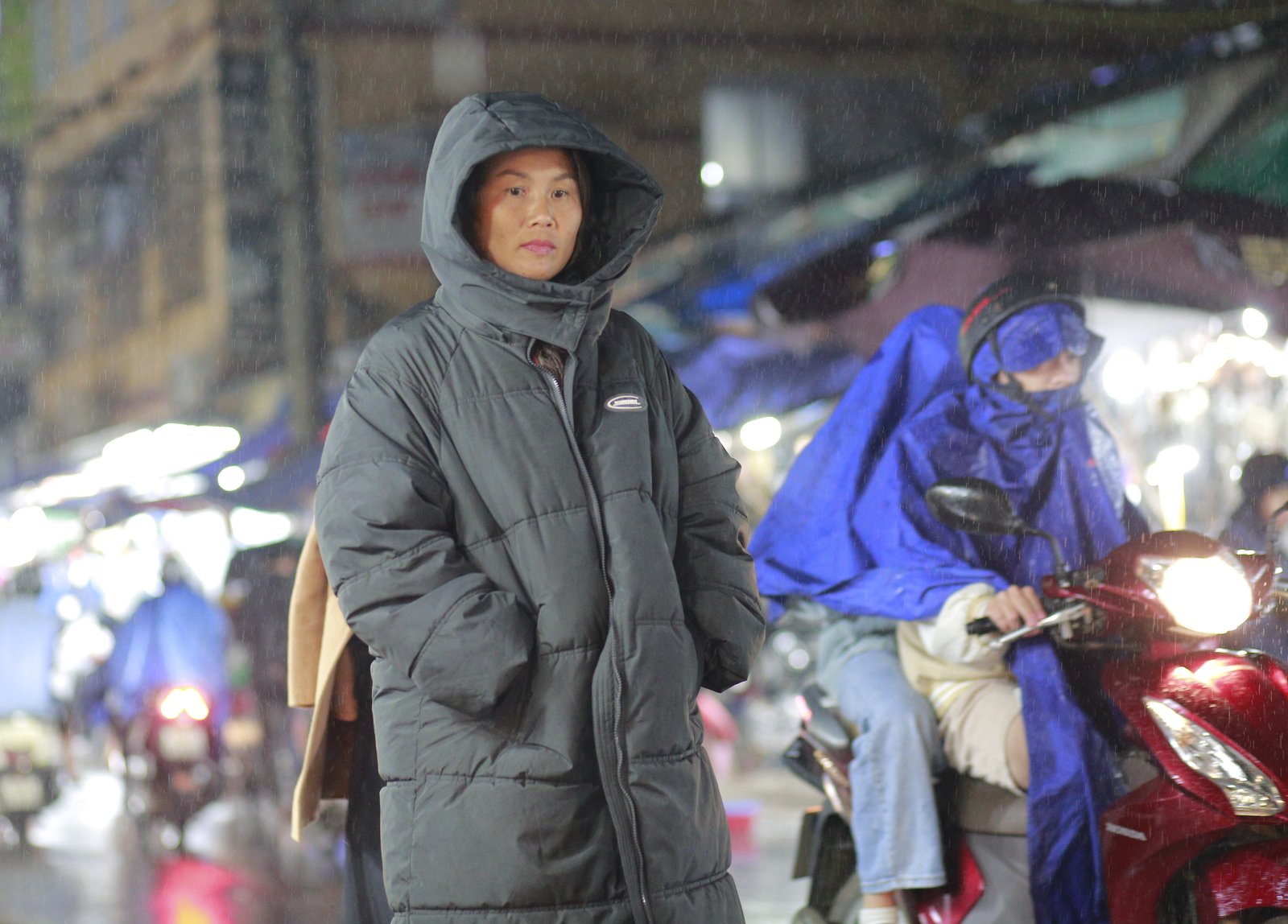
Layers. A warm jacket and long trousers for Hanoi and the north, a rain jacket for the central coast, and light, breathable clothes for Saigon and the islands.
Do I need a jacket in Vietnam?
For the north from December to February, yes. Hanoi can drop to around 10 to 14°C at night, and Sapa gets close to freezing.
What plug adapter do I need for Vietnam?
Vietnam uses 220V with flat two-pin and round two-pin sockets. A universal adapter covers both.
Can I bring a vape to Vietnam?
No. E-cigarettes and heated tobacco have been banned since 1 January 2025, and users can be fined 3 to 5 million VND.
Can I take a power bank on domestic flights in Vietnam?
Yes, in your cabin bag only, two at most, up to 100Wh each, and you can't use or charge them during the flight.
Should I bring my pickleball paddle?
If you love your paddle, bring it in your carry-on or checked bag. Otherwise, most clubs rent paddles, and we can arrange one for you.
The bottom line
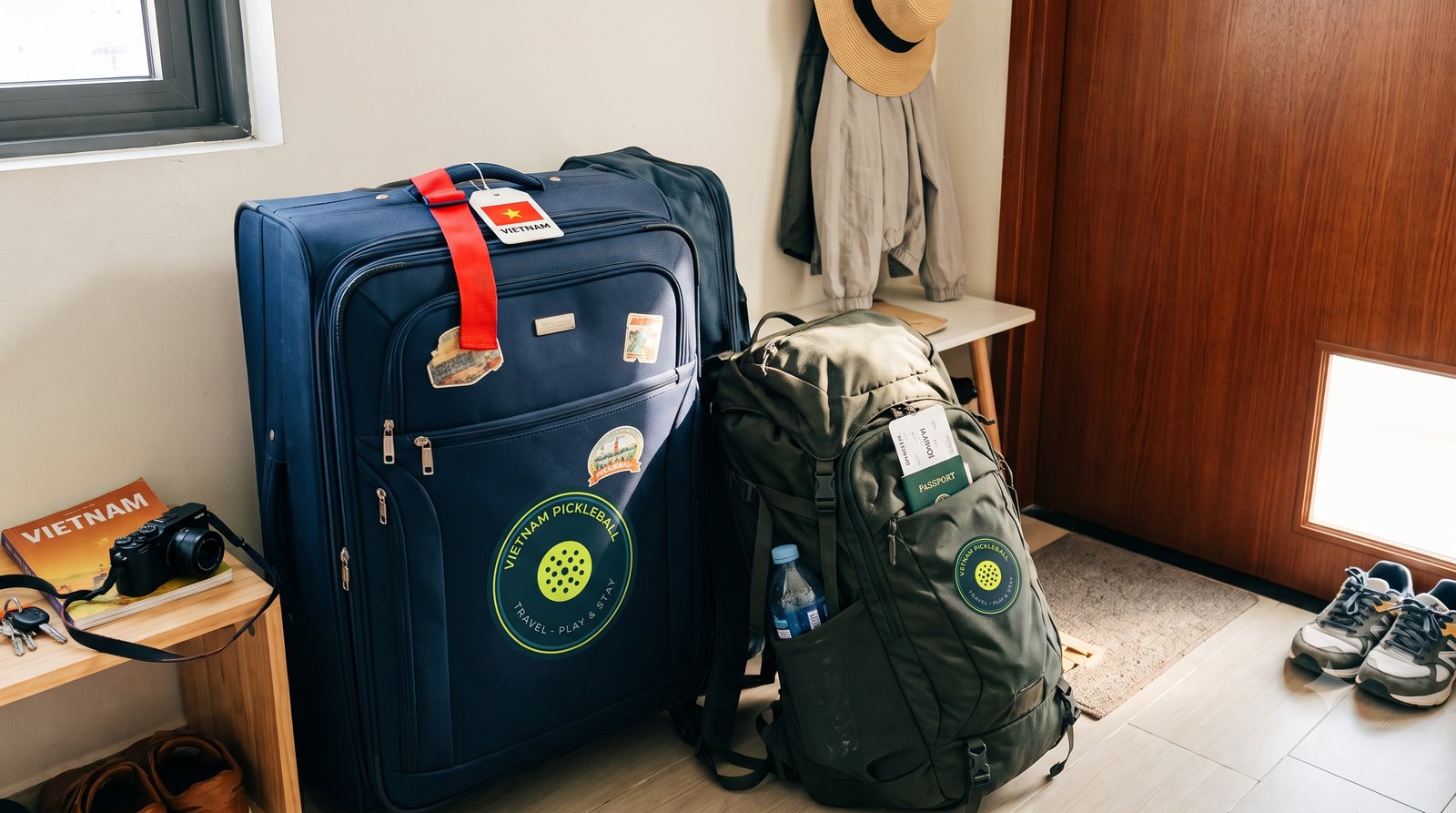
The best Vietnam packing list for December to April is built on layers: warm for the north, waterproof for the centre, light for the south. Carry your medicines and paperwork, keep power banks in your cabin bag, leave vapes and drones at home, and bring good court shoes. Everything else you can buy or rent when you arrive. When you're ready, we can plan it as a private trip around the weather and your game.
Find a game in Vietnam
Join Pickleball in Vietnam, our free Facebook group. Ask about courts, find a morning game and swap tips with players who live here.
Join the group