My father is a vegetarian. At home he keeps it very simple: tofu, boiled greens dipped in vegetarian fish sauce, a handful of peanuts. The first time I took him to a proper vegetarian restaurant in Hanoi, he put his chopsticks down and said, "If I could eat like this every day, I'd be vegetarian for the rest of my life." That's the thing most visitors don't know. Vietnam has one of the biggest vegetarian food cultures in Asia, rooted in Buddhism, and it's spectacular. Gluten-free and nut-free take a little more care. Here's how to eat well with all three, the Vietnamese words you need, and the restaurants I actually take my parents and travellers to.
The short answer
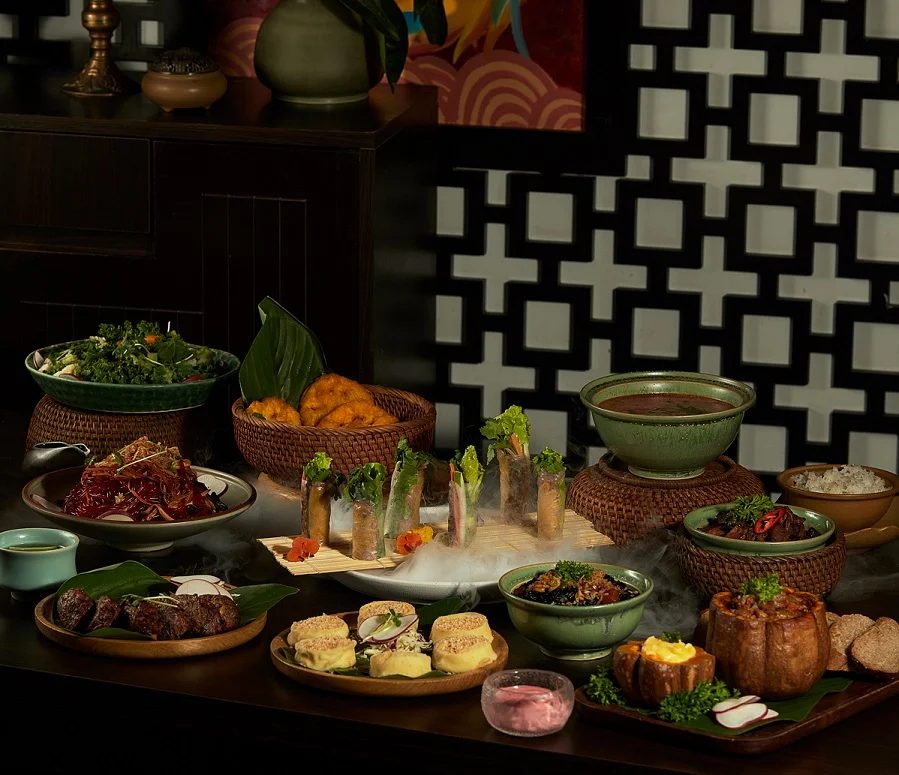
Vegetarian is easy in Vietnam. Look for the word chay, which means vegetarian food in the Buddhist tradition. Every city has dedicated quán chay (vegetarian restaurants) where nothing on the menu contains meat or fish sauce.
Gluten-free is mostly easy, because noodles, rice paper and cakes are usually made from rice. Watch soy sauce, bread, wheat noodles and mock meat.
Nut-free needs the most care. Crushed peanuts go on salads, noodles and dipping sauces. Say không lạc in the north or không đậu phộng in the south, and carry a printed card if your allergy is severe.
Is it easy to be vegetarian in Vietnam?
Yes, easier than most travellers expect. Millions of Vietnamese Buddhists eat chay on the 1st and 15th of every lunar month, and many, like my father, eat it every day. That's why there's a vegetarian restaurant in every neighbourhood, from 60,000 dong buffets full of office workers to fine dining with an eleven-course menu.
A few things to know:
- Chay is stricter than "vegetarian" on a Western menu. A chay kitchen uses no meat, no fish and no fish sauce. Most dishes are vegan by default, because eggs and dairy are rare. Some strict Buddhist kitchens also skip garlic and onion.
- Outside a chay restaurant, fish sauce is everywhere. A plate of morning glory at a normal restaurant is usually cooked with fish sauce or oyster sauce. Ask, or stick to chay places.
- Watch the seasoning powder. Many street kitchens use hạt nêm, a stock powder that often contains chicken or pork extract.
- Lunar 1st and 15th get busy. Popular vegetarian places fill up on those days. Book if you can.
The Vietnamese words you need
Save this on your phone or print it. The north and south use different words for peanuts, MSG and soy sauce, so I've given both.
| English | Vietnamese |
|---|---|
| I'm vegetarian | Tôi ăn chay |
| No meat, no fish | Không thịt, không cá |
| No fish sauce | Không nước mắm |
| No egg | Không trứng |
| No MSG | Không mì chính (north) · Không bột ngọt (south) |
| No peanuts | Không lạc (north) · Không đậu phộng (south) |
| I'm allergic to peanuts | Tôi bị dị ứng lạc (north) · Tôi bị dị ứng đậu phộng (south) |
| No cashews or any nuts | Không hạt điều, không các loại hạt |
| I can't eat wheat flour | Tôi không ăn được bột mì |
| No soy sauce | Không xì dầu (north) · Không nước tương (south) |
| Is it fried in peanut oil? | Có chiên bằng dầu lạc không? |
Can you eat gluten-free in Vietnam?
Yes, more easily than in most countries, because so much of Vietnamese food is built on rice. Pho noodles, bún, rice paper, sticky rice and most cakes are rice-based. The traps are the sauces and the Western-style dishes.
| Usually safe | Watch out |
|---|---|
| Phở (rice noodles) | Bánh mì (wheat bread) |
| Bún, rice vermicelli dishes | Mì, the yellow egg-and-wheat noodles |
| Gỏi cuốn, fresh rice paper rolls | Soy sauce and hoisin, which contain wheat |
| Bánh cuốn, steamed rice rolls | Mock meat, which is often made from wheat gluten |
| Xôi, sticky rice | Fried dishes with a wheat batter |
| Plain rice with grilled or steamed dishes | Marinades and braises made with soy sauce |
One trap catches vegetarian and gluten-free travellers at the same time: mock meat. The "chicken" and "pork" in many chay restaurants is made from wheat gluten. Mushroom and tofu dishes are the safer choice. If you have coeliac disease, cross-contamination in shared woks and fryers is real, so stick to steamed and fresh dishes and explain clearly.
Is Vietnam safe for a peanut or nut allergy?
It can be, but this is the one that needs a plan. Peanuts are used as a topping more than a hidden ingredient, which helps, because you can ask for them to be left off. But they turn up often:
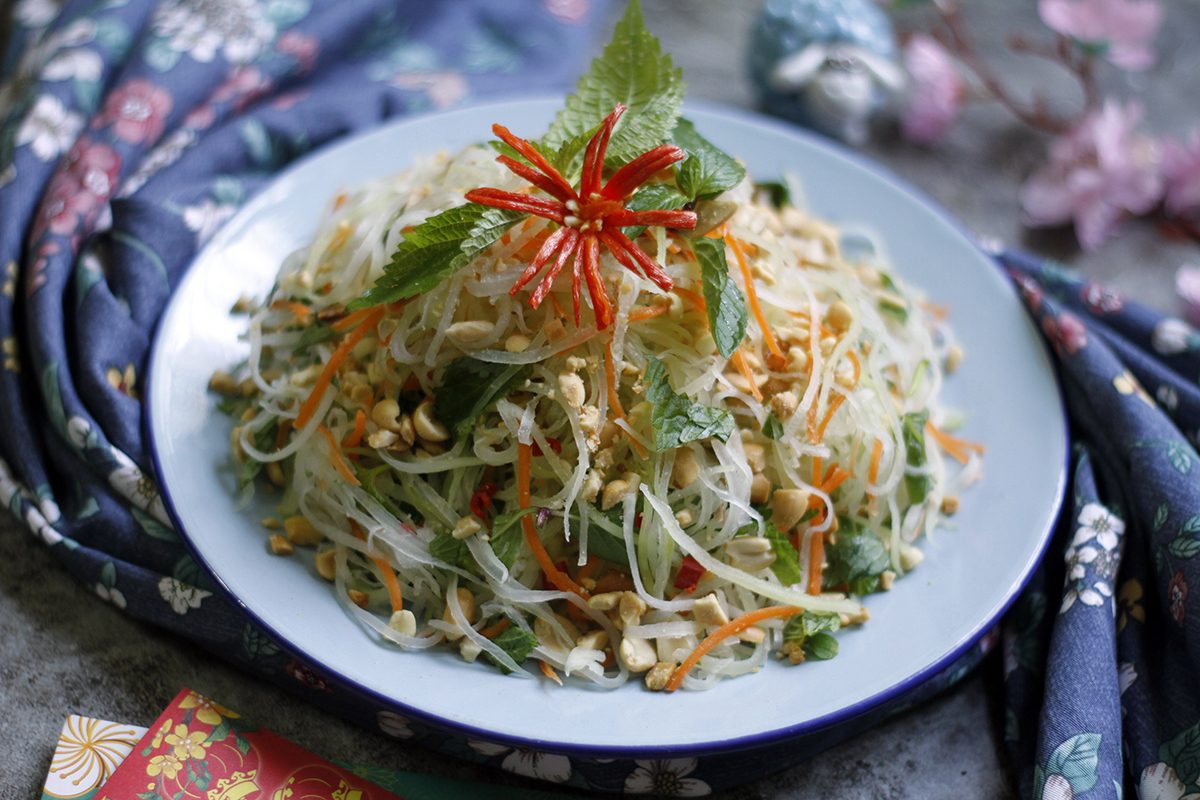
- Salads (nộm in the north, gỏi in the south) are almost always finished with crushed peanuts.
- Noodle bowls like bún bò Nam Bộ and mì Quảng come topped with peanuts.
- Dipping sauce for fresh spring rolls in the south is often a peanut and hoisin sauce.
- Desserts: sticky rice with peanuts, sweet soups (chè) and peanut candy.
- Cooking oil: some kitchens fry in peanut oil. Ask.
For a severe allergy, bring two epinephrine auto-injectors, a printed allergy card in Vietnamese, and eat at sit-down restaurants rather than street stalls, where staff have more time to listen and fewer shared tools. Tell your hotel too. For hospitals and pharmacies, see my guide to healthcare in Vietnam.
What about MSG?
MSG is used a lot in Vietnam, in soups, stir-fries and dipping sauces. If it bothers you, say không mì chính in the north or không bột ngọt in the south. Most kitchens will leave it out of your dish, though a pot of broth made in the morning will already have it. Vegetarian restaurants and the more expensive places tend to use less.
Where to eat vegetarian in Hanoi: places I take my parents and travellers
These are restaurants I've eaten at myself, many times, with my parents and with the vegetarian travellers I guide. All are central and easy to reach from the Old Quarter.
Chay Food, Old Quarter
66 Nguyễn Hữu Huân, Hoàn Kiếm. I've eaten here more times than I can count. A relaxed, mid-priced place in the Old Quarter with a menu that runs from bún riêu and pho rolls to curry and banh mi. Grab a seat on the upstairs balcony and watch the street go by.
Sadhu, near Hoàn Kiếm Lake
87 Lý Thường Kiệt, Cửa Nam. My favourite for a big meal. You pay one buffet price, then order as many dishes as you like from the menu, cooked fresh and brought to your table. Around 400,000 dong a person. My tip: order a whole round of dishes at the start, so you can eat and talk instead of waving at the waiter every ten minutes.
Ưu Đàm Chay, near the French Quarter
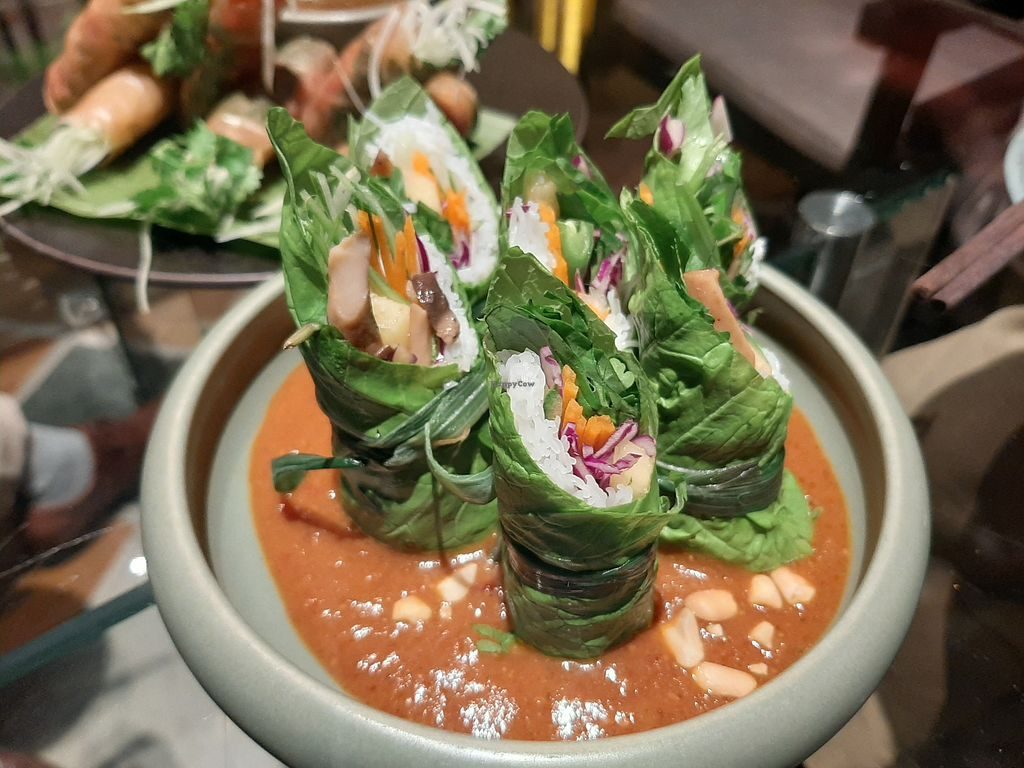
55 Nguyễn Du, Hai Bà Trưng. A beautiful colonial building with a calm, temple-like feel inside. The food is refined and the space is the most elegant on this list. Good for a special dinner.
Cồ Đàm Chay, fine dining
68a Trần Hưng Đạo, Cửa Nam. Set menus of up to eleven courses, each one explained at the table. Whatever you normally eat, try it here. The flavours are so satisfying that meat-eaters leave converted. Book ahead. Open for lunch and dinner only.
Yen Vegetarian Tasty, the hidden one
54 Quán Sứ, Cửa Nam. Walk to the end of a long alley in an old apartment block and you'll find a quiet, lovely room serving excellent pho and noodle dishes. It feels like a secret, because it almost is. Book on the 1st and 15th of the lunar month.
Buffet Chay Hương Thiền, the local lunch
261 Xã Đàn, Đống Đa, a few metres back from the road. A no-frills vegetarian buffet where locals eat. It's packed at lunchtime, which tells you everything. Open 11am to 2pm and 6pm to 9pm.
Veggie Castle, vegan buffet
7 Yên Ninh, Ba Đình. A family-run all-you-can-eat vegan buffet near the Old Quarter, with a daily-changing spread and a make-your-own pho station. About 119,000 dong in 2026.
There are many more in Hanoi. These are the ones I keep going back to. For the rest of the city's food, see what to eat in Vietnam and my Hanoi Old Quarter guide.
Travel with someone who orders for you
On our private trips your guide explains your diet to every kitchen, in Vietnamese, before you sit down. Vegetarian, gluten-free or a nut allergy, we plan every meal around it.
See the tripsVegetarian restaurants in Ho Chi Minh City (Saigon)
All central, in District 1 or District 3, and open in October 2026.
- Be An Vegetarian Bistro, ground floor of Saigon Garden, 99 Nguyễn Huệ. A calm bistro on the walking street. Good for a first night.
- Chay Garden, 52 Võ Văn Tần. A Michelin Guide pick in a leafy house near the War Remnants Museum. Creative and good value for the quality.
- Phương Mai, 86F Võ Thị Sáu. Deep in a quiet alley, cooking that lets mushrooms and vegetables lead rather than mock meat. One of the highest-rated vegetarian restaurants in the city.
- Vị Quê Kitchen, 110 Sương Nguyệt Ánh. Vegetarian versions of Vietnamese classics like mì Quảng and bánh xèo, near Bến Thành.
- Quán Chay Nhà, 19/14 Nguyễn Thị Minh Khai. A tiny alley buffet, around 60,000 dong, with dishes that change daily. Lunch and dinner.
Vegetarian restaurants in Da Nang
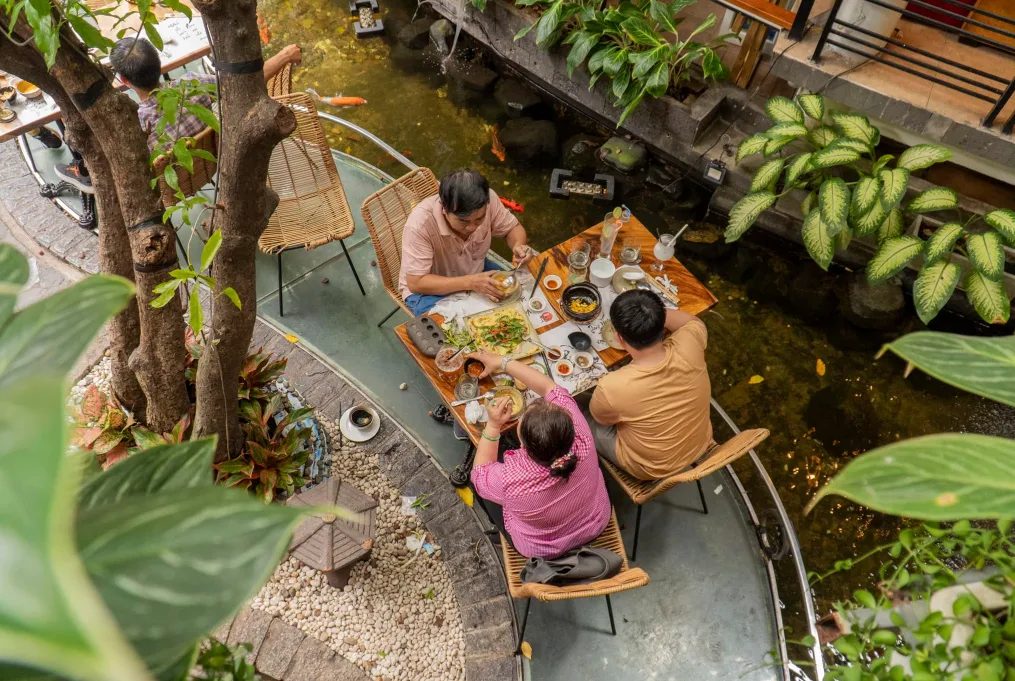
- Ngọc Chi, 202 Hoàng Diệu, Hải Châu. Listed in the Michelin Guide. Staff are used to explaining dishes and allergies to visitors.
- Sangha, 84 Hoàng Văn Thụ, Hải Châu. A peaceful, Zen-like space with a menu that changes weekly. Book ahead to sit inside.
- Shala Vegan House, 87/16 Nguyễn Du, Hải Châu. A small family-run place in a quiet alley. Very good value.
Vegetarian restaurants in Hoi An
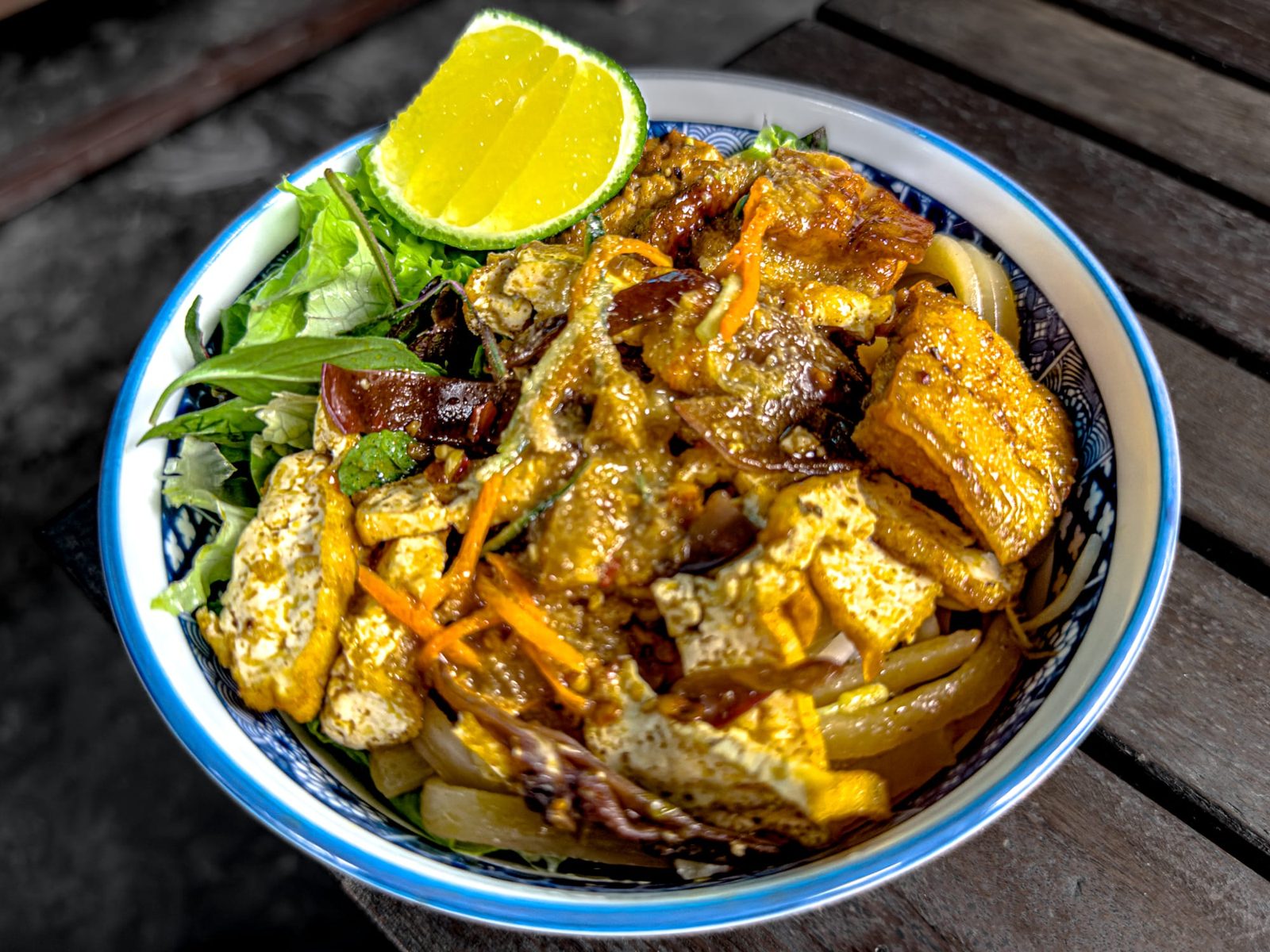
- V Vegan, 108 Nguyễn Thái Học, Old Town. A long menu including vegan cao lầu, Hoi An's own noodle dish.
- An Hy, 59 Phan Châu Trinh, Old Town. Simple, family-run and very Hoi An. The tofu with lemongrass and chilli is the one to order.
- Minh Kiến, 50 Trần Cao Vân. Owner-run, warm, and famous for its stuffed tofu.
- Bà Đàm, 71/20 Phan Châu Trinh, Old Town. A local rice-and-dishes canteen. Point at what you want. Check the price before you eat.
For more of the town, read things to do in Hoi An and things to do in Da Nang.
Eating vegetarian, gluten-free and nut-free in Vietnam: FAQ
What does "chay" mean in Vietnam?
Chay means vegetarian food in the Vietnamese Buddhist tradition: no meat, no fish and no fish sauce. Most chay dishes are also vegan, because eggs and dairy are rarely used.
How do you say no peanuts in Vietnamese?
Say "không lạc" in northern Vietnam and "không đậu phộng" in the south. For an allergy, say "Tôi bị dị ứng lạc" or "Tôi bị dị ứng đậu phộng", and show it written on your phone.
How do you say no MSG in Vietnamese?
Say "không mì chính" in the north and "không bột ngọt" in the south.
Is Vietnamese food gluten-free?
Much of it is, because noodles, rice paper and cakes are usually made from rice. Avoid bánh mì, yellow wheat noodles (mì), soy sauce, hoisin and mock meat, which is often made from wheat gluten.
Is fish sauce vegetarian?
No. Fish sauce (nước mắm) is made from fermented fish. Vegetarian restaurants use a vegetarian version made from soy or pineapple. At a normal restaurant, say "không nước mắm".
The bottom line
Vietnam is one of the best countries in Asia for vegetarians, a good one for gluten-free travellers, and manageable with a nut allergy if you plan ahead. Eat at quán chay restaurants, show the right Vietnamese words on your phone, skip mock meat if you avoid gluten, and ask about peanuts every single time. Do that, and like my father, you may find the vegetarian meals are the ones you remember.
This guide is general information. If you have a severe allergy or coeliac disease, speak to your doctor before you travel and always carry your medication.
Where this comes from
The Hanoi restaurants are places I've eaten at many times, with my parents and with travellers. The Saigon, Da Nang and Hoi An restaurants were checked on Google Maps in October 2026 for current opening hours, addresses and recent reviews. Prices are from recent reviews and my own visits. Restaurants change, so check before you go.
Ask the people who eat here
Join Pickleball in Vietnam, our free Facebook group. Ask for a vegetarian place near your court, find a morning game and swap tips with players who live here.
Join the group