Ask anyone who's been to Vietnam what they remember most, and food comes up before the beaches, the boats, or the courts. That's not an accident — this is a country where the food changes meaningfully from north to south, and where a plastic stool on a street corner will often out-cook a restaurant. Here's what to actually order, city by city.
The short version
Hanoi: phở and bún chả — the two dishes the north is built on.
Da Nang & Hoi An: mì Quảng, cao lầu, bánh xèo, and Hoi An's own white rose dumplings.
Saigon: cơm tấm, hủ tiếu, and a bánh mì built differently from the one up north.
Eating safely: follow the crowd, eat where the turnover is fast, and don't overthink it.
Hanoi
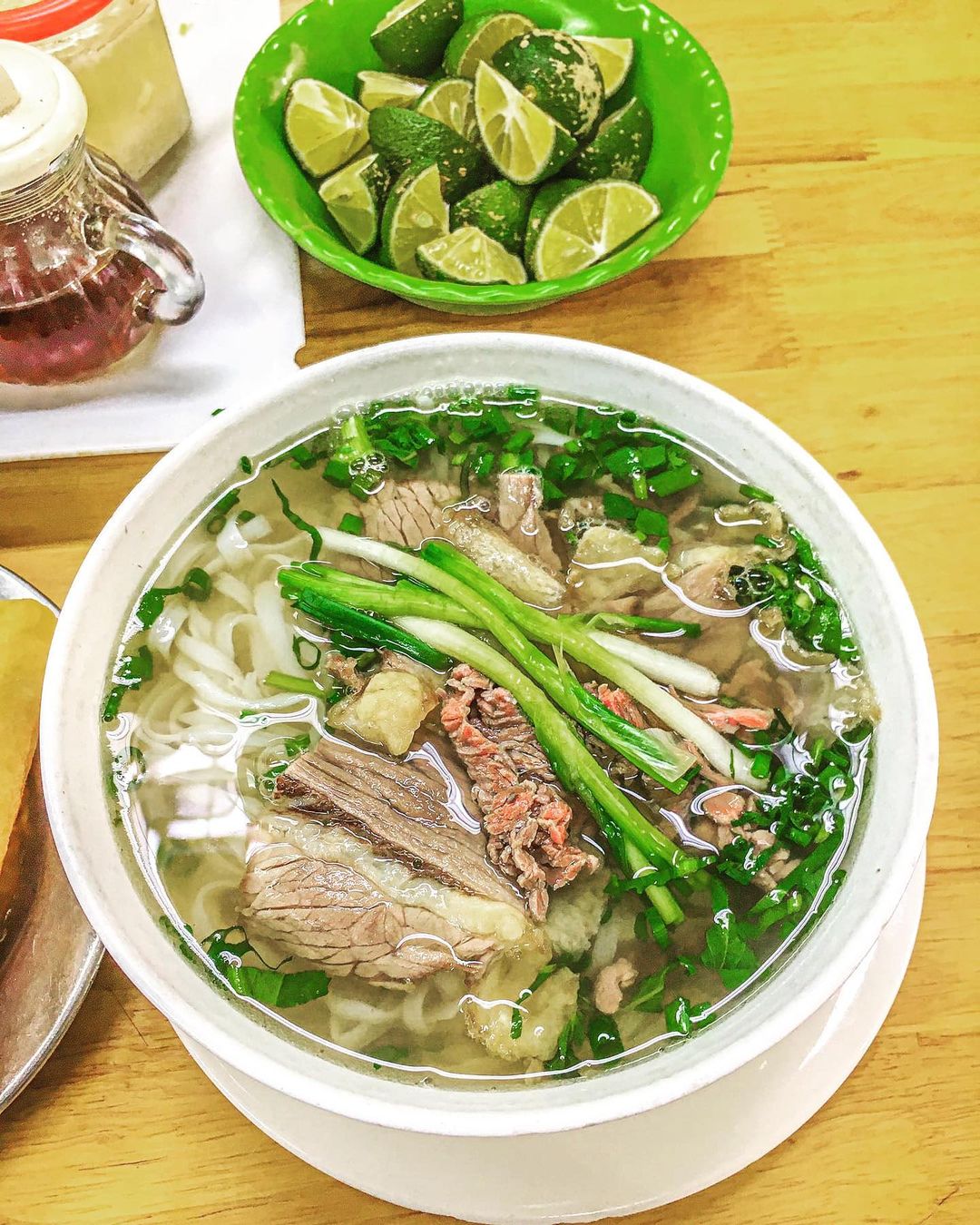
The north's food is quieter and more precise than the south's — fewer garnishes, more attention to the broth. Phở is the obvious place to start: clear beef broth, rice noodles, herbs kept on the side rather than piled in, meant to be tasted rather than dressed up. Order it for breakfast, the way locals do, at one of the small shops that only serve it until they sell out.
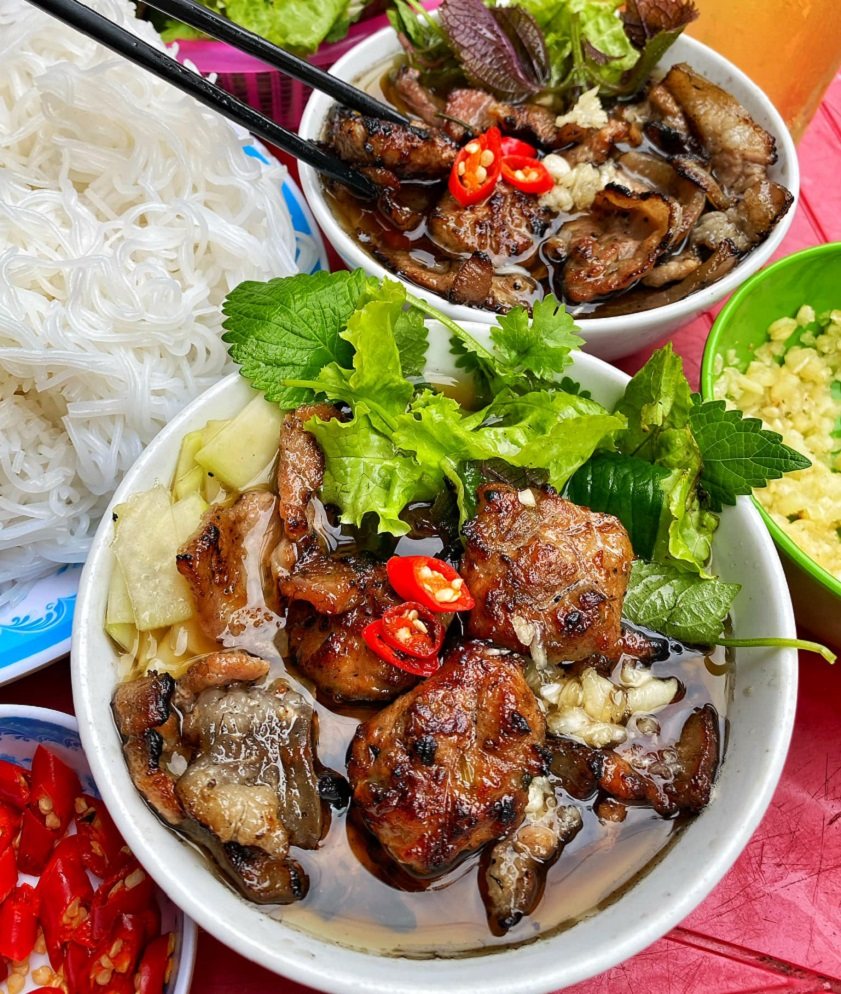
Bún chả is the other essential: grilled pork patties and pork belly in a sweet-sour fish sauce broth, served with a mountain of rice noodles and greens on the side. It's a lunch dish, best eaten at one of the smoke-filled grills you'll smell before you see. For more on the neighbourhood where both are easiest to find, see our guide to Hanoi's Old Quarter — and if egg coffee catches your eye while you're there, we've written the whole story on Vietnamese coffee culture.
Da Nang & Hoi An
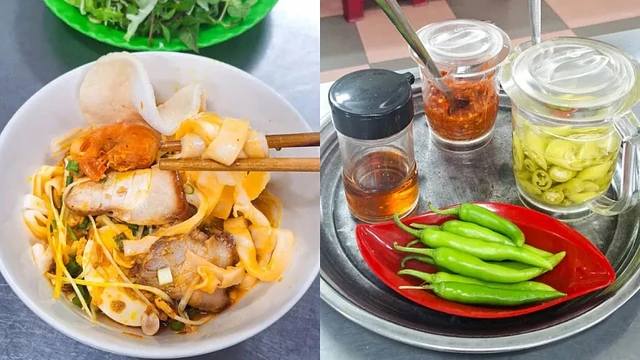
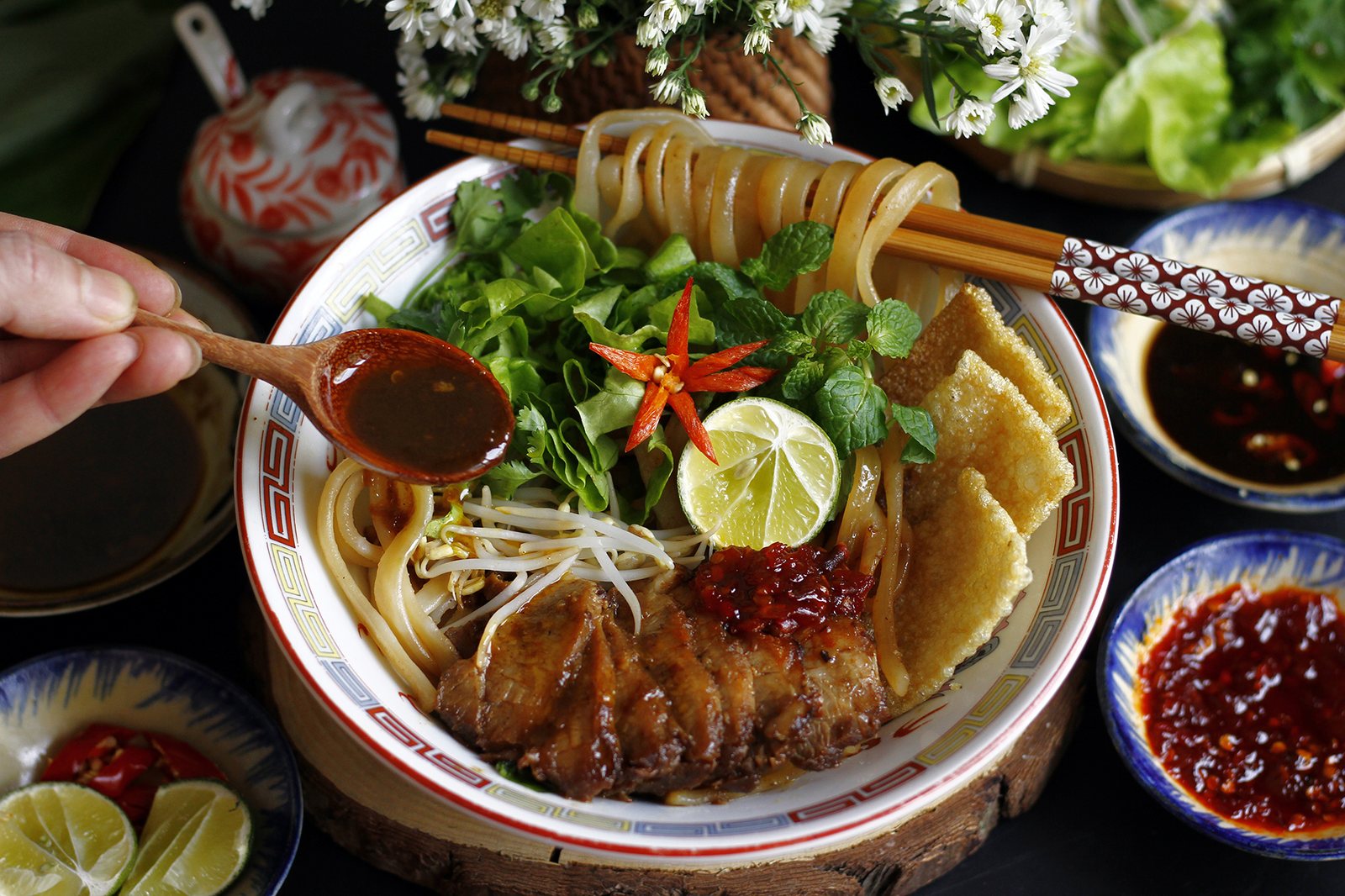
The central coast has its own food identity, distinct from both the north and south. Mì Quảng is the regional noodle dish — turmeric-yellow noodles, a small amount of broth rather than a full soup, topped with shrimp, pork, herbs and a rice cracker for crunch. Cao lầu is Hoi An's own version, made with thicker noodles that (according to local legend) only taste right when made with water from a specific well in town, served with pork and crispy croutons.
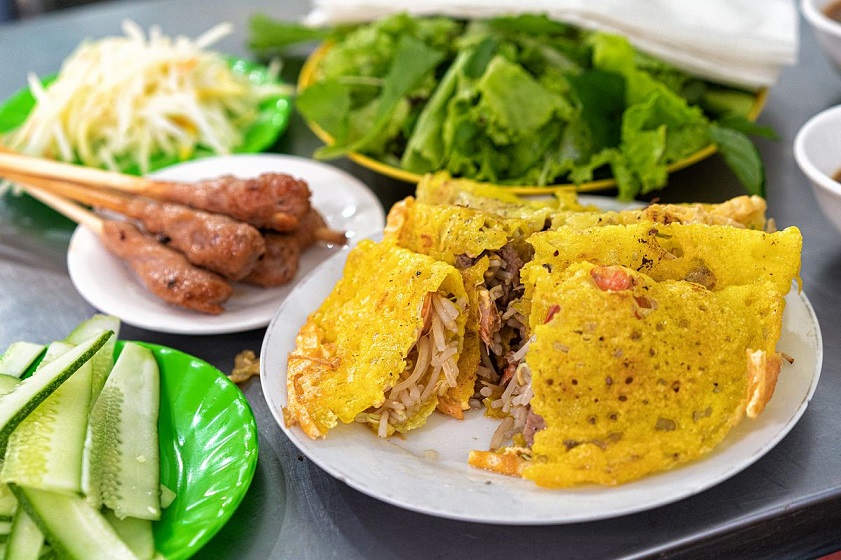
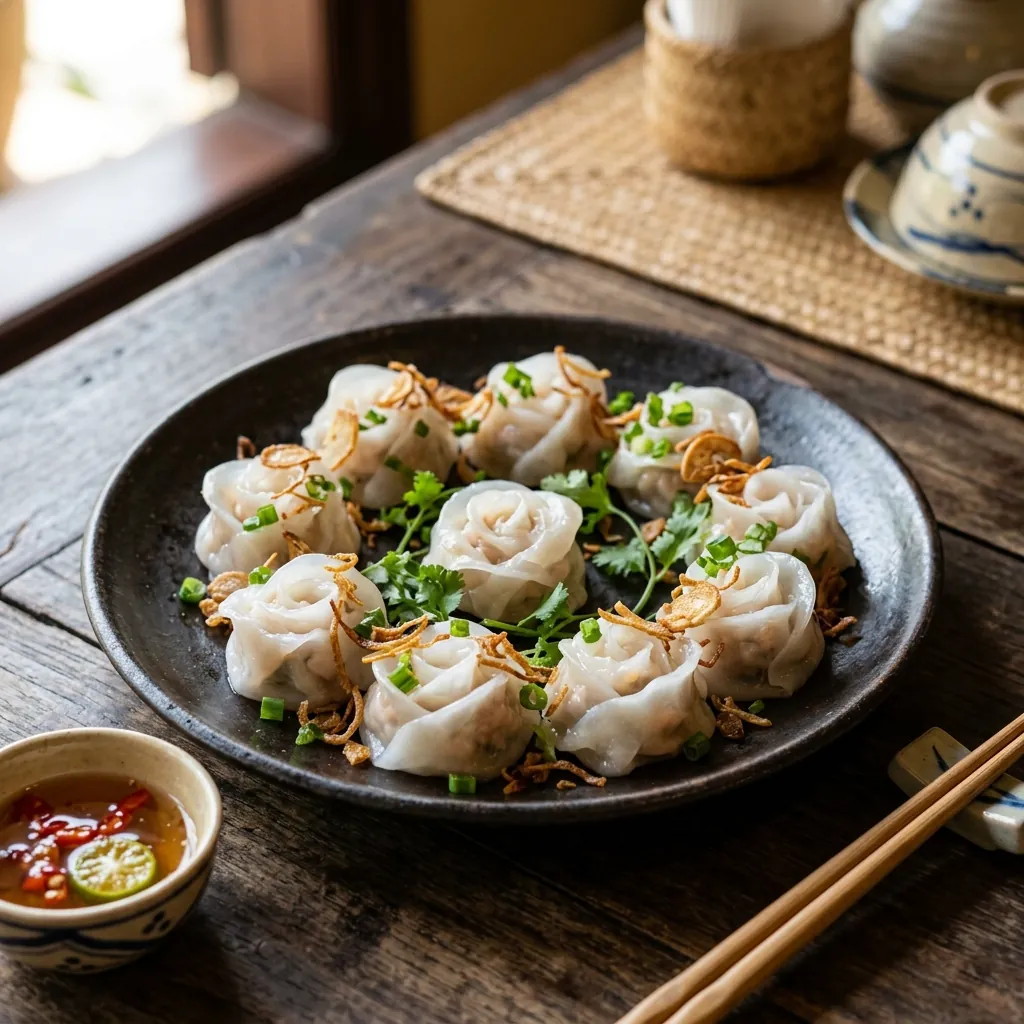
Bánh xèo, the crispy turmeric pancake stuffed with pork, shrimp and bean sprouts, is a good hands-on dish — you tear it apart, wrap pieces in lettuce and herbs, and dip. And in Hoi An specifically, don't skip white rose dumplings, delicate steamed shrimp parcels folded to look like a flower — a dish that, by local reputation, is made properly in only a handful of family kitchens in town.
For the fuller list of what to do around these dishes, see one week in Da Nang and things to do in Hoi An.
Saigon
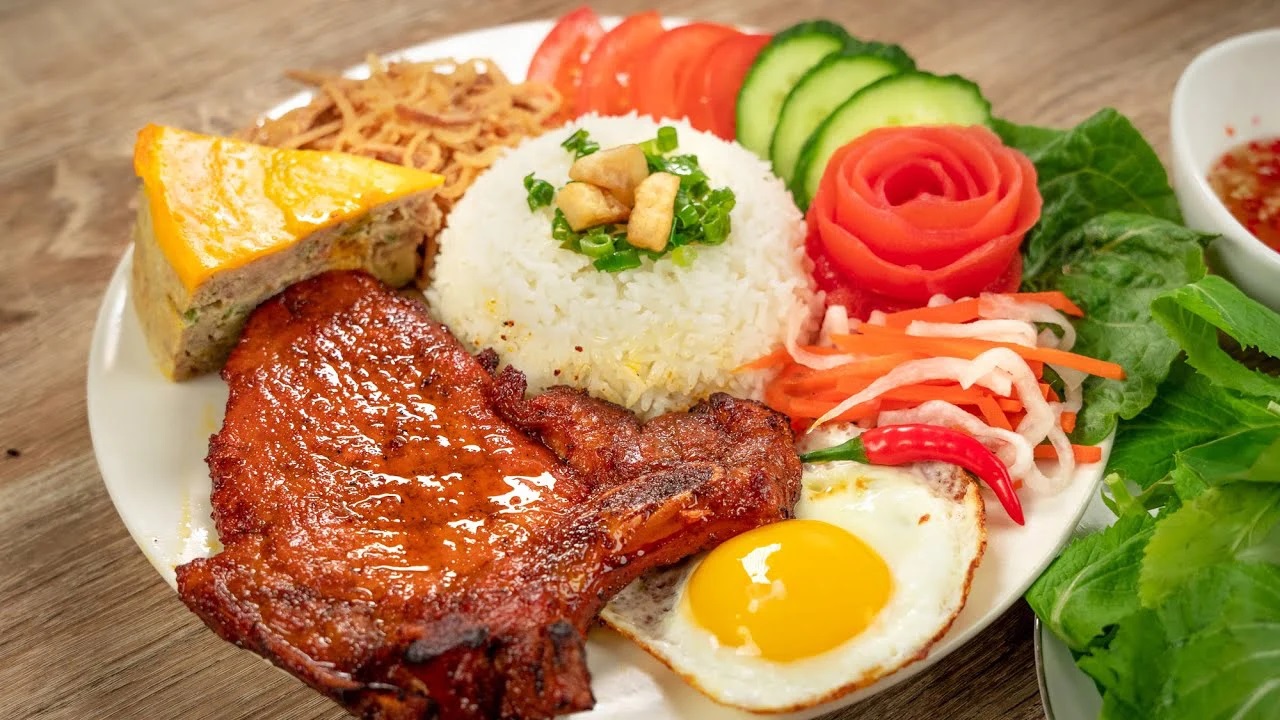
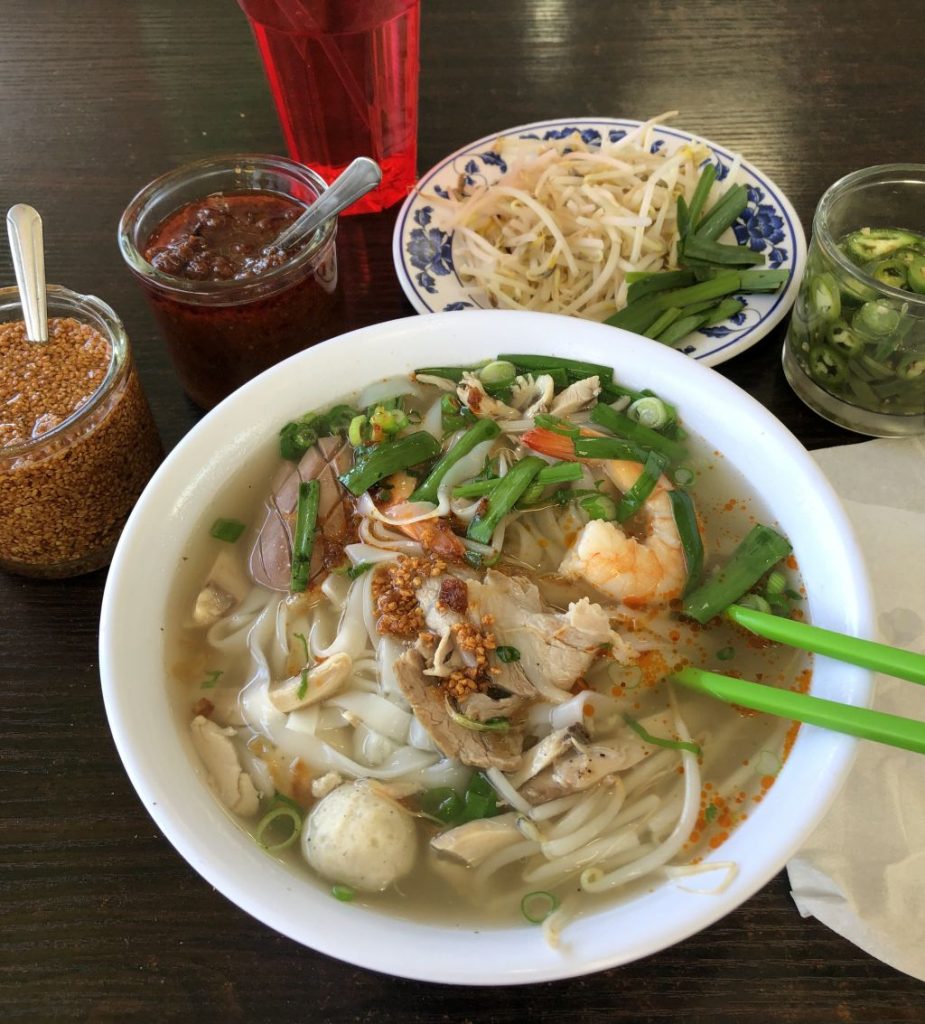
The south eats differently — sweeter, more herbs at the table, more freedom to build your own bowl. Cơm tấm (broken rice) is the everyday plate: grilled pork chop, a fried egg, pickled vegetables and a side of fish sauce, sold from breakfast through to a late dinner. Hủ tiếu, a clear noodle soup with pork and shrimp, shows the city's Chinese and Cambodian influences in a way you won't find further north.
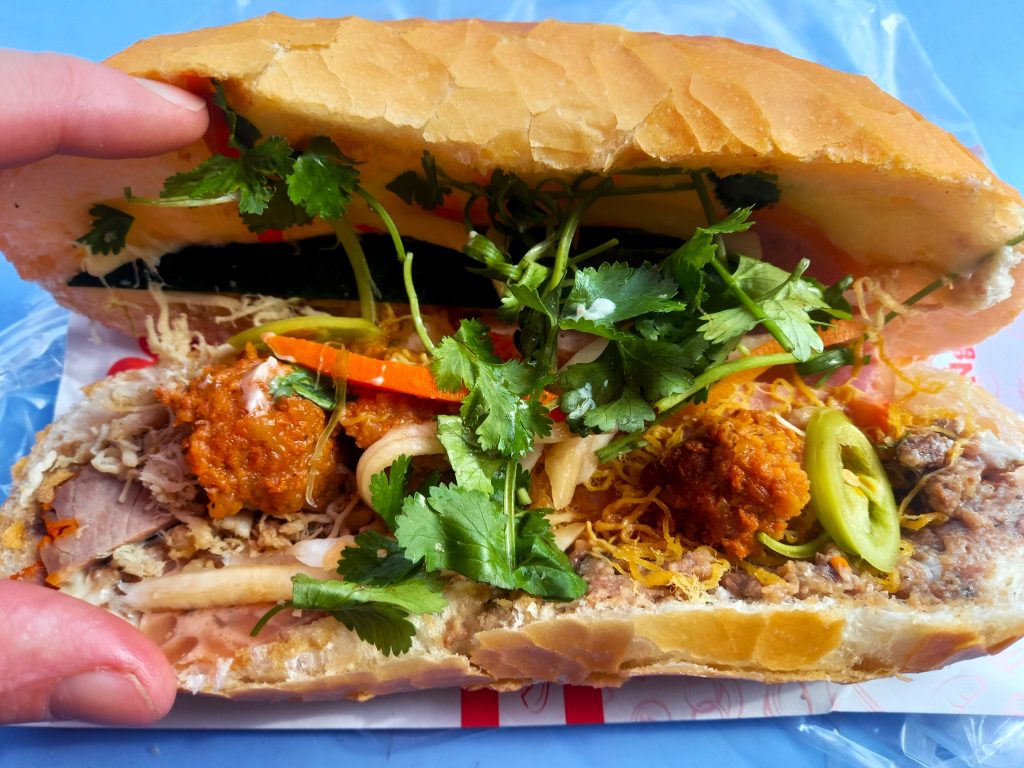
And then there's bánh mì, built noticeably differently here than in Hanoi — more pate, more pickled carrot and daikon, a heavier hand with chili. Find a stall with a queue and a fast-moving line; that's usually the tell.
Eating like a local after a morning pickleball game
The rhythm that works best here isn't complicated: play early, while it's cool, and by the time you're done the street food stalls are already busy with their own breakfast rush. A bowl of phở or a plate of cơm tấm after a game does more for you than any recovery shake — and it means the rest of your day starts on a full stomach instead of a search for somewhere to eat. It's one of the small, unplanned pleasures of building a trip around morning play: you end up eating on local time, not tourist time.
Eating safely as a first-timer
The advice that actually matters is simpler than most guides make it sound. Eat where there's a steady stream of locals and a fast turnover of food — that tells you the ingredients aren't sitting around. Bottled or boiled water only, ice from a proper ice-making plant (the small cylindrical kind, not blocks) is fine almost everywhere in cities. And don't over-plan it: the best meal of most trips is the one found by following a queue, not a guidebook.
Play mornings. Eat everything after.
Our Top to Bottom trip runs Hanoi to Saigon, through Da Nang and Hoi An in between — every region on this list, on your dates.
See the Top to Bottom tourThe bottom line
Vietnam's food changes as much as its geography does — quiet and precise in the north, distinct and unrepeated in the centre, loud and generous in the south. Eat where the locals eat, follow the queues, and build a little extra time into every stop. You'll need it.