Vietnam is the world's second-largest coffee producer, and almost none of that reputation is built on the stuff most people picture when they hear "coffee." No lattes, no drip machines, no baristas steaming milk. Just a small metal filter, a glass of condensed milk, and a lot of patience. Here's how it actually works, and how to order it without feeling like a tourist.
The short version
How it's made: a phin filter drips strong robusta coffee slowly over condensed milk or ice — no espresso machine involved.
What to try: cà phê sữa đá (iced milk coffee) everywhere, and cà phê trứng (egg coffee) specifically in Hanoi.
Where it fits your trip: a coffee shop or a court-side counter is where the morning actually starts, pickleball or not.
Why Vietnam drinks coffee differently
Coffee arrived with French colonists in the 1850s, but what Vietnam did with it afterward has almost nothing to do with France. The beans are mostly robusta, not arabica — harsher, more bitter, and roughly double the caffeine, which is part of why a small cup here hits harder than you'd expect. Condensed milk became the standard sweetener decades ago, back when fresh milk was hard to keep cold, and it never left. The result is a drink that's thick, strong, and usually served over ice, built for a climate where a scalding-hot americano makes no sense past 9am.
The basics: how it's actually made
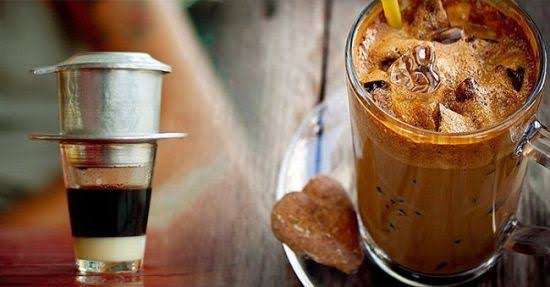
The tool is called a phin — a small metal filter that sits directly on top of your glass or cup. Ground coffee goes in the bottom, a perforated press sits on top of the grounds, and hot water is poured in. Then you wait, usually four or five minutes, while it drips through on its own. There's no rushing it, which is sort of the point — ordering coffee here comes with a built-in pause, not a to-go cup you drink while walking.
Once it's dripped through, you've got two directions to take it: over ice with condensed milk for cà phê sữa đá, the everyday version you'll see on every corner, or black over ice for cà phê đen đá if you take it without sugar. Either way, you stir the condensed milk up from the bottom yourself — it's meant to be layered, not premixed.
Egg coffee in Hanoi
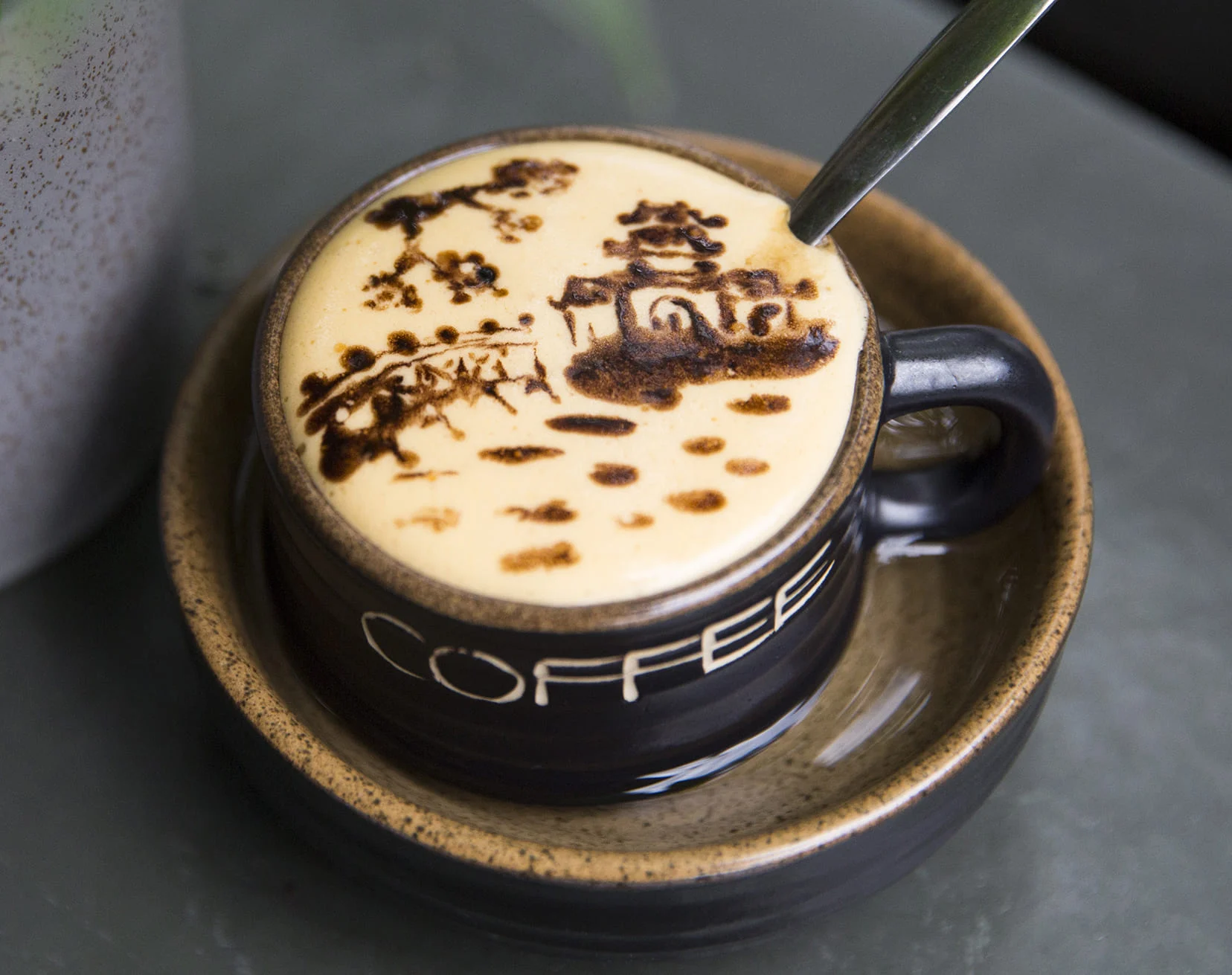
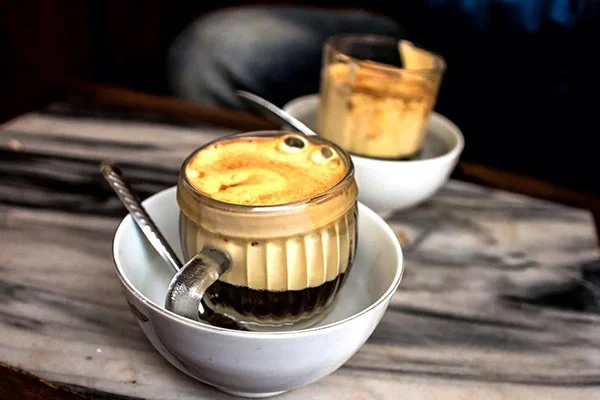
If you're spending time in the capital, cà phê trứng — egg coffee — is worth going out of your way for. It was invented in Hanoi during a 1940s milk shortage, when a café owner whipped egg yolk with sugar and condensed milk to stand in for the milk he didn't have. What came out is closer to a warm custard sitting on top of strong black coffee than anything you'd call a coffee drink back home — thick, sweet, and genuinely strange the first time, in a good way. It's a Hanoi specialty specifically, tied to a handful of old cafés in the Old Quarter that still make it the original way. If you're building out a few days around the capital, our Hanoi Old Quarter guide covers exactly where those cafés are.
When pickleball meets coffee
Coffee and pickleball turn out to share a schedule. Courts here fill early, 6 to 9am before the heat sets in, and coffee shops run on the same clock — for a lot of people, the two happen back to back or at the same time. In Ho Chi Minh City, 002 Pickleball Club in Thao Dien takes this literally: it runs its own coffee counter right beside the courts, so you can play a game and order a cà phê sữa đá without leaving the building. We cover it and five other Saigon clubs in our guide to playing pickleball in Ho Chi Minh City. On our trips, this is usually how the morning goes anyway — a game, then a slow coffee while everyone compares scores.
How to order like a local
A few phrases go a long way, even mangled:
- Cà phê sữa đá — iced coffee with condensed milk. The default order, everywhere.
- Cà phê đen đá — iced black coffee, no milk.
- Cà phê trứng — egg coffee, Hanoi only, best had sitting down rather than to-go.
- Bạc xỉu — the milder, milkier version, if straight robusta is too strong for you.
Street-side stalls with the plastic stools are usually the cheapest and, honestly, often the best — 15,000 to 25,000 VND (under $1) for a coffee that a sit-down café would charge triple for. Nobody will think less of you for taking the low stool over the café chair. If anything, it's the better seat for watching the street go by.
Mornings on court, afternoons figuring out coffee
Every trip we run has room for both — a game before the heat, then whatever the city's doing with a cup of robusta and condensed milk.
See the Top to Bottom tourThe bottom line
Vietnamese coffee rewards slowing down — a phin filter that won't be rushed, condensed milk you stir yourself, and in Hanoi, an egg coffee that's stranger and better than it sounds. Have it after a game if you can. The two go together more than you'd think.