
Pick Sapa if you want big mountain scenery, rice terraces and real hiking. Pick Da Lat if you want cool, easy days, good coffee and more courts to choose from. Both towns sit at roughly 1,500 to 1,600 metres (about 5,000 feet), but they feel like different countries. Here is how they compare on weather, terrain, travel time and courts, so you can choose with your eyes open.
The short answer
Choose Sapa for the landscape. Terraced valleys, Fansipan at 3,143 metres (10,312 ft), village walks and a proper cold snap in winter. It takes more effort to reach and the ground is steeper and muddier, but some of its pickleball courts have beautiful mountain views.
Choose Da Lat for the pace. Pine hills, a lake you can walk around, coffee farms, dry sunny winters and the bigger choice of pickleball clubs. It is the easier trip for older travellers and for anyone who wants plenty of courts to pick from.
Winters are the big difference. January averages about 9.5°C (49°F) in Sapa and about 14.8°C (59°F) in Da Lat.
Getting there: Da Lat is a direct flight from Hanoi, Saigon or Da Nang. Sapa has no airport, so count on 5.5 to 6 hours by road from Hanoi.

Sapa vs Da Lat at a glance
If you only read one section, make it this table. The details sit underneath.
| Sapa | Da Lat | |
|---|---|---|
| Altitude | About 1,600 m (5,200 ft) | About 1,500 m (4,900 ft) |
| January average | About 9.5°C (49°F), frost possible | About 14.8°C (59°F), dry and sunny |
| Wettest months | Roughly May to September | Roughly May to October |
| Scenery | Terraced valleys, high peaks, villages | Pine hills, lake, flower and coffee farms |
| Terrain | Steep, muddy trails after rain | Rolling hills, walkable town centre |
| From Hanoi | 5.5 to 6 hours by van, or night train plus 1 hour | About 1 hour 50 minutes by direct flight |
| Pickleball | Fewer courts, but some with beautiful mountain views. More in Lao Cai city | More clubs, with covered and indoor options |
| Best for | Hikers, photographers, village stays | Slow travel, couples, seniors, players |
What is the weather like in Sapa and Da Lat?
Both towns are cooler than the rest of Vietnam, but not by the same amount. Sapa sits much further north, so the winter monsoon hits it harder. Da Lat stays mild all year. The averages below come from the same climate source for both towns, so the comparison is like for like.
| Season | Sapa | Da Lat |
|---|---|---|
| Dec to Feb | 9.5 to 10.5°C (49 to 51°F). Cold, foggy mornings, frost, snow only on rare days | 14.8 to 16°C (59 to 61°F). Driest months, sunny days, nights near 8°C (46°F) in January |
| Mar to May | 13 to 19°C (55 to 66°F). Flooded, planted terraces. Showers build | 18 to 22°C (64 to 72°F). Warming up, first rains from late April or May |
| Jun to Aug | About 19.5°C (67°F). Wettest and foggiest, terraces lush green | 22 to 22.7°C (72 to 73°F). Rainy season, heaviest in July and August |
| Sep to Nov | 18.5 down to 12.5°C (65 down to 54°F). Golden terraces, clearest skies from October | 21.8 down to 16.8°C (71 down to 62°F). Rain eases, October is mild and bright |
Two practical points. In Sapa, fog is the thing that ruins a plan, not rain. Fansipan can be pure white on a bad morning, so ask your hotel how the summit looks before you buy tickets. In Da Lat, the sun is warm at midday even in December, but the evenings drop fast, so you still want a layer.
Which looks better, Sapa or Da Lat?
Sapa is the one for photographs. The Muong Hoa valley is stacked with rice terraces, and the timing matters: they are flooded and freshly planted from March to May, green from June to August, and golden around September and October. Add Fansipan, the Muong Hoa mountain train and the O Quy Ho pass, and you have some of the most dramatic scenery in Vietnam. I cover the sights and prices in the things to do in Sapa guide.
Da Lat is the one for atmosphere. It was built by the French as a hill station, and it still feels like one: pine forest on the road in, Xuan Huong Lake in the middle of town, flower gardens and coffee farms a short drive away. Nothing here is as dramatic as Sapa, but it is a place you want to wander without a plan. More in the Da Lat guide.

How hard is the terrain in Sapa and Da Lat?
This is where the two towns split most for travellers over 55, and where I see the most mistakes.
Sapa is physically harder. The classic valley walk to Lao Chai and Ta Van is around 10 to 12 kilometres, mostly downhill, with a car back to town. Paths turn to mud after rain, so you want proper walking shoes and a stick for the steep sections. A guided day trek costs roughly 450,000 to 600,000 VND per person. If that sounds like too much, drive to Lao Chai and walk the flatter stretch to Ta Van, which takes about an hour and a half. Fansipan is easy on the legs because of the cable car, but it is 5 to 10°C (9 to 18°F) colder at the top, with wet stone steps.
Da Lat is gentler. The town sits over rolling hills, so there are slopes, but the lake loop and the centre are comfortable on foot, and most sights are a short drive apart. You can take it as slowly as you like. If you have bad knees, or you are travelling with someone who does, this is the easier trip. Our guide to Vietnam for seniors goes deeper on pacing.
How do you get to Sapa and Da Lat?
Here is the real difference in effort. All figures below were current in the sources listed at the bottom, but schedules and prices move, so confirm before you book.
| Route | Time | Typical cost |
|---|---|---|
| Hanoi to Sapa, limousine van | 5.5 to 6 hours | $13 to $18 (320,000 to 450,000 VND) |
| Hanoi to Sapa, night train to Lao Cai plus minivan | 8 to 9 hours door to door | $35 to $75 in total |
| Hanoi to Da Lat, direct flight | About 1 hour 50 minutes | About $32 to $100 one way |
| Saigon to Da Lat, flight | About 50 minutes | About $28 to $88 one way |
| Saigon to Da Lat, sleeper bus | 6 to 8 hours | About $10 to $14 standard |
Sapa: there is no airport. The vans run on the Noi Bai to Lao Cai expressway, roughly every 30 to 60 minutes through the morning and early afternoon. The sleeper bus is cheaper but leaves late and arrives around 4:30 to 5am, which I would skip. The overnight trains, SP1 and SP3, end in Lao Cai at about 5:30 to 6:10am, then it is roughly 35 kilometres and an hour by minivan to Sapa town.
Da Lat: Lien Khuong Airport is about 30 kilometres south of the centre, 40 to 50 minutes by road. An airport shuttle bus costs about 60,000 VND, and a fixed-price ride on Green SM (formerly Xanh SM) or a taxi runs about 350,000 to 450,000 VND. My Green SM guide shows how to set the app up, and the flights vs trains guide helps you decide how to move around the rest of the country.
Want one of these built into a private trip?
We have a Hanoi and Sapa trip and a Da Lat trip, both private, with the pickleball sessions arranged for you. Tell us your dates and we will shape it around you.
See Hanoi and Sapa See Da LatWhere can you play pickleball in Sapa and Da Lat?
Da Lat has more courts. Sapa has fewer, but a lively community and some of the best views. A lot of Kinh Vietnamese live and work in Sapa town, so the local pickleball crowd is bigger than most visitors expect. Court details change quickly in this part of Vietnam, so treat the lists below as a starting point and call before you go.
Sapa
Sapa Center Pickleball Club
A covered hall of several courts with big windows looking out over the mountains. Rain and fog do not stop play here, which matters in Sapa. Confirm the address and opening hours by phone, as the directories I checked do not agree on details.
Hours and price: confirm before you go
Rooftop court, Sapa Lumia Hotel
A single outdoor court on a hotel on Violet Street, with the mountains right behind the net.
Hours and price: confirm before you go
Lao Cai city, about 35 kilometres and an hour down the valley, has the bigger cluster of clubs. If you want even more variety, you can add sessions in Hanoi on either side of the trip. Our Hanoi pickleball guide lists clubs that welcome visitors.

Da Lat
Pickleball TKD
17B Tran Khanh Du. Listed with about seven courts, indoors and sheltered from sun and rain.
Phone: 0909 528 966 · Check hours and price
Thanh Phat Dat Pickleball and Badminton Academy
33A Xo Viet Nghe Tinh. Six covered courts, shared with badminton.
Phone: 0899 004 972 · Check hours and price
Da Lat Pickleball Clubhouse (The Court Dalat)
78 Trieu Viet Vuong. Outdoor courts, booked by phone. Local sources put typical Da Lat court rates at about 80,000 to 200,000 VND per hour.
Phone: 0394 207 061 · Check hours and price
Golfvalley Pickleball Club
In the Golf Valley area, with both covered and outdoor courts. Listed as open 5:00 to 22:00 daily.
Phone: 0867 725 772 · Check hours and price
Dalat 1500 Pickleball Club
12A Trieu Viet Vuong, at the back of a petrol station. Three courts, listed as open 6:00 to 22:00.
Phone: 0354 691 500 · Check hours and price
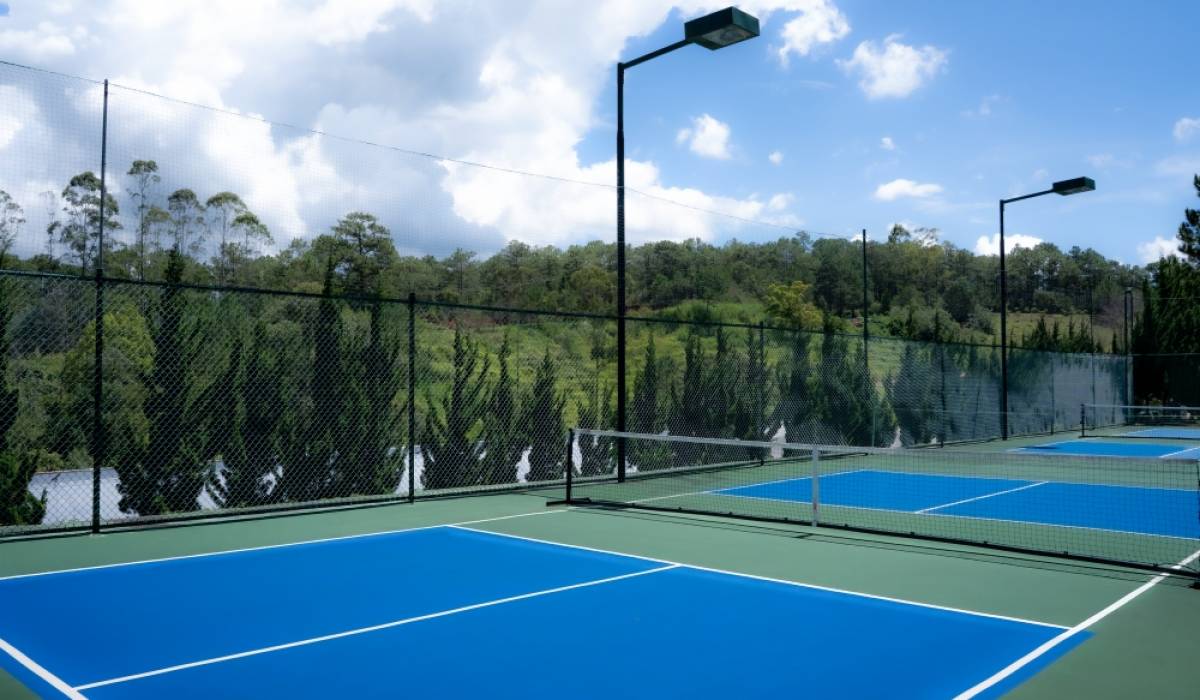
The playing conditions are a real selling point. Da Lat's cool mornings mean you can play at almost any hour, which is not true on the coast. For more on how heat changes a session, read playing pickleball in the heat in Vietnam.
So which should you choose?
| If you are... | Choose | Why |
|---|---|---|
| A hiker or photographer | Sapa | Terraces, village trails and mountain views on a different scale |
| Wanting the most courts to choose from | Da Lat | More clubs, covered courts, cool air for long sessions |
| Wanting a court with a mountain view | Sapa | Courts set against the peaks, and a lively local community |
| Travelling with older parents or bad knees | Da Lat | Gentler terrain, no long road transfer from an airport |
| Short on time | Da Lat | One flight and you are there, no overnight travel |
| Wanting real cold and fog | Sapa | Frost in winter, clouds below you on Fansipan |
| Doing the north first | Sapa | Pairs naturally with Hanoi and Ha Long |
| Doing the south first | Da Lat | Pairs naturally with Saigon or Da Nang |
Can you do both? Yes, and the flight makes it easy. Spend a few days in Hanoi and Sapa, then fly direct from Hanoi to Da Lat in under two hours and finish in the south. The mistake I see most often is squeezing Sapa into one night. With the journey each way, two to three nights is the minimum, and Da Lat deserves three. If you are building a longer route, start with the northern Vietnam itinerary and add Da Lat at the end.
Sapa vs Da Lat: FAQ
Is Sapa or Da Lat better for a Vietnam trip?
Neither wins outright. Sapa is better for dramatic mountain scenery, rice terraces and trekking. Da Lat is better for mild weather all year, easy walking and coffee. You can play pickleball in both: Da Lat has more courts, while Sapa has courts with beautiful mountain views.
Which is colder, Sapa or Da Lat?
Sapa. Both towns sit at roughly 1,500 to 1,600 metres, but Sapa's January average is around 9.5°C (49°F) against roughly 14.8°C (59°F) in Da Lat. Sapa gets frost and fog in winter, and snow only on rare days. Da Lat winters are dry, sunny by day and cool at night.
Which is easier to reach from Hanoi?
Da Lat is faster. A direct flight from Hanoi takes about 1 hour 50 minutes, plus a 40 to 50 minute transfer from Lien Khuong Airport. Sapa has no airport. It is 5.5 to 6 hours by limousine van from Hanoi, or an overnight train to Lao Cai plus about an hour by road.
Can you play pickleball in Sapa?
Yes, and the community is bigger than most visitors expect, because many Kinh Vietnamese live in Sapa town. There are fewer courts than in Da Lat, but several have beautiful mountain views, including a covered club and a hotel rooftop court. Lao Cai city, an hour away, has more. Call ahead for hours and prices.
Can you play pickleball in Da Lat?
Yes, and the choice is much wider. Several clubs are listed around town, including covered and indoor courts, so rain does not stop play. Local court prices usually run from about 80,000 to 200,000 VND per hour. Check by phone first, as some listings are out of date.
How many days do I need in Sapa and Da Lat?
I would give Sapa two to three nights, because the journey eats most of a day each way. Da Lat works well with three nights and rewards a fourth if you want to slow down. Both are easy to add to a longer private itinerary through Vietnam.
The bottom line
If you want a landscape you will remember, go to Sapa. If you want an easier trip you will enjoy every single day, go to Da Lat. Whichever you choose, pack your paddle: Sapa's mountain-view courts and Da Lat's cool-air courts are both worth a morning. If you still cannot decide, tell us your dates and who is travelling, and we will tell you which one fits.
Not sure which is right for your group?
Message us your dates, your pickleball level and how much walking you want to do. We will recommend one and build the rest around it.
WhatsAppFind a game in Vietnam
Join Pickleball in Vietnam, our free Facebook group. Ask about courts, find a morning game and swap tips with players who live here.
Join the groupWhere these facts come from
Monthly temperatures, altitude and seasons from the climate guides at north-vietnam.com (Sapa) and north-vietnam.com (Da Lat). Hanoi to Sapa times and prices from Vietnam Tourism, updated October 2026. Da Lat flights, airport transfers and bus times from Vietnam Tourism, August 2026. Climate comparison also checked against Trip.com. Court details from local directories including Axel Pickleball, Toplist and The Pickle Hub. Trek distances, guide fees and Fansipan details from our own Sapa guide. Prices and hours change, so confirm before you go.