"Is Vietnam too much for us?" It's one of the questions we get asked most, usually by couples in their fifties, sixties and seventies who've done Europe and Thailand and are wondering if Vietnam is a step too far. The honest answer: Vietnam is very good for seniors, as long as you plan for the heat, the pavements and the distances. Here's what's actually hard, what's easier than you'd expect, and how to set the pace so you come home energised rather than wrecked.
The short version
Is Vietnam good for seniors? Yes. It's safe, the food is gentle, hotels are excellent value, and the best places are compact and walkable.
The real challenges: heat from April to September, uneven pavements, crossing busy roads, and long distances between regions.
Best months for comfort: February to April for a whole-country trip, November to March for the south.
Best places for a slower pace: Hoi An, Hue, an overnight cruise on Ha Long Bay, and Da Nang's beach.
The golden rule: three or four bases, at least three nights in each, and fly between regions instead of driving.
Is Vietnam good for seniors? The honest answer
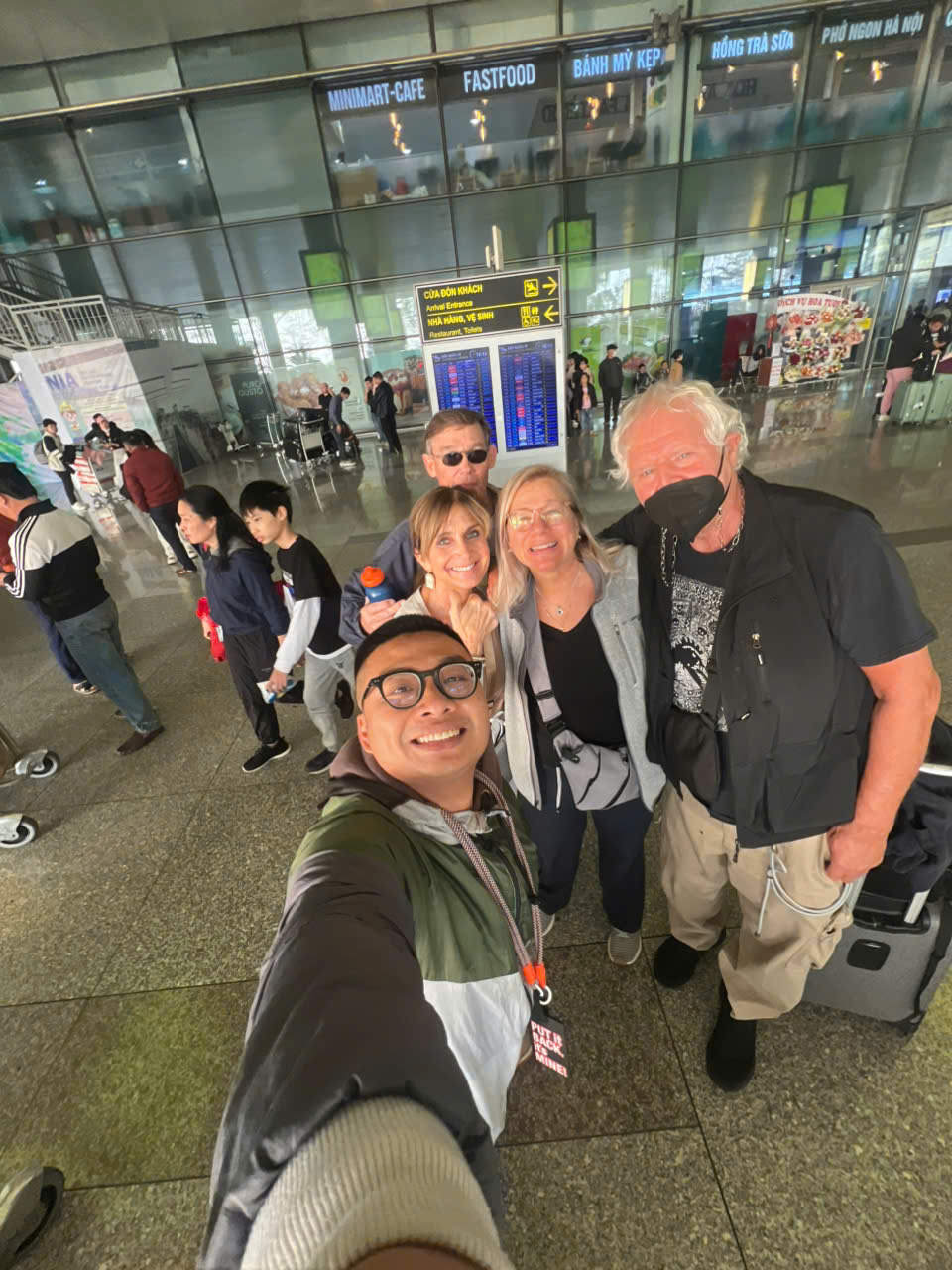
Vietnam has a reputation as a backpacker country, all overnight buses and motorbike loops. That's one Vietnam. The other is comfortable hotels at half the price of home, private drivers, short domestic flights and some of the best food in Asia. Most travellers over 50 who come home disappointed tried to do the first kind of trip at the second kind of age.
The things that make Vietnam work well for older travellers:
- It's safe. Violent crime against visitors is rare. The main risks are traffic and petty theft, and both are manageable. Our guide to whether Vietnam is safe goes into detail.
- Comfort is cheap. A room that costs $300 a night in Sydney or Seattle is often $100 to $150 here. Massages, private cars and good restaurants are a fraction of home prices.
- People are warm to older visitors. Age earns respect in Vietnamese culture. You'll be helped up steps, offered seats and asked, very directly, how old you are. It's a compliment.
- You can stay active. Walking, swimming, cycling in the rice fields and pickleball at 6am with the locals all fit easily into a day.
What's actually hard, and how to handle it
The heat

This is the big one. From May to September, temperatures regularly pass 35°C with high humidity, and April is the hottest month in the south, with Saigon often reaching 34 to 36°C. Heat is harder on older bodies, and it creeps up on you.
Do what the Vietnamese do. Get out early, from about 6 to 10am. Rest through the middle of the day, with lunch, a nap, the pool or a massage. Go out again after 4pm, when the light softens and the streets come alive. Carry water, and a sachet of oral rehydration salts in your bag, sold at every pharmacy, is worth more than any hat.
Pavements and steps
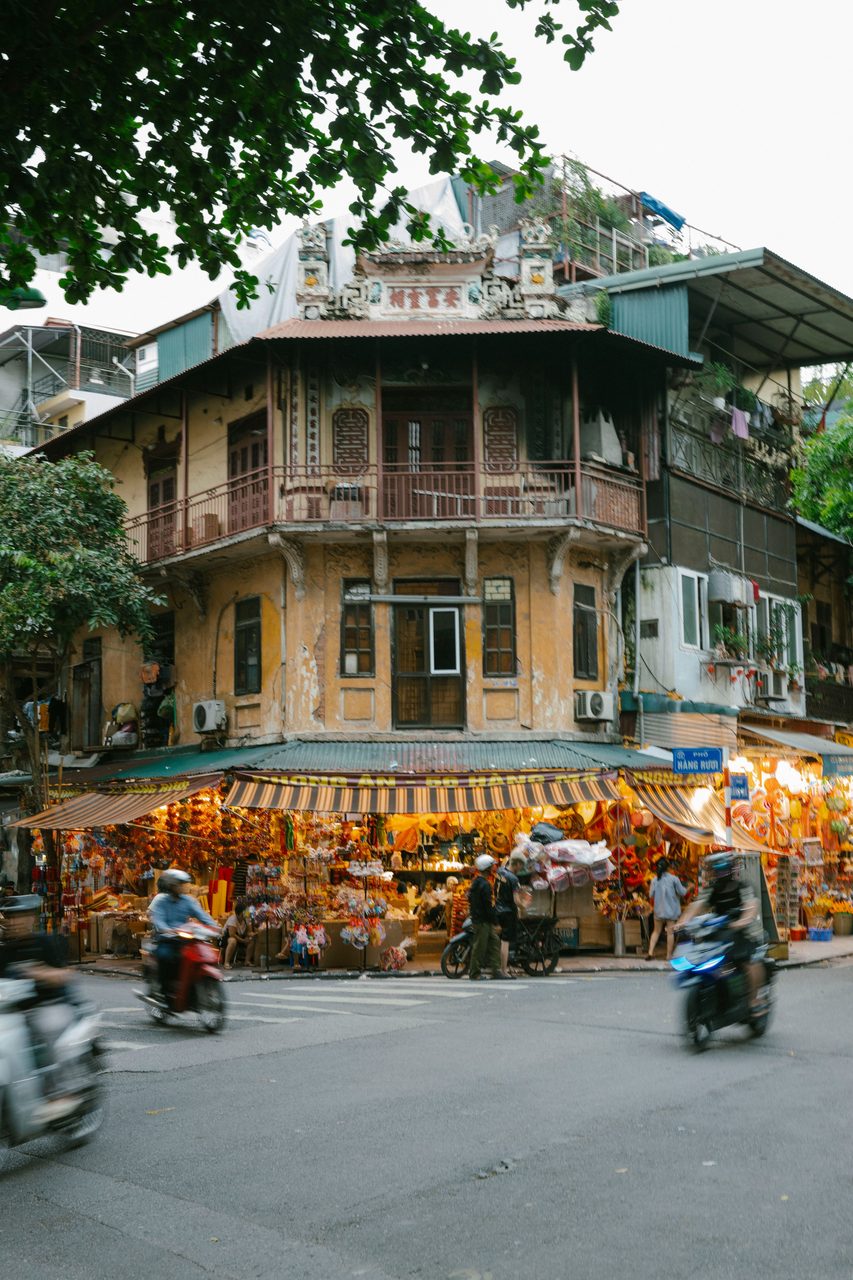
City pavements are uneven, and often taken over by parked motorbikes and street kitchens, so you end up walking along the edge of the road. Good walking shoes with grip matter more than anything else you pack.
Some sights involve real climbing. It helps to know the numbers before you go:
- Sung Sot Cave, Ha Long Bay: roughly 100 steps up to the entrance, taller than normal stairs. Visitors compare it to climbing five or six storeys. It's doable at a slow pace with breaks.
- Ti Top Island viewpoint, Ha Long Bay: several hundred steep steps. Skip it if your knees complain. The beach below is lovely on its own.
- Marble Mountains, Da Nang: there's an elevator up the main mountain, which saves the worst of the climb, but the caves and pagodas at the top still involve steps and uneven rock.
- Hoi An old town: flat, compact and closed to motorbikes for much of the day. One of the easiest places in the country to walk.
Crossing the road

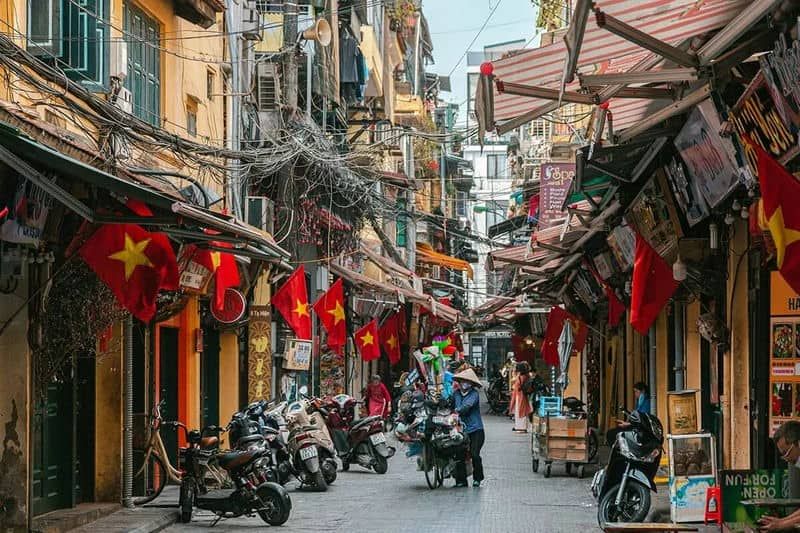
The first time you face a Hanoi junction, it looks impossible. The trick is counter-intuitive: walk slowly and steadily, and don't stop, run or step back. Motorbikes steer around a predictable pedestrian. Raise a hand, make eye contact, and keep going at the same pace. Cars and buses won't swerve, so let those pass. After a day or two, you'll do it without thinking. Until then, cross next to a local and match their pace.
Distances
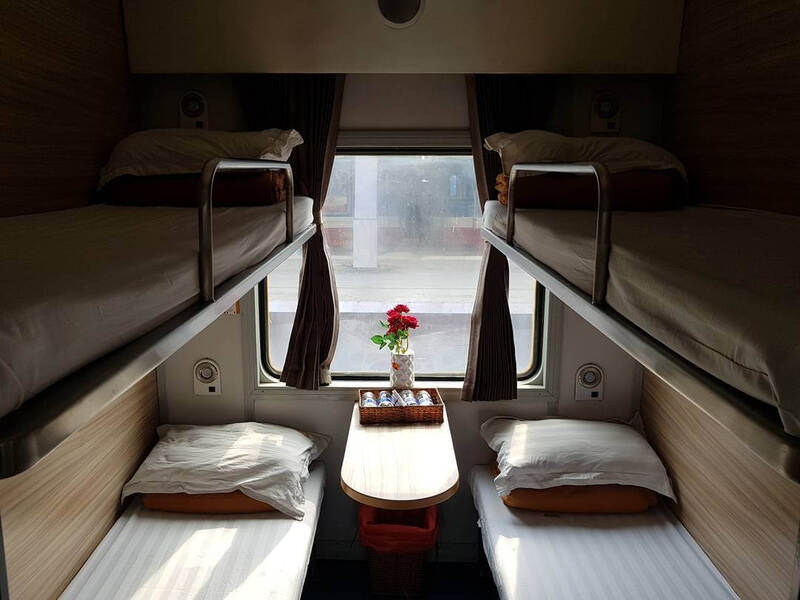
Vietnam is over 1,600 km long. The overnight train from Hanoi to Da Nang takes roughly 15 to 17 hours, and the bus is worse. The flight takes about an hour and twenty minutes. For most people over 50, flying between regions is the single best decision you can make. Typical journeys:
- Hanoi to Da Nang: about 1 hour 20 minutes by air.
- Da Nang to Saigon: about 1 hour 25 minutes by air.
- Hanoi to Saigon: just over 2 hours by air.
- Hanoi to Ha Long Bay: about 2.5 hours by car on the expressway.
- Da Nang to Hoi An: about 45 minutes by car.
What's easier than you'd expect
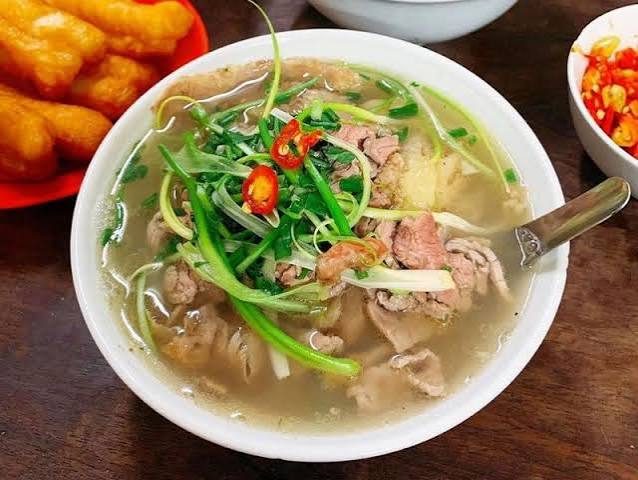
- The food. Vietnamese cooking is fresh and light, and much of it isn't spicy at all. The chilli sits on the table for you to add. Pho, fresh spring rolls and grilled fish are easy on any stomach. Our street food guide has the dishes to start with.
- Getting around town. The Grab app works like Uber, with the price fixed upfront, so there's no haggling and no language barrier.
- English. In hotels, restaurants and anything tourist-facing in Hanoi, Hoi An, Da Nang and Saigon, you'll manage fine.
- Paperwork. The e-visa is online and valid for up to 90 days, and many European nationalities don't need a visa for shorter stays. See our e-visa guide.
- Money. Cards work in hotels and better restaurants, and ATMs are everywhere. Our guide to money in Vietnam covers the rest.
The best places for a slower pace
Hoi An

If we could send every older traveller to one place, it would be Hoi An. The old town is flat and car-free for much of the day. The beach at An Bang is fifteen minutes away. And the pace of life is gentle: tailors, cooking classes, basket boats and long lunches. Give it four nights at least. Our guide to things to do in Hoi An will fill them.
Hue
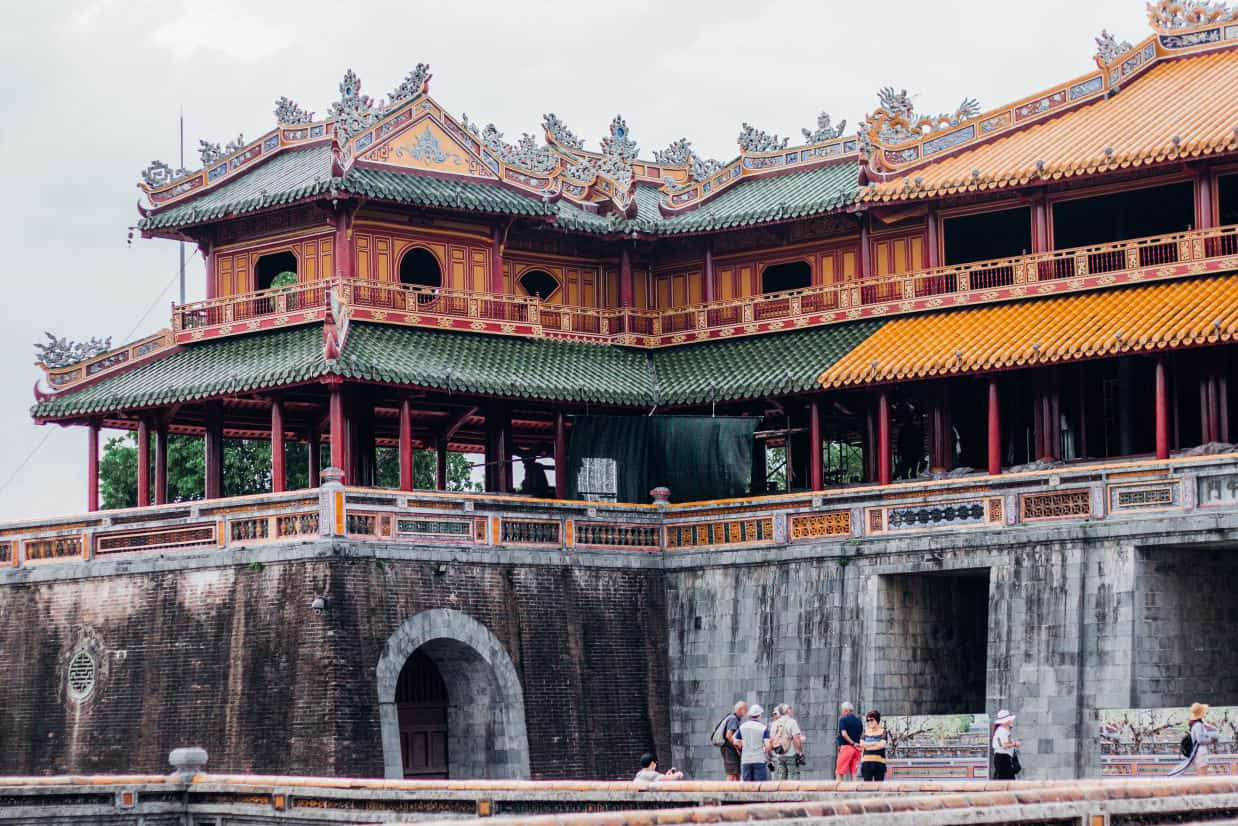
The old imperial capital is quieter than Hanoi, with less traffic and more space. The Imperial City is large but flat, so do it in sections with a rest in between. The royal tombs are spread out along the Perfume River, so take a car or a slow boat between them rather than trying to walk.
Ha Long Bay, on an overnight cruise

A night on a good boat is the most relaxing way to see Ha Long Bay: you unpack once, sit on deck and watch the islands drift past. Two things to know. Getting on and off can involve a small tender boat and a step down, so ask the crew for a hand. And the excursions (kayaking, the cave, the island climb) are all optional. Our comparison of Ha Long Bay and Cat Ba will help you choose the route.
Da Nang

Modern, clean and easy. Da Nang has wide pavements along the river, a long flat beach for morning walks, and the best choice of resorts in the country. It's also Vietnam's pickleball capital, with dozens of courts. Base yourself here and do Hoi An, the Marble Mountains and the Golden Bridge as easy half-day trips.
Hanoi, in small doses
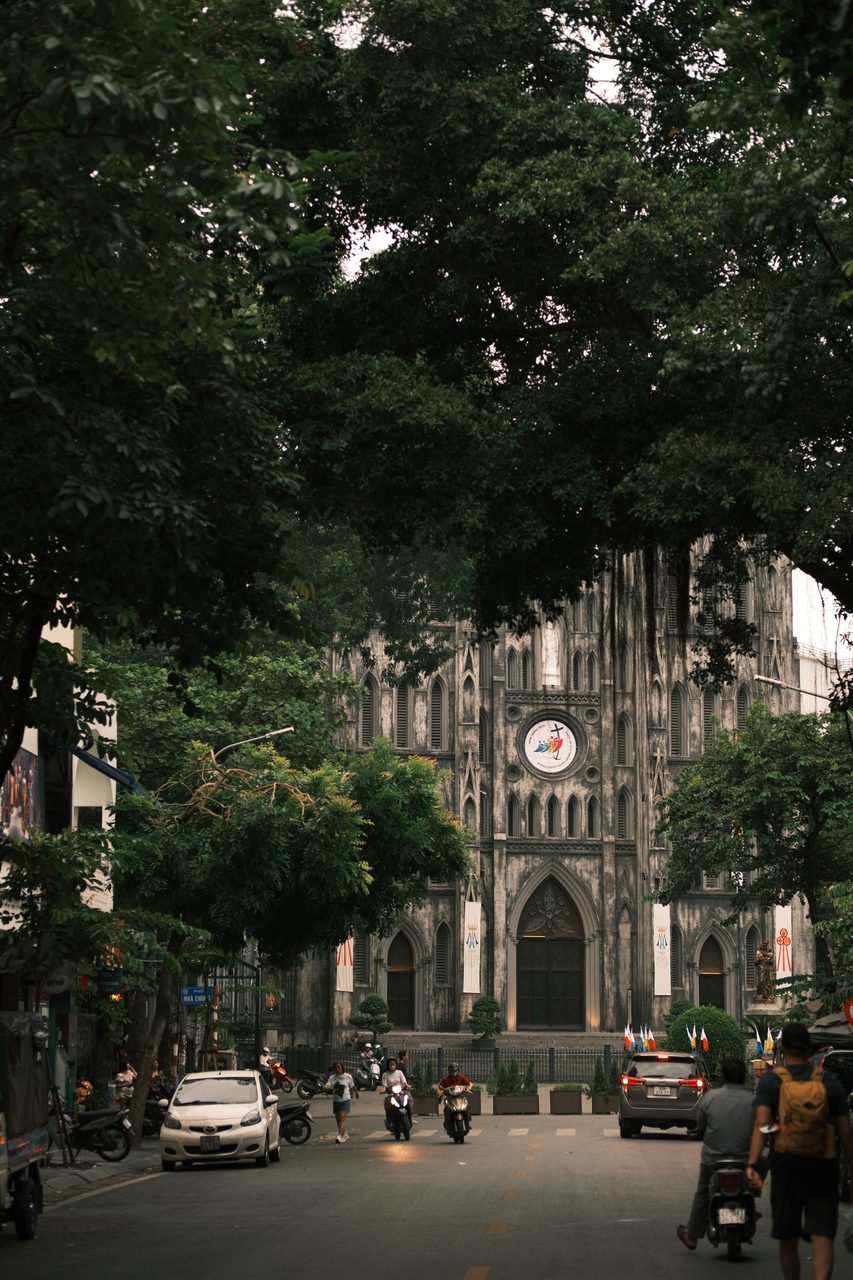
Hanoi is wonderful and intense. Stay near Hoan Kiem Lake, where the walking is easier. Go out early, when the lake is full of people doing tai chi and dancing. Take a cyclo for the longer stretches of the Old Quarter, and plan a proper rest each afternoon. Two or three nights is plenty.
What to skip, or do carefully
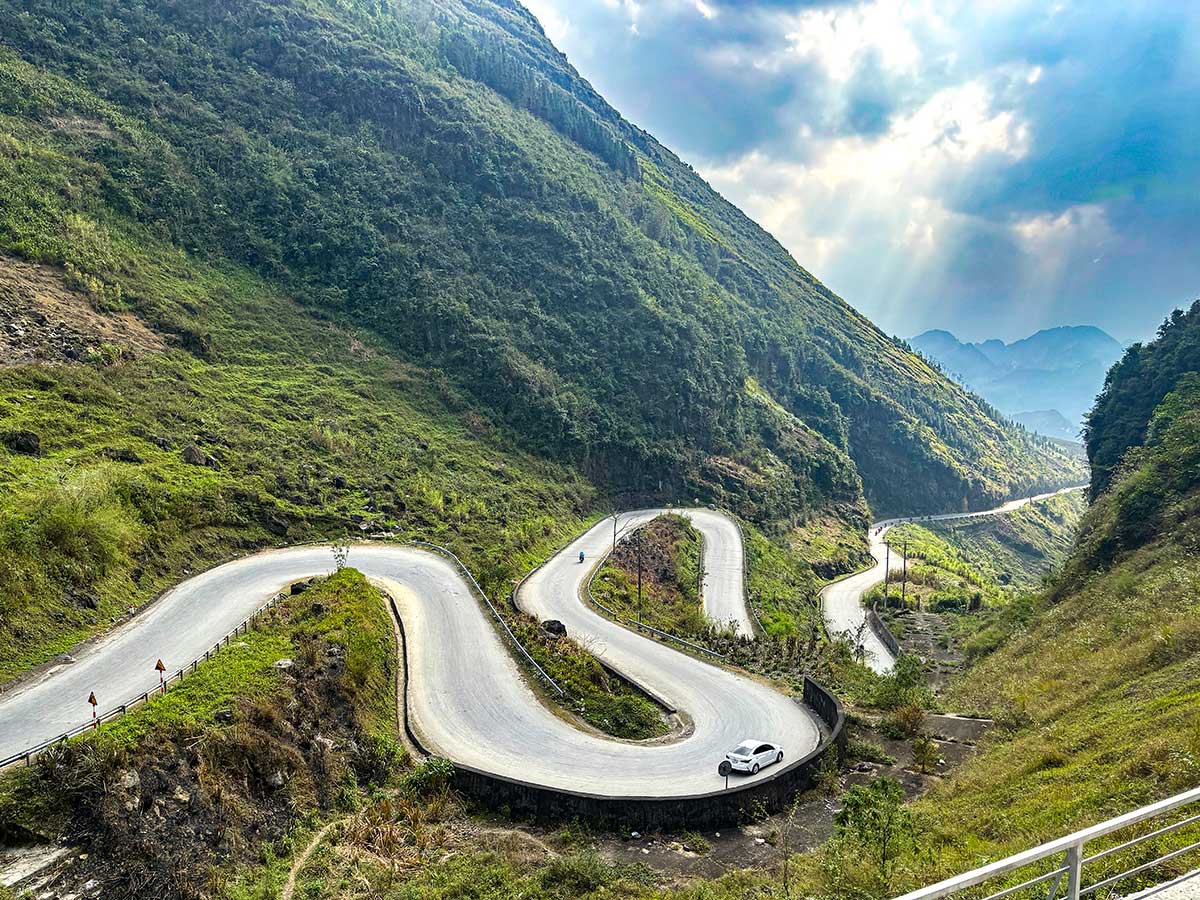
- The Ha Giang Loop: three or four days on the back of a motorbike on mountain roads. Unforgettable for some, too rough for most. By car it's easier, but still long days. See Ha Long Bay vs the Ha Giang Loop.
- Trekking in Sapa: the trails are steep and slippery after rain. Pick an easy valley walk with a guide, or skip it.
- The Cu Chi Tunnels crawl: the visit itself is fine, and crawling through the tunnel is optional. Our Cu Chi Tunnels guide explains who should sit that part out.
- Overnight buses: just don't. Fly, or take a private car on shorter hops.
- Trying to see everything: Vietnam in ten days, north to south, with a new hotel every night, is where most bad trips begin.
When to go

For comfort, timing matters more for older travellers than for anyone else.
- February to April: the best window for a whole-country trip. The north is mild, the centre is dry and the south is warm but bearable. March is the sweet spot.
- November to March: the south's dry season, and a great escape from a northern winter.
- Be careful with May to August (heat everywhere), and October and November on the central coast (heavy rain and flooding).
- Around Tet (6 February 2027), many shops and restaurants close for a few days. Read our Tet 2027 guide before you book.
Our month-by-month guide has the region-by-region detail.
How long to go for, and a sensible pace

Twelve to fourteen days is ideal for a first trip. Ten works if you stick to two regions. Whatever the length, the rules are the same: three or four bases, at least three nights in each, one flight between regions, and one completely empty day in the middle of the trip. You'll use it.
A relaxed 13-night shape we often suggest:
- Hanoi, 3 nights: the Old Quarter, the lake at dawn, a food walk, one day trip.
- Ha Long Bay, 1 night: an overnight cruise.
- Hoi An or Da Nang, 5 nights: fly down. Old town, beach, a cooking class, a free day. Our week in Da Nang shows how it flows.
- Saigon, 3 nights: fly south. The city, a Mekong day and the Cu Chi Tunnels if you're keen.
Our Top to Bottom trip follows almost exactly this route over ten days, and the Da Nang & Hoi An trip is a gentle six days in one base.
Health, medicines and insurance

This isn't medical advice. Talk to your own doctor or a travel clinic before you go. But these are the practical points travellers over 50 ask us about:
- Bring your regular medicines in their original packaging, with a copy of the prescription and enough to last a few extra days.
- Pharmacies are everywhere, including big chains like Long Chau and Pharmacity, and staff in tourist areas often speak some English. Good for rehydration salts, plasters and sun cream.
- International hospitals with English-speaking staff include Vinmec Times City, the Hanoi French Hospital and Family Medical Practice in Hanoi, Vinmec Da Nang and Family Medical Practice in Da Nang, and FV Hospital and Vinmec Central Park in Saigon.
- Travel insurance: check the age limits, pre-existing conditions and medical evacuation cover carefully. Evacuation from a remote area can run into tens of thousands of dollars.
- Drink bottled or filtered water. Ice in restaurants and cafes is made from filtered water and is generally fine.
Staying active: why pickleball fits so well

Staying active is the best cure for jet lag, stiff joints after flights, and the travel fatigue that creeps in during the second week. Pickleball suits this age group perfectly: it's lower impact than tennis, it's easy to pick up, and in Vietnam it's the fastest-growing sport in the country. Locals of every age play early in the morning, before the heat.
A game at 6:30am, breakfast, a slow morning of sightseeing, then a rest in the afternoon: that's the rhythm that keeps people fresh for two weeks. Courts are easy to find in Hanoi, Da Nang and Saigon. See can you play pickleball in Vietnam for the basics, or pick a hotel with its own court from our list of resorts in Vietnam with pickleball courts. Other easy ways to move: swimming, cycling through the rice fields around Hoi An, and joining the tai chi crowd at Hoan Kiem Lake at dawn.
Private trip, tour or DIY?
There's no single right answer, but here's how it tends to work out for travellers over 50:
- Doing it yourself is cheapest and perfectly possible, but you'll spend a lot of energy on logistics: transfers, bookings, finding the right driver.
- A fixed-date tour takes care of logistics, but the pace is set for everyone, and early starts and packed days are common.
- A private trip costs a little more, but the pace, the hotels and the rest days are set around you. A driver waits at every airport, and there's a local guide when you want one and space when you don't.
Travel at your own pace
Every trip we plan is private: just you, your partner or a few friends, on your dates, at your speed. Rest days, short transfers and morning games are built in.
See the toursWhat to pack

- Comfortable walking shoes with good grip, plus sandals you can walk in.
- A light layer or two: air conditioning is fierce, and Hanoi is genuinely cool from December to February.
- A wide-brimmed hat, sunglasses and high-factor sun cream.
- Rehydration salts and your usual medicines, with copies of prescriptions.
- Something to cover shoulders and knees for temples and pagodas.
- Your paddle and court shoes, if you play. Balls and rental paddles are easy to find locally.
The bottom line

Vietnam is a great destination for seniors and travellers over 50, and far more comfortable than its backpacker image suggests. Go between February and April, or November to March for the south. Pick three or four bases, stay at least three nights in each, and fly between regions. Start your days early, rest in the afternoon, and keep moving with a swim, a walk or a morning game. Do that, and the hardest part of your trip will be deciding which city you liked best.