Vietnamese people are very forgiving of visitors. Nobody expects you to know the right pronoun or the right bow, and most mistakes get a laugh instead of a frown. But a handful of habits carry real weight here, and knowing them is the difference between being polite and being remembered fondly.
The short version
Dress and shoes: shoulders and knees covered at pagodas, shoes off at temples and at people's homes.
Table: never stand chopsticks upright in your rice, and let the eldest person start.
People: use both hands to give and receive, ask before photographing anyone up close, keep your voice calm. If you slip, smile and say xin lỗi (sorry).
Greetings, smiles and the personal questions
Greet the eldest person first. A smile and a small nod is all you need, and a handshake works with men. With women and older people, wait to see whether they offer a hand.
Don't be thrown when someone asks your age, whether you're married and how many children you have within the first five minutes. It's warmth, not nosiness. Answer lightly, then ask them the same thing and you'll have a friend.
Two things are easy to misread. A smile doesn't always mean happy. It can cover embarrassment or a problem nobody wants to say out loud. And vâng, the word for yes, often just means "I hear you", not "I agree". If something matters, such as a pickup time, confirm it gently a second time. Related to that is the idea of saving face: raise a problem quietly and with a smile. Raising your voice is the fastest way to lose the argument.
A few body-language rules are worth knowing. Don't touch anyone's head, including a child's. Point with an open hand rather than one finger. Beckon someone with your palm facing down, not up. Keep your feet away from altars and away from people. And keep public affection modest, especially outside the big cities.
Temples and pagodas
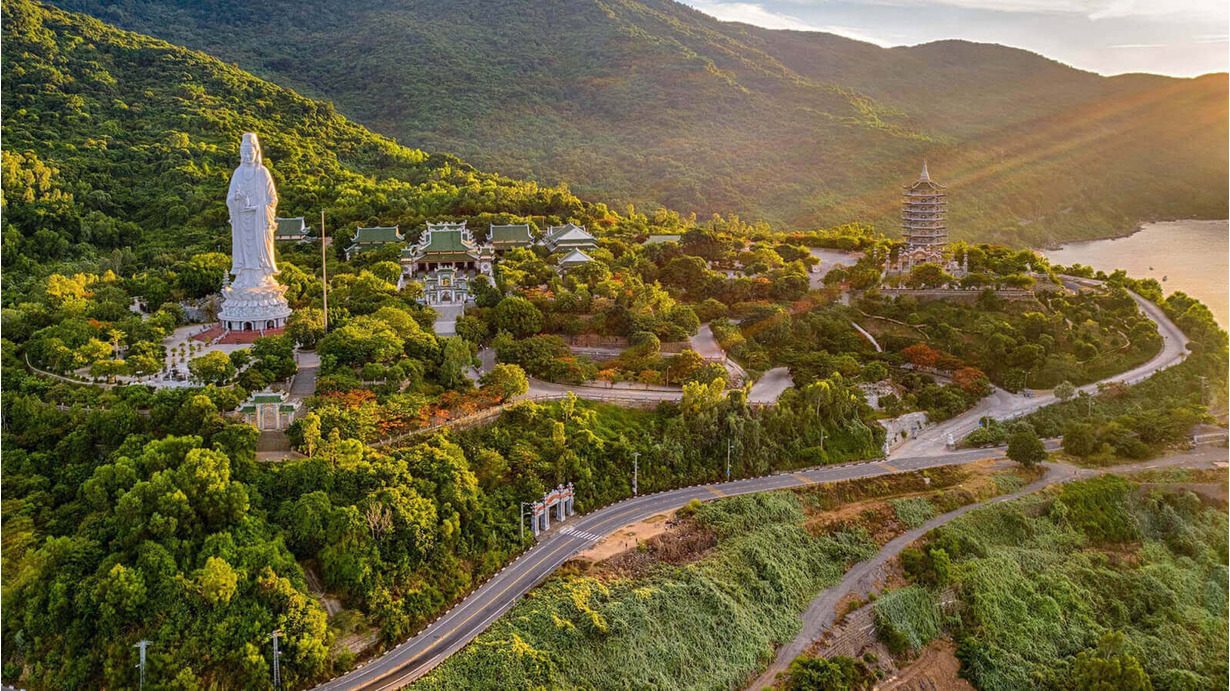
Pagodas here are places of worship first and sights second. Cover your shoulders, chest and knees, and carry a light scarf in your bag so you can fix it on the spot. Take off your hat and sunglasses inside, and leave your shoes at the door with everyone else's.
Keep your voice down and your phone on silent, and don't eat, run or smoke on the grounds. Don't touch Buddha statues or monks, and don't walk between someone who is praying and the altar. Go behind them instead. Skip the flash, ask before photographing monks or anyone mid-prayer, and never pose as if you're praying for a photo. If there's a donation box, a few tens of thousands of dong is the usual amount.
At the table
The one rule people remember is the right one: never stick chopsticks upright in a bowl of rice. It looks like the incense burned for the dead. Also avoid passing food from your chopsticks to someone else's, pointing with them, or stabbing at your food. When you're done, lay them across the bowl or on the rest.
Dishes come to the middle and everyone shares. Take a little into your own bowl, use the serving chopsticks if there are any, and let the eldest person start before you do. Someone will probably say mời, which is a friendly "please, go ahead".
Toasts run on một, hai, ba, dô, which is one, two, three, cheers. Hold your glass a little lower than an older person's rim when you clink. If you don't drink alcohol, say so with a smile and clink with water or a soft drink. Hosts may insist a couple of times; a polite second refusal is fine. And if a bill turns into a friendly scramble, that's normal. The person who invited usually pays.
If you want to know what you'll actually be eating, our street food guide goes city by city, and the coffee guide explains why nobody rushes a cup here.
If you're invited into a home
Shoes come off at the door unless you're told otherwise. Don't touch, point at or photograph the ancestor altar without asking. Wait for your host to show you where to sit.
Bring a small gift. Fresh fruit, biscuits, good tea or a bag of Vietnamese coffee are all safe, at roughly 100,000 to 300,000 dong, or $4 to $12. Anything grander creates an obligation. Hand it over with both hands, and don't be surprised if it's refused once out of politeness. Offer again and it will be accepted. Avoid clocks, knives and scissors, handkerchiefs, chrysanthemums, and black or white wrapping paper, all of which carry associations with death or parting.
Photos and people
Street life is wonderful to photograph and people are usually relaxed about it, but ask before you go close, especially with market sellers at work, children and monks. A smile and a gesture toward your camera does the job. If someone says no, that's the end of it.
On the pickleball court
Vietnamese pickleball is social first and competitive second. Courts fill up early, usually between 6 and 9am, and clubs tend to organise play by level, so it's common for strangers to wave a visitor into their game. Say yes. Be honest about your level, expect the age-and-family questions between points, and take the score lightly.
A few small courtesies help. Arrive a few minutes early, wear proper court shoes, and keep a few small notes on you, because a casual court booking is usually split between the players. If someone hands you a bottle of water, take it. And if you get invited for coffee afterwards, go. That's often where the day's real conversation happens. We cover the clubs and what to expect in our guides to Hanoi, Ho Chi Minh City and Da Nang, and the bigger picture in can you play pickleball in Vietnam.
If your trip lands on Tet
Tet, the lunar new year, falls in early February in 2027 and moves each year. Many shops and restaurants close for several days, and it's the busiest travel time of the year for Vietnamese families. Bright colours are welcome. Red envelopes with fresh notes, called lì xì, are given to children and elders. Our guide to the best time to visit Vietnam has more on how the calendar affects a trip.
If you get it wrong
Stop, smile, say xin lỗi, and carry on. A sincere apology beats a perfect performance every time. And if money manners are the part that makes you nervous, we've put those in one place in our guide to money in Vietnam.
A local guide beside you the whole way
On every trip you have a local guide with you, so you can ask "is this okay?" in the moment instead of guessing. Our Da Nang and Hoi An trip includes a morning at Linh Ung Pagoda.
See the Da Nang & Hoi An tourThe bottom line
Dress modestly at temples, respect the table rules, and use both hands. Everything else is warmth and good humour, and Vietnam has plenty of both to meet you halfway.