Hue gets squeezed. It sits between Hoi An's lanterns and Hanoi's buzz, and a lot of first-time itineraries either skip it or give it half a day from Da Nang. That's a shame, because this was Vietnam's imperial capital for almost 150 years, and it still feels different from anywhere else: quieter, greener, slower, with royal tombs in pine forests, a walled citadel on the river and some of the best food in the country. So is Hue worth visiting? For most people, yes. And if you travel with a paddle, Hue now has covered courts in town and a new resort court down the coast, so you don't have to give up your morning games to see it. Here's who it suits, how long to stay, what to see, and what it costs in 2026.
The short version
Worth it if: you like history, food, and a slower pace. Hue is the calmest of Vietnam's big-name stops.
How long: two full days, three nights if you can. One day is a rush.
Must see: the Imperial City, two of the royal tombs (Khai Dinh and Minh Mang), Thien Mu Pagoda and a bowl of bun bo Hue.
Tickets: 200,000 VND for the Imperial City, 150,000 VND for each big tomb. A 3-day pass for everything is 580,000 VND.
When: February to April is best. October and November are the wettest months on this coast.
Pickleball: a small but friendly scene with covered courts, one of them a short walk from the Imperial City, plus hotel courts at Lumiere Boutique Vy Da in town and Laguna Lang Co on the coast. Play at 6am, then do the citadel before the heat.
So, is Hue worth visiting?
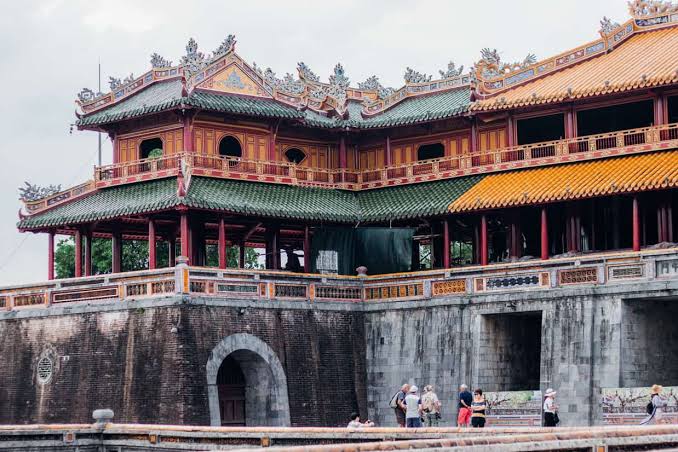
From 1802 to 1945, Hue was the seat of the Nguyen emperors, Vietnam's last royal dynasty. They built a walled city on the north bank of the Perfume River, laid out with the help of feng shui, and filled the hills around it with tombs grand enough to be palaces. The whole group of monuments is a UNESCO World Heritage Site, and much of it was badly damaged in the war, so what you see today is part ruin, part careful restoration. That mix is a big part of the charm.
Hue is a good fit if you enjoy history and architecture, you want a break from busier cities, and you like to eat well. It's also an easy, gentle stop for travellers who prefer not to rush, which is why we include it so often in trips for older travellers.
You might skip it if you only have a week and want beaches and nightlife, or if you're travelling in October or November and your plans can't bend around heavy rain. In that case, spend the time in Hoi An or Da Nang instead.
How many days do you need in Hue?
- One day: the Imperial City in the morning, one tomb and Thien Mu Pagoda in the afternoon. Possible as a long day trip from Da Nang, but tiring.
- Two days: the right amount for most people. One day for the citadel and the city, one for the tombs and the river.
- Three days: add the countryside, a cooking class, or a day trip to the old DMZ.
The sights are spread out, especially the tombs, and Hue is a place that rewards slowing down. Two nights feels short; three feels about right.
The Imperial City
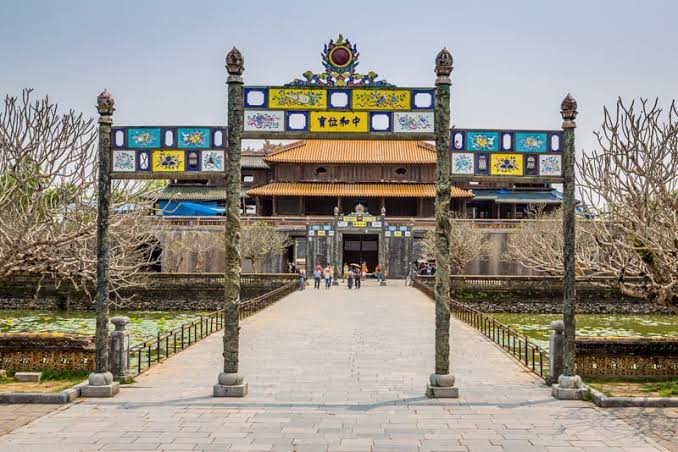
The heart of Hue is a fortress inside a fortress. The outer Citadel is a huge square of walls and moats, still lived in, with houses, schools and markets inside. Within it sits the Imperial City (Đại Nội), and inside that the Forbidden Purple City, where only the emperor, his family and his servants could go.
What to see
- Ngo Mon Gate: the grand main entrance, with a pavilion on top where the emperor watched ceremonies.
- Thai Hoa Palace: the throne hall, with red and gold lacquered columns. Restored and reopened in recent years.
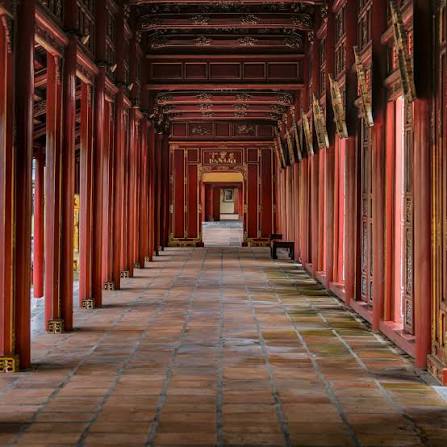
- The Forbidden Purple City: largely destroyed in 1968 and slowly being rebuilt. The long covered corridors and the restored reading pavilion are beautiful.
- The Mieu temples and the Nine Dynastic Urns: huge bronze urns cast in the 1830s, decorated with scenes of Vietnam.
Tickets and tips
- Ticket: 200,000 VND for adults, 40,000 VND for children aged 7 to 12, free for under-6s. E-tickets are now common.
- Hours: roughly 6:30am to 5:30pm in summer and 7am to 5pm in winter.
- Allow: three hours at least. The site is big, with a lot of walking on gravel and little shade.
- Go early. Arrive at opening, before the tour buses and the midday heat. Electric buggies can take you around the grounds for a fee.
The Imperial City also opens for special evening programmes during festivals, with lights and performances. Ask your hotel what's on when you're there.
The royal tombs

The Nguyen emperors planned their tombs while they were still alive, and some used them as country retreats. There are seven in the hills south of the city. You don't need to see them all. Pick two or three, and go early or late in the day.
Khai Dinh: the showpiece
The newest and most unusual tomb, finished in 1931. It's built of grey concrete on a steep hillside, with 127 steps up to rows of stone mandarins and a burial hall covered inside in mosaics of porcelain and glass. Some find it gaudy, but nobody finds it boring. There are a lot of steps, so take it slowly.
Minh Mang: the most beautiful

A long, symmetrical layout of gates, courtyards and pavilions running through gardens and around two lakes. It's peaceful and much greener than Khai Dinh, and the walk feels more like a park than a monument. It's the furthest from town, about 12 kilometres, so combine it with a boat ride back up the river.
Tu Duc: the romantic one
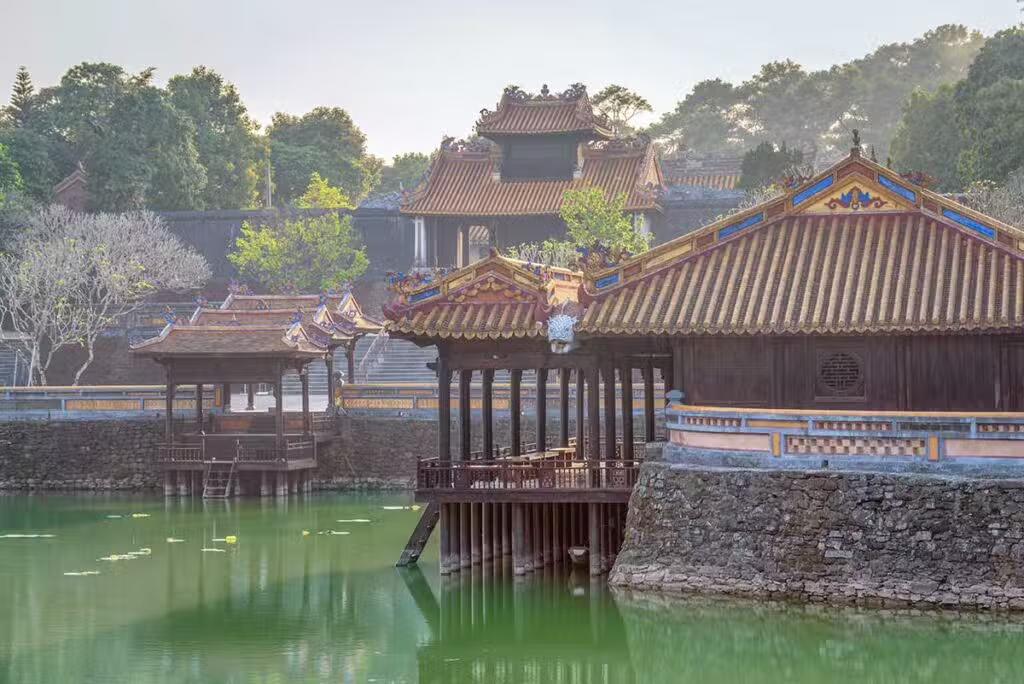
Closest to the city and the easiest to visit. Emperor Tu Duc used it as a retreat, writing poetry in a lakeside pavilion. Pine trees, frangipani and a quiet lake make it a lovely place in the late afternoon.
Tickets
Each of the big tombs costs 150,000 VND for adults. If you're seeing the Imperial City and two or three tombs, a combo is better value: around 420,000 VND for three sites over two days, or 580,000 VND for all of them over three days.
Thien Mu Pagoda and the Perfume River

Founded in 1601, Thien Mu is older than the dynasty itself and is still a working monastery. Its seven-storey octagonal tower is the city's best-known landmark. It's free to visit, and the monks' gardens are calm and shady. Look for the blue Austin car parked at the back: in 1963 the monk Thich Quang Duc drove it to Saigon, where he burned himself to death in protest. It's a quiet, moving reminder of a hard period.
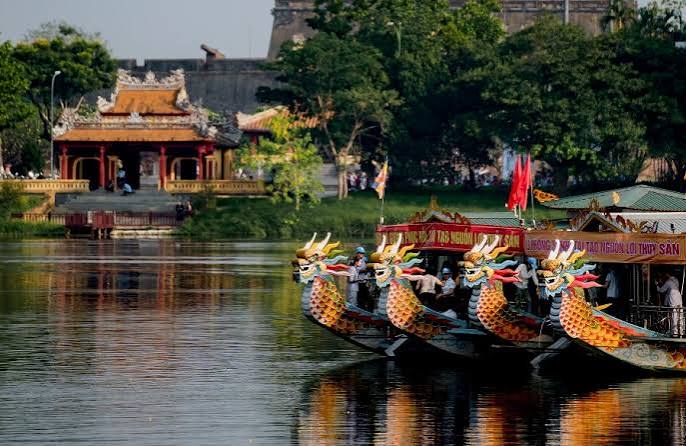
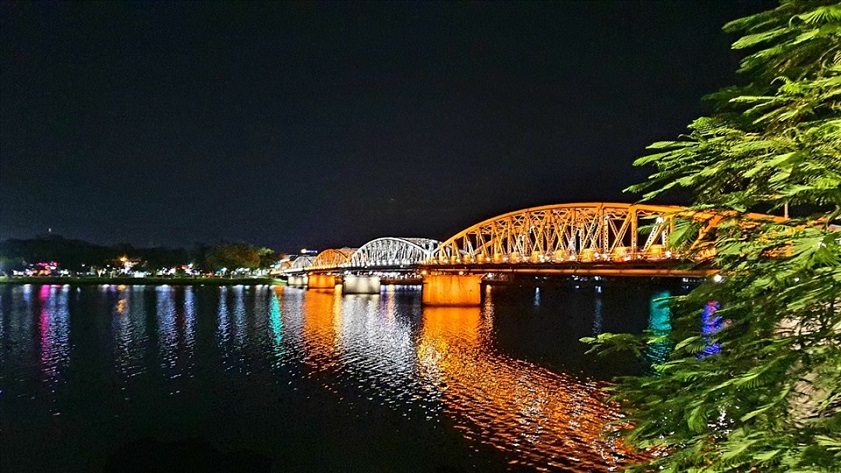
The best way to arrive is by boat. Dragon boats leave from the riverbank near the Truong Tien Bridge and drift upstream to Thien Mu in about half an hour. Many continue to the tombs. Agree the route and price before you set off, or let your guide arrange a private boat. In the evening, the Truong Tien Bridge lights up in changing colours, and the riverside walk is where everyone goes for a stroll.
What to eat in Hue
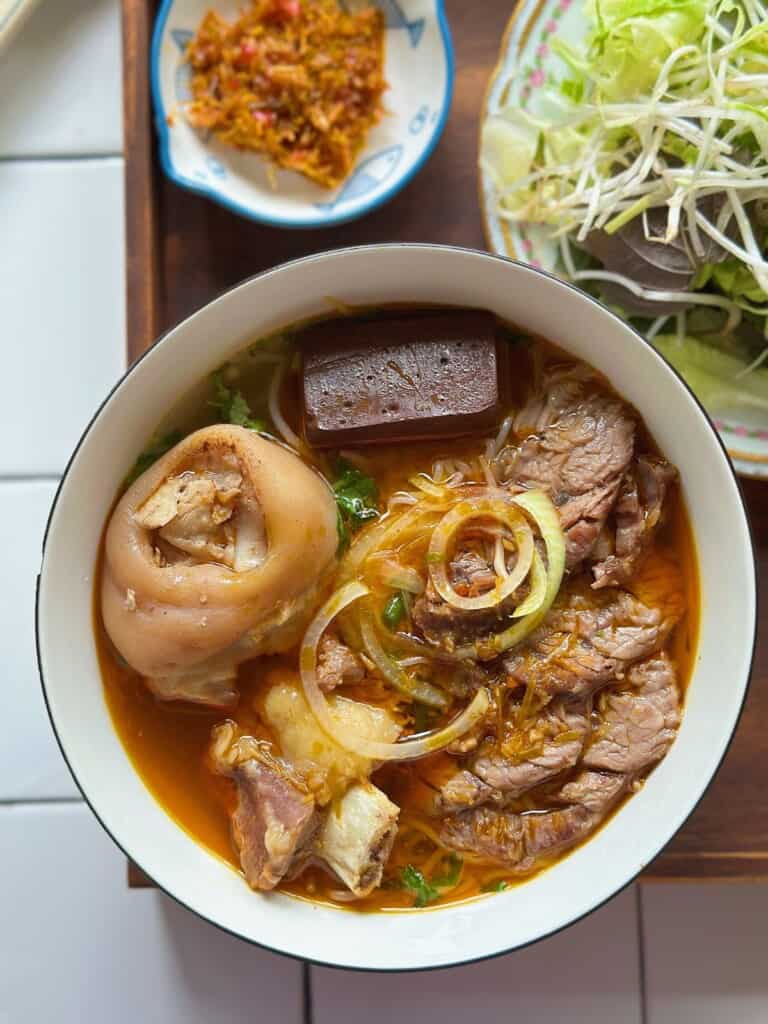
Royal kitchens, a love of chilli and a lot of small dishes: Hue has its own cuisine, and many Vietnamese will tell you it's the best in the country.
- Bún bò Huế: beef and pork noodle soup with lemongrass and chilli oil. Stronger and spicier than pho. A local breakfast.
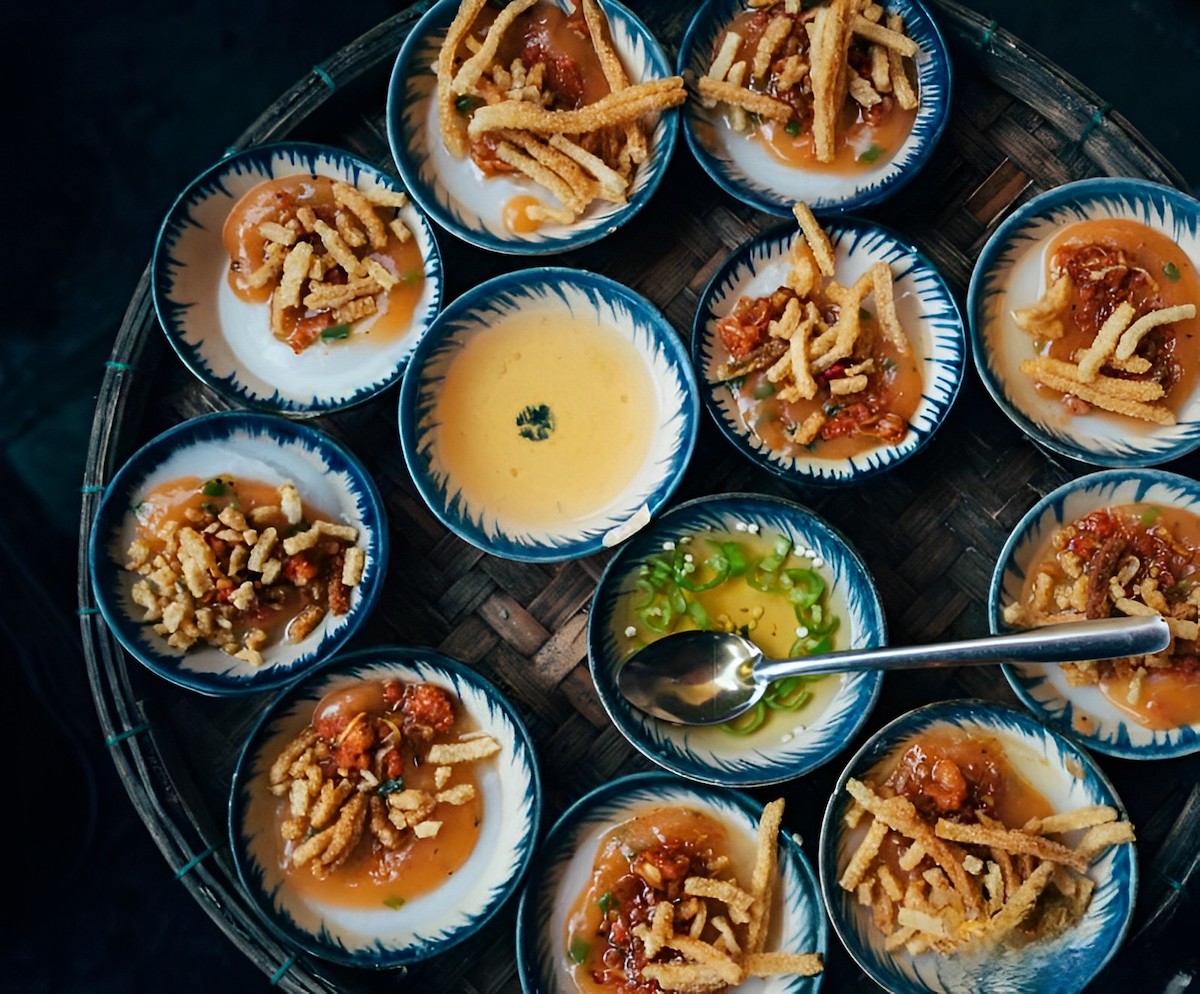
- Bánh bèo, bánh nậm, bánh lọc: little steamed rice cakes, some in banana leaves, topped with shrimp and pork. Order a mixed plate and share.
- Cơm hến: rice with tiny river clams, herbs and crackling. A very local taste.
- Chè: sweet soups and puddings, sold everywhere in the evening.
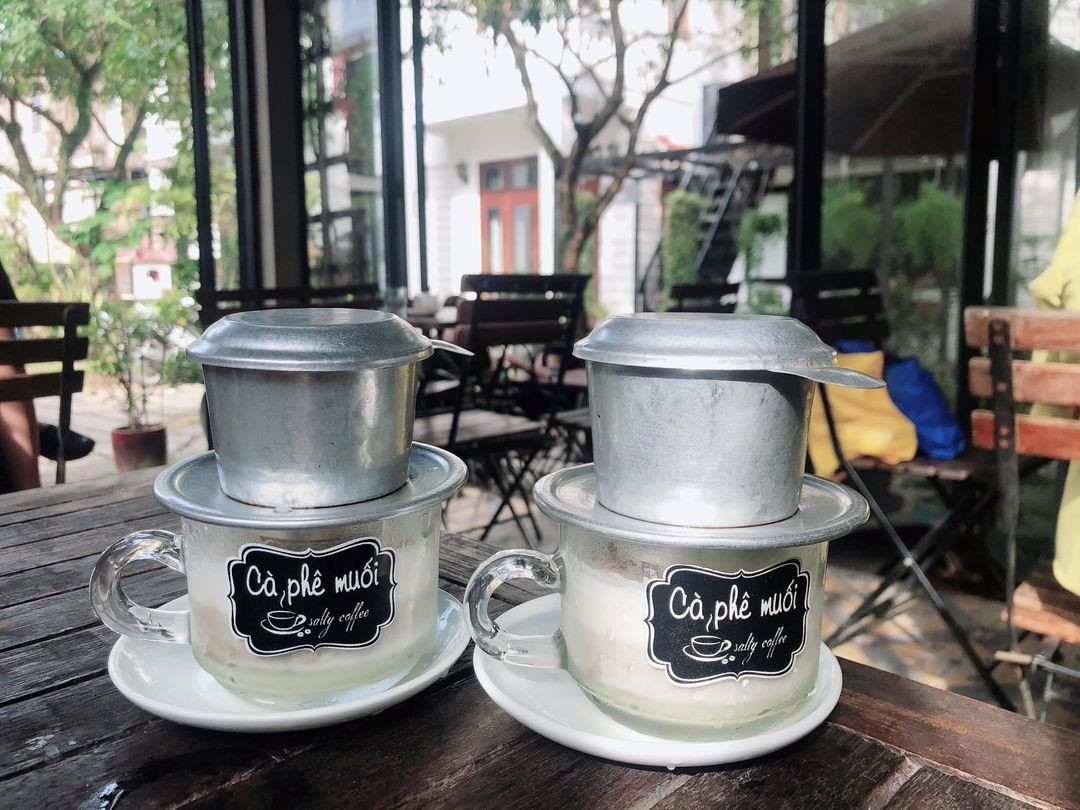
- Salt coffee (cà phê muối): iced coffee topped with a salty cream. It started in Hue and is now popular all over Vietnam.
Dong Ba Market, by the river near the Citadel, is the big market for food, dried goods and conical hats. For more on Vietnamese food and coffee, see what to eat in Vietnam and Vietnamese coffee culture.
Slow Hue: gardens, villages and a tiled bridge
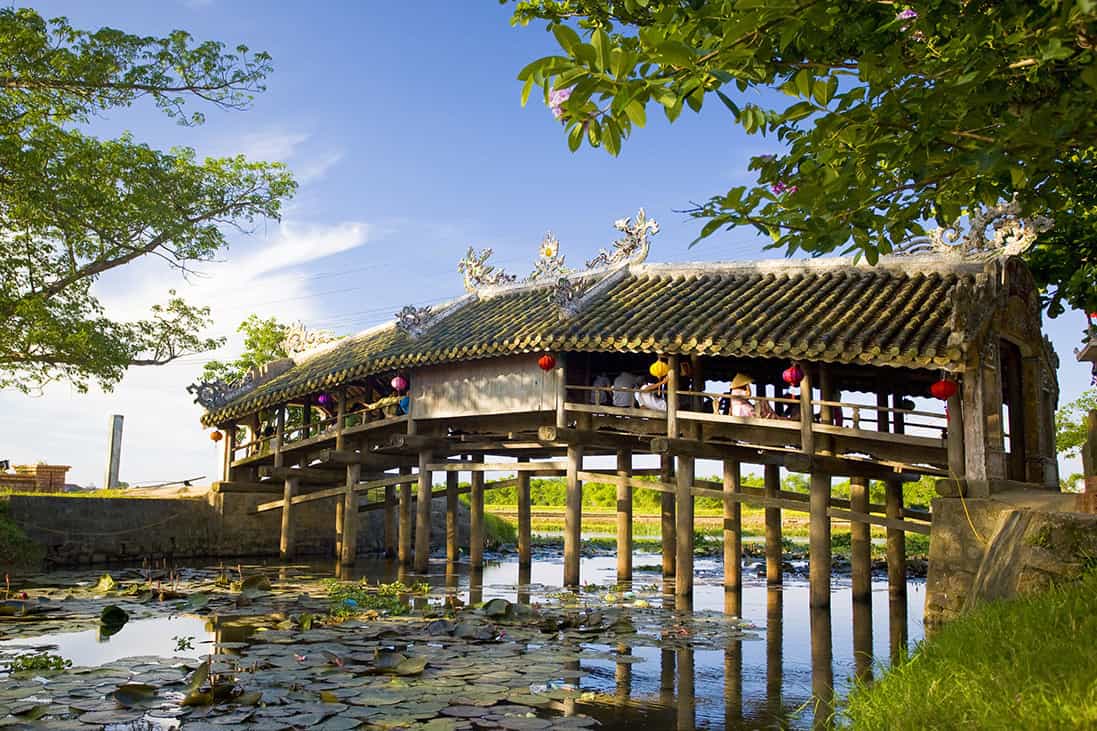
Hue is best when you stop sightseeing for a few hours. A few ideas for an easy half day:
- Thanh Toan tiled bridge: a wooden covered bridge from the 1770s, out among the rice fields east of the city. A pleasant bike ride or a short drive.
- The garden houses (nhà vườn): old family homes set in walled gardens of fruit trees, some open to visitors for tea or lunch.
- A cooking class with a market visit, often in a garden house.
- Coffee by the river in the afternoon, when the light softens over the water.
Play pickleball in Hue
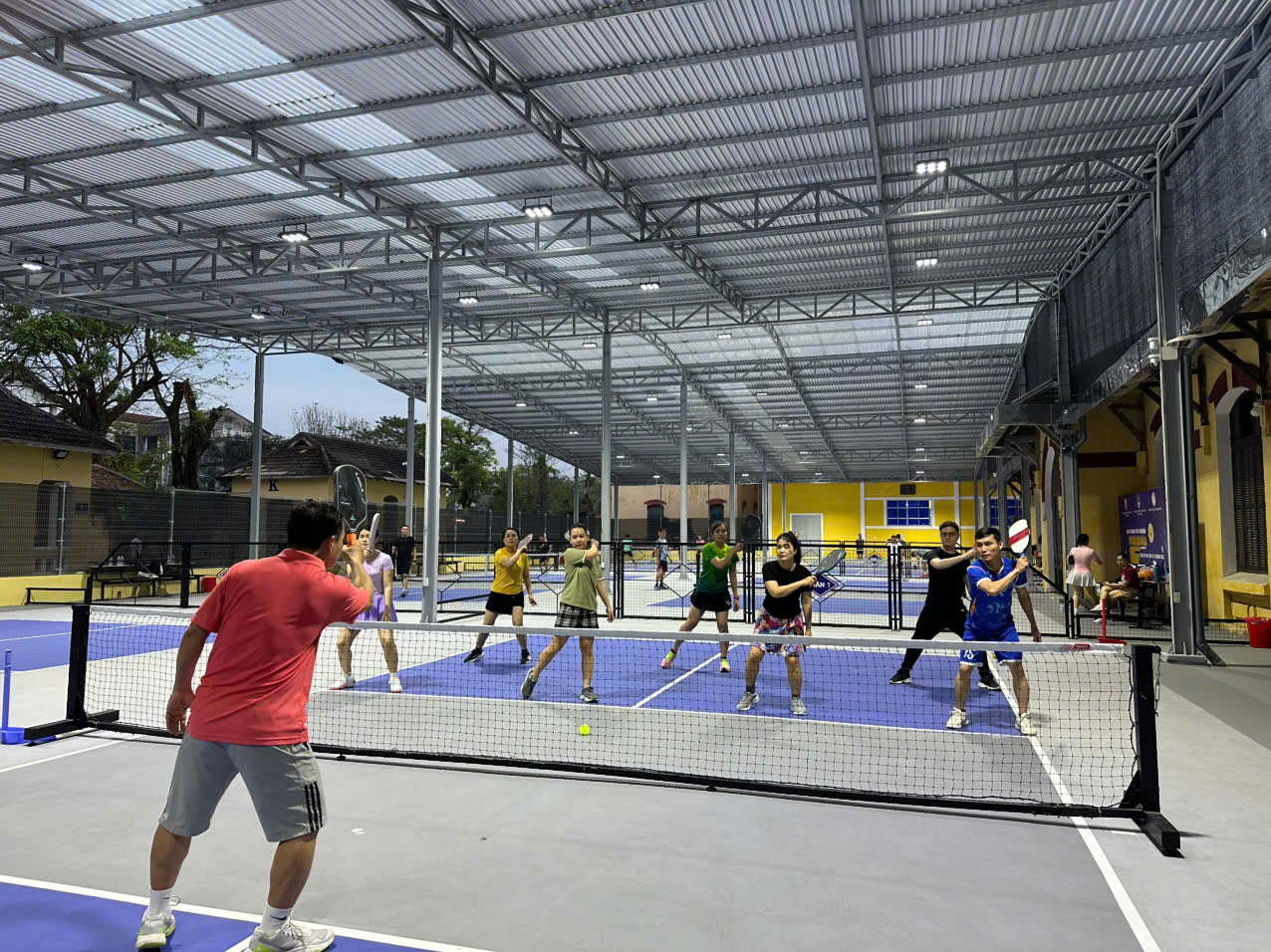
Hue's pickleball scene is smaller than Da Nang's, but it has grown fast, and it suits a sightseeing trip surprisingly well. Most of the newer courts are covered, which matters here: Hue is the hottest stop on the central coast in summer and the wettest in autumn. And because the city is compact, you can play at six and still be at the Imperial City gate by half past seven.
Where to play
- Royal 150 (150 Nguyen Trai): two courts inside the old Citadel area, the handiest for sightseeing. Play, have breakfast nearby, and walk to the Imperial City.
- BMC (11 Dong Da): four courts on the south side of the river, close to most hotels. Around 120,000 to 180,000 VND per court per hour, depending on the time.
- Louis Hue (68A Hoang Quoc Viet): four courts in the An Cuu area, open from 5am.
- Zone 75 (17–19 Vo Van Kiet): three courts in An Tay, a little further out towards the tombs.
Courts come and go quickly in a scene growing this fast, so check before you go, or let us book it for you.
Hotels with their own court
Until 2026, Hue had almost nothing at the hotels. Now there are two. Lumiere Boutique Vy Da opened in April 2026 in town, a few minutes' walk from the Perfume River, with a court on the grounds for guests. Laguna Lang Co, the Banyan Tree and Angsana resort about an hour south on the way to Da Nang, opened its court in August 2026, and court time is free for guests between 8:30am and 5pm. Our guide to resorts with pickleball courts in Vietnam has the details.
How to get a game as a visitor
- Go early. Locals play from about 5 or 6am until 8, and again after 5pm. That's when you'll find open play and people to make up a four.
- Ask at the desk. Book a court for an hour and ask if anyone needs a partner. Hue players are curious about visitors and happy to mix.
- Travel light. Most clubs rent paddles and sell balls, so you don't have to carry yours from Da Nang.
- Mind the heat. From May to August, stick to the first two hours of the day. Our guide to playing pickleball in the heat explains why.
If pickleball is the main point of your trip, base yourself in Da Nang, two to three hours away, and give Hue two nights. You'll have a game every morning either way. See pickleball in Da Nang for the clubs there.
Want Hue in your trip, done properly?
Every trip we plan is private: just you, your partner or a few friends, on your own dates. We arrange the guide, the boat, the tombs at the quiet times and a morning game, then drive you over the Hai Van Pass to Hoi An.
Plan a private tripDay trips from Hue
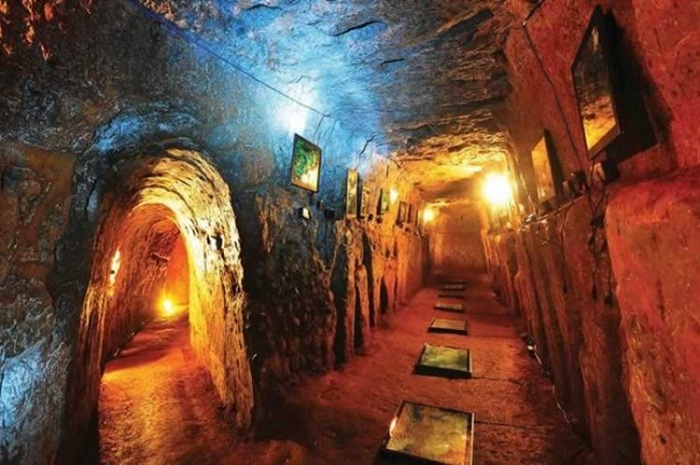
- The DMZ: the old demilitarised zone that split North and South Vietnam lies about 100 kilometres north. A full-day trip takes in the Hien Luong Bridge on the Ben Hai River, the Vinh Moc tunnels and, if you want, Khe Sanh. It's a long day in the car but powerful, especially for travellers with a connection to the war.
- Lang Co and the Hai Van Pass: on the way to Da Nang or Hoi An, stop at the lagoon at Lang Co, then cross the pass with views down the coast. If you're staying at Laguna Lang Co, there's a court waiting.
- Tam Giang lagoon: Vietnam's biggest lagoon, with fishing villages and sunsets over the water, about 40 minutes from the city.
Getting to Hue

- By air: Phu Bai airport is about 15 kilometres from the centre, with daily flights from Hanoi and Saigon.
- By car from Da Nang or Hoi An: about two to three hours. Take the old road over the Hai Van Pass rather than the tunnel, and stop at Lang Co for lunch.
- By train from Da Nang: around two and a half to three hours on one of the most scenic stretches of railway in the country.
- By sleeper train from Hanoi: roughly 13 hours overnight.
Where to stay in Hue

- The south bank, by the river: the easiest base. Hotels, restaurants and the riverside walk are all here, and the Citadel is a short ride across the bridge.
- Inside or near the Citadel: quieter and more local, with small hotels and homestays.
- Riverside or countryside resorts: a few lovely places outside the centre, set in gardens or by the river. Best if you want a slower stay and don't mind a short drive.
- If you want a court at the hotel: Lumiere Boutique Vy Da in town, or Laguna Lang Co on the coast an hour south.
When to visit Hue

February to April is the best time: mild, mostly dry and green. May to August is hot, often above 35°C, so do your sightseeing early and late. September to December is the rainy season, and October and November are the wettest months of the year, with a real risk of storms and flooding. January is cool and often drizzly.
Since 2026, the Hue Festival has run all year round in four seasons, with ceremonies, music and lantern events spread across the calendar instead of one big week. Our best time to visit Vietnam guide compares every month, and Vietnam in November explains how to plan around the central rains.
A 2-day Hue plan
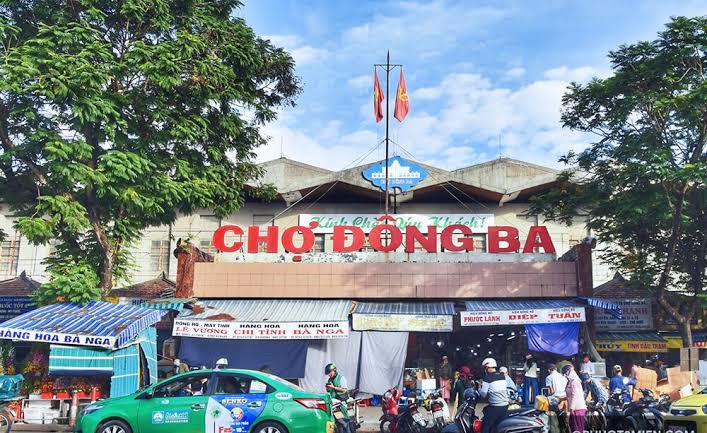
Day 1: the city. A 6am game at Royal 150 inside the Citadel, then bun bo Hue for breakfast. The Imperial City at 7:30am, before the crowds. Lunch and a rest. Late afternoon at Dong Ba Market, then a walk along the river and dinner of small Hue dishes.
Day 2: the river and the tombs. An early hit at your hotel or across the river, then a dragon boat or a private boat to Thien Mu Pagoda while it's still cool. Continue by car to Khai Dinh and Minh Mang. Back for a late lunch and a rest. Tu Duc at golden hour, then salt coffee by the river.
Day 3 (if you have it): the countryside and Thanh Toan bridge, or the DMZ. Or drive south to Laguna Lang Co, play on the resort court and have lunch by the lagoon, then cross the Hai Van Pass to Hoi An. For more ideas on building Hue into a bigger trip, see your second trip to Vietnam and one week in Da Nang.
Hue FAQ
Is Hue worth visiting?
Yes, if you enjoy history, food and a slower pace. It's Vietnam's old imperial capital, with a citadel, royal tombs and its own cuisine. Skip it only if you're very short of time or it's the peak of the rainy season.
How many days do you need in Hue?
Two full days is right for most people. Three gives you time for the countryside or a DMZ trip.
Can you do Hue as a day trip from Da Nang or Hoi An?
You can, but it's a long day of two to three hours each way. One night makes it far more enjoyable.
How much are tickets in Hue?
The Imperial City is 200,000 VND, and each big tomb is 150,000 VND. A combo for all the sites over three days costs 580,000 VND.
What's the best time to visit Hue?
February to April. Avoid October and November if you can, as they're the wettest months.
Is there pickleball in Hue?
Yes. The scene is small but growing, with several covered courts in town that open from 5 or 6am, and hotel courts at Lumiere Boutique Vy Da and Laguna Lang Co. Da Nang, a few hours away, has far more.
Can I play pickleball and still see Hue in two days?
Easily. Play from 6 to 7:30am, have breakfast, and start sightseeing at 8, when the Imperial City and the tombs are still quiet. Royal 150 is a short walk from the Imperial City.
The bottom line
Is Hue worth visiting? For anyone who likes history, good food and a calmer pace, it's one of the most rewarding stops in Vietnam. Give it two days: one for the Imperial City and the river, one for the tombs. Go early, eat everything, and leave over the Hai Van Pass. And if you play, there's a covered court waiting at six, a short walk from the emperors' gate. When you're ready, we can plan it as a private trip with Hue, Hoi An and Da Nang in one easy loop.
Find a game in Vietnam
Join Pickleball in Vietnam, our free Facebook group. Ask about courts, find a morning game and swap tips with players who live here.
Join the group